
Hello 🙂
This blog marks the end of week two of my summer internship working on the ‘Victorian Animals’ project in the archives. To elaborate a little more than the last introductory blog, the project incorporates the ways in which animals were involved in many aspects of Victorian culture, most evidently, Victorian art, yet this in turn communicates other areas of culture for animal involvement such as sport, politics, travel, and occupation. As exemplified in the last blog, animals feature in many 19th century artworks, expressing changing attitudes and the Victorians’ newfound holistic approach towards other creatures.
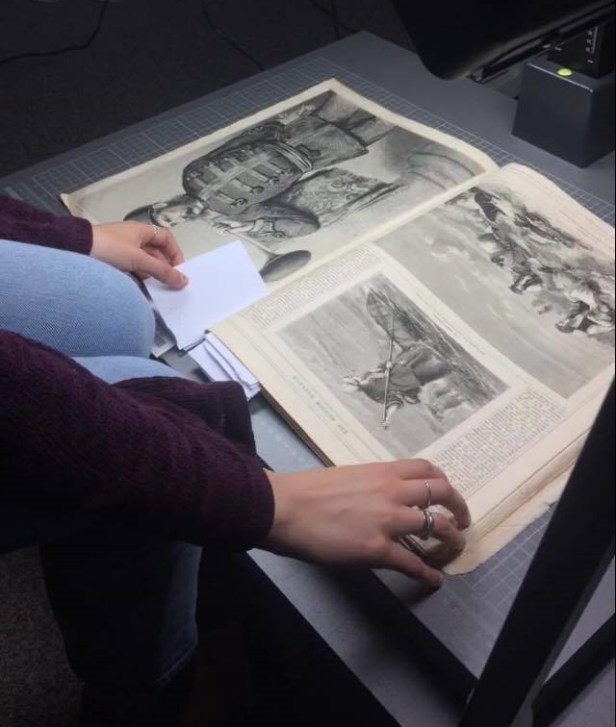
This week Jade and I have focused on digitising the images of animals found in the Victorian periodicals. We are doing this in order to create an online portfolio that students and the wider public can access and enjoy. The content, colours, and details are far too beautiful to keep only on the pages of the old archives and not shared with everyone. Hence, our other project plan for an exhibition at the end of summer that will be a bit more informational.
We began with sifting through the periodicals and bookmarking all relevant animal imagery. Anne, the Aldham Robarts digital content coordinator, then showed us the equipment and taught us the digitisation process. Soon enough, Jade and I had developed a system and got to work on bringing these images from paper to screen in order for them to be admired, as they should be. So far, we have mastered the physical metadata of the digitisation process. Once all of the images have been digitised, we have to enter a thumbnail version of the image along with a reference code and a short description, into a spreadsheet. This spreadsheet will act as a catalogue of all the images. The descriptive metadata process will be our focus for next week. We have a long way to go, but the end-result of an eclectic portfolio full of exquisite animal and pastoral art, will be worth every minute.
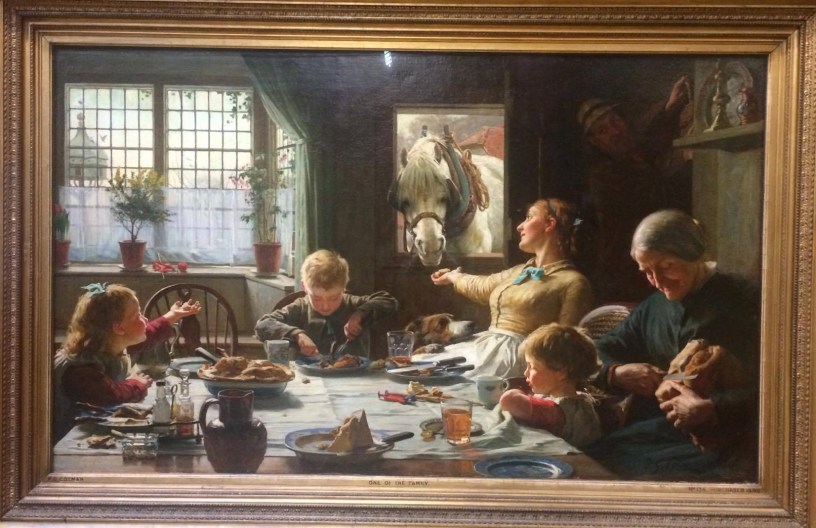
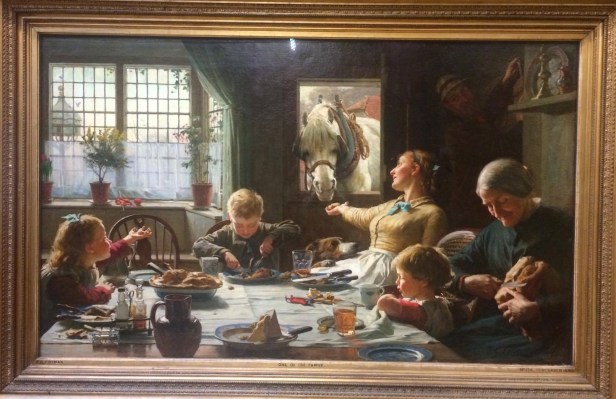
To further our knowledge of Victorian art, we visited the Walker Art Gallery on Thursday morning. The gallery really is a special place. There are many artists from, or with connections to, Liverpool; adding again to the charm and cultural essence of this amazing city. We began our visit in the sculpture gallery where there was one 19th century sculpture in particular to gain our attention; ‘The Goat Herd’ (1839) by Emil Wolff. The work is of a young woman holding a kid goat whilst feeding the adult goat at her feet. Within moments of arriving at the gallery, the Victorians’ affinity with animals was expressed. Jade and I both agreed on ‘One of The Family’ as the loveliest Victorian animal painting in the gallery. It is by Frederic George Cotman and dated 1880. I love the warmth and naturalness of the scene. The lighting reminds me of a cold winter afternoon when there are no clouds but the sun is weak. Here is a photo of the painting that Jade took on her phone:
The gallery has a wonderful collection of 19th century paintings from the Pre-Raphaelites including Rossetti, Turner, and Millais. However, for my ‘Favourite Image of the Week’, to finish off the blog, I am sticking with the animal theme of the project and have chosen to show you another image from the ‘Animal World’ (1890) collection by the RSPCA:
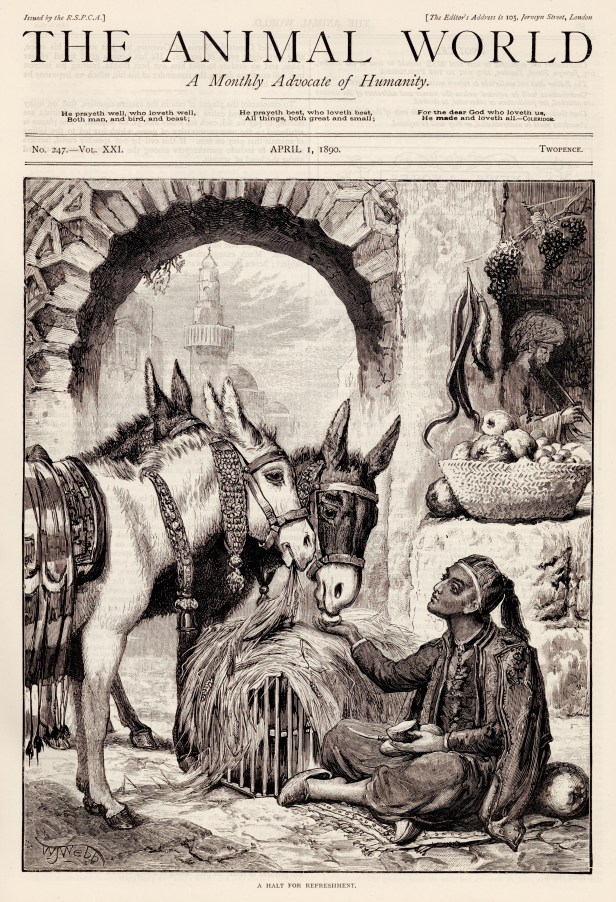
This image links to the Victorians’ fascination with exoticism that I mentioned in my previous blog. The style of dress and architecture is synonymous with the Far-East. It is called ‘A Halt For Refreshment’ and depicts a young woman sat cross-legged, feeding two donkeys some fruit. Her air is languid and comfortable. The main reason I chose this print is that donkeys are my favourite animal so it is lovely to see them being treated with such respect. The ones in the image are even prettier as their saddles and harnesses are patterned. Note the minaret in the background and the man playing a wind-pipe instrument in the shadows; imagine the sound of his music filling the warm air and the smell of spices and hot stone. The animals are placid and the atmosphere is calm. It is a time to focus on simple things and basic needs. There is an abundance of exotic fruit to eat and the donkeys visibly enjoy this privilege. Again, as in ‘The Duke of Sunderland’s Children’, the relationship between humans and animals is compassionate and kind. Distract yourself from the miserable English weather we’re having at the moment to immerse yourself in this Eastern bliss.
Thank you for reading!
Roisin
x
References
Royal Society for the Prevention of Cruelty to Animals (comp.) (1890) The Animal World. London: S.W. Partridge and Co.
 LJMU Special Collections & Archives