

Hi all,
This week I’d like to turn everyone’s attention to Miss Potter. The well-known author born into 1866 Victorian society. The author is best known for her novel The Tale of Peter Rabbit which features a little rabbit named Peter in a handsome blue coat.
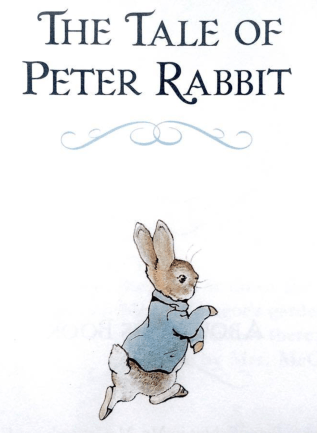
Throughout the week Roisin and I have been focusing our attention on research for our exhibition, to be presented later in the year. We have created a timeline dividing the period into decades, and sat within our time segment of ‘1860-1869’ was the birth of Beatrix Potter. Only later did I realise that, sat at home on my bookshelf, I had a collective novel called The Complete Tales of Beatrix Potter;
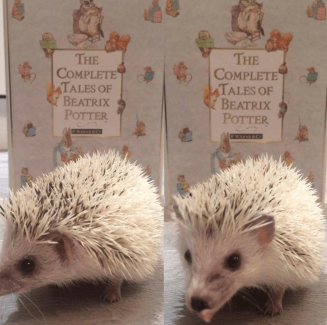
Yes. Yes, you are right. That is a hedgehog presenting a collective book of garden animals (he has a thing for Mrs. Tiggy-Winkle). Anyway, getting back to the topic of conversation; we had managed to discover so much about Beatrix, her childhood and what led her to the novels that she wrote. From a young age, she and her brother, Bertram, loved to draw and paint, often making sketches of their many pets, including rabbits, mice, frogs, lizards, snakes and a bat. A BAT. Other periodicals suggest to researchers – like myself – that the general house pets were cats and dogs. Take The Animal World, for example; their 1890 collective issue features nearly every domesticated animal/pet to be a dog or sometimes a cat. But no, Miss Potter has a bat.
Throughout her life Beatrix was considered very intelligent despite never attending school. She did, however, have a number of governesses along with an art teacher – to whom she remained close throughout her life. She was always encouraged by them to draw because of her sketches that clearly demonstrated a unique fascination of nature.
Beatrix’s first story, The Tale of Peter Rabbit, was initially rejected by a number of publishers including F. Warne & Co, who later energetically reconsidered because of the popularity of independent printing that Beatrix undertook. She printed approximately 250 copies for family and friends in December 1901; boy, did she show them. To this day F. Warne & Co has trademarked Beatrix Potter and Peter Rabbit as a logo while having full rights to the publishing. Even my copy has been printed by them!
In my book there is a small section dedicated to telling the reader about the start of the tales: “The story of naughty Peter Rabbit in Mr. McGregor’s garden first appeared in a picture letter Beatrix Potter wrote to Noel Moore, the young son of her former governess, in 1893. Encouraged by her success in having some greetings card designs published, Beatrix remembered the letter seven years later, and expanded it into a little picture book, with black-and-white illustrations.” – This is cute, but why Peter Rabbit? What was her reasoning behind his creation?
Beatrix, as mentioned, had many pets – one of which was a bunny. This must have been a favourite of hers as she used it as inspiration for the first, and main character, Peter. Peter is a small rabbit with a brown coat, commonly seen in the British wilderness, however is domesticated and wears a small blue jacket. The domestication could demonstrate Beatrix’s relationship with her animals as they were all very dear to her in the family home, and the blue of the jacket could simply symbolise the gender of Peter and the accountability of his ‘being’. Gender codes were, and still are, very widely used within children’s media to help them grow and understand connections such as colours and genders through schemas.
Peter Rabbit’s mischievous personality could be a reflection of Beatrix and her rabbits. The first being Benjamin Bounce and the Second, Peter Piper. Both had a unique personality which was merged to form the makings of Peter as they are noted to have enjoyed buttered toast and performing tricks. Beatrix even took Benjamin for walks on a lead when visiting the Scotland Home.
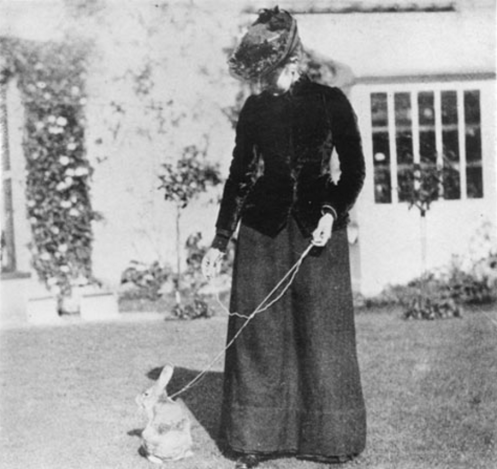
It is plain to see where the rest of Beatrix’s inspiration for all the tall tales lie, knowing her love for the Scottish home in the countryside: Her characters reside in the bodies of wild British creatures. They are natural, can be seen by people nationwide and, more importantly, are close to her audience. Beatrix’s Stories became believably popular almost instantly and offered readers (children and big children) a sense of magic in their everyday lives; it wasn’t a magical lion in a far-away land. It was the secret lives of the animals that lived at the bottom of the garden.
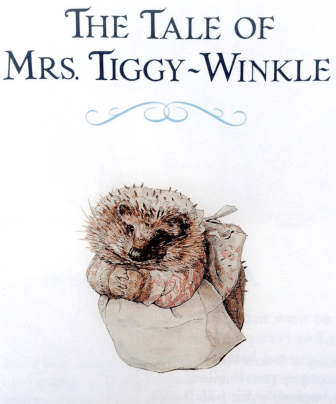
Currently, a personal favourite of mine would be The Tale of Mrs. Tiggy-Winkle, for obvious reasons. In an image above you can see that at home I have a little African Pygmy Hedgehog and his name is Smudge, not one to cuddle he mainly sleeps all day but I still love him. I have recently found myself to be a slight hedgehog obsessive. I’m even wearing hedgehog slippers as I write this (shout-out to Boohoo.com!). Regardless, the story behind Mrs. Tiggy-Winkle is special to Beatrix, too. According to my book, Miss Potter’s hedgehog tale was; “inspired by Kitty McDonald, an old Scottish washerwoman, ‘a comical, round little old woman, as brown as a berry and wears a multitude of petticoats’”. The Tale of Mrs. Tiggy-Winkle is about a hedgehog that takes care of the neighbouring animals in a maternal fashion and even spends a day with a little girl who only later realises that Mrs. Tiggy-Winkle is a hedgehog. Adorable.
Did you know you can even visit Beatrix’s home in the Lake District? It is owned by The National Trust as she was an avid naturist and wanted to give as much as she could to the cause (even her other SIX farms). Her house stands as a ‘writers house museum’ in the scenic Lake District and decorated in a way that Beatrix would have called home. Get it on your bucket list, you might even find Mrs. Tiggy-Winkle and Peter Rabbit!
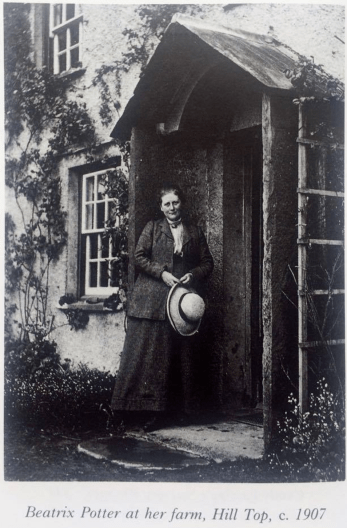
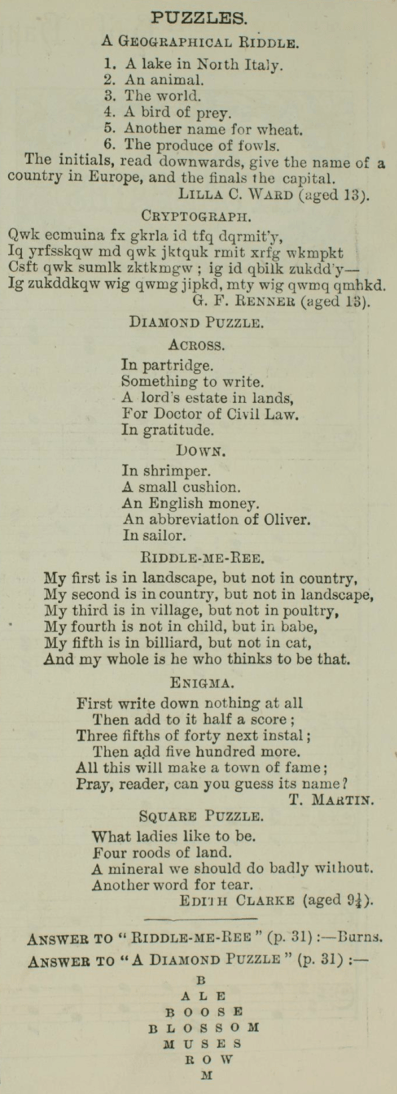
A beautiful place, is Hill Top and I plan to visit one day, however as we near the end of the blog we must consider this week’s ‘Puzzle Page’ from our much loved The Children’s Friend. I hope you managed to complete all the puzzles, check on this posting to see if you were right! Enjoy.
Don’t forget to like, share and comment on your social media and I’ll be seeing you next week.
Jade x
P.S. No cheating!
 LJMU Special Collections & Archives