
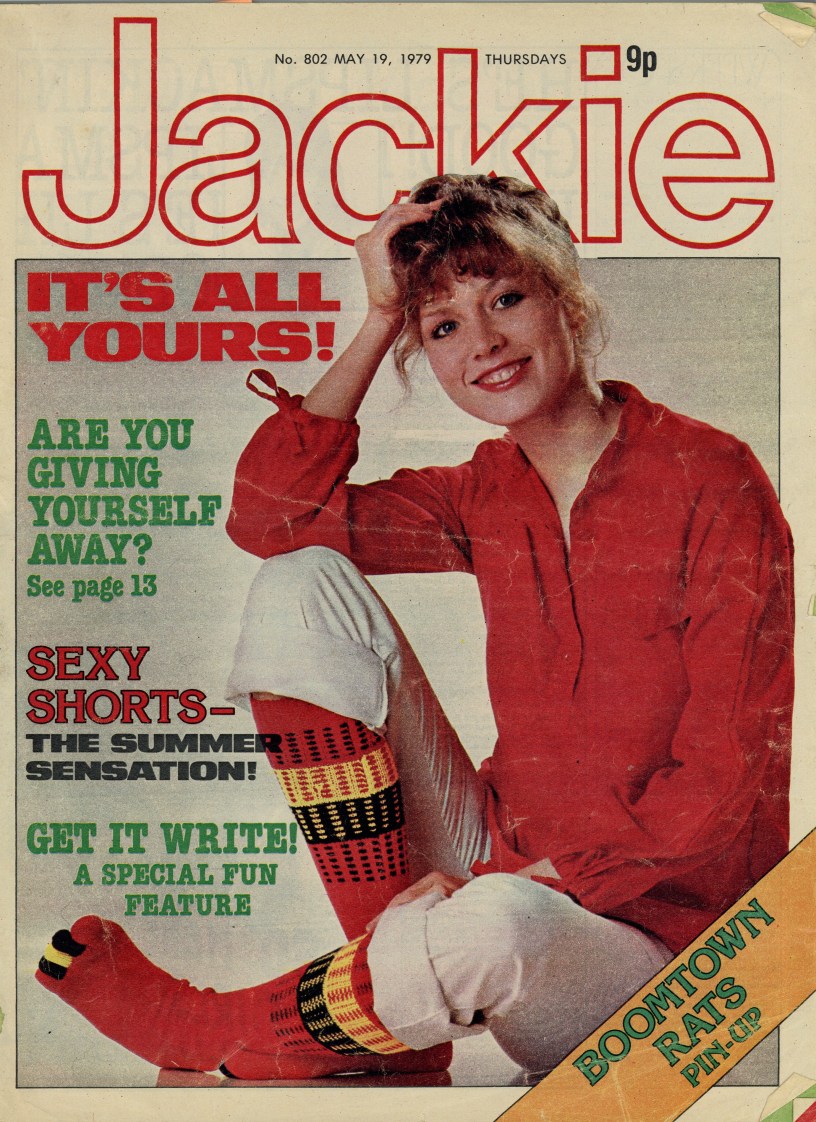
Something I have struggled with during this research process is not being aware of cultural moments, pop-stars, and the low low prices, of the period we are researching, from the 60s through to the 80s. I don’t think I’ve ever seen Jo, who is leading the internship look as disgusted as when I said I didn’t know who Paul Young is…
Therefore, can I truly understand the audience of Jackie? Well yes, I am a woman, a woman who has grown up with girls’ magazines, but on the other hand I have mainly done my growing up online. I didn’t send a letter to Cathy & Clare as an unsure sixteen-year-old but watched Sprinkle of Glitter on YouTube who I still watch now six years later.
I was born in 1996, and therefore was of girls’ magazine reading age in the noughties. Jackie ceased publication three years before I was born and Just Seventeen in 2004, when I was only eight and therefore more into Girl Talk. I grew up on Girl Talk, Mizz, Bliss and Sugar with the later three no longer in publication, possibly due to the effect of YouTube stars. However, from what I remember they all contained the main themes of Jackie – celebrity culture, fashion, beauty, gossip and disguised domesticity in arts, crafts and cooking, but the times were different.
Of course, I could turn to Google, or books, or documentaries, but as feminist media studies teaches, the best way to find out about audiences, especially female ones, is to ask them. I recently wrote my dissertation on Make Do and Mend and sewing as an everyday lived culture for women, and the most important part of the research process was listening and responding. Listening to the women for whom it is an everyday lived culture, not generalising other research to all women or making assumptions on why they enjoyed the practice.
This can be defined as an oral history approach where we allow individuals to recall and retell their own experience of a time giving us a new way to interpret the world, placing lived-experience at the forefront of a narrative.
Oral history upholds much importance for a collection such as Femorabilia. As Summerfield articulates, it can give “voice to the voiceless” which is a notion I really like when the main audience for Jackie was teenage girls (2000, p.92). They are traditionally a demographic who are often ignored or dismissed as being overly emotional and their interests trivialised, or as we may say in 2018 deemed ‘basic’ (this article sums this up better than I can).
Now forty odd years later both myself and the women who read them are beginning to understand what these texts meant and how they shaped the domestic lives of many, and this is through asking people if they have an experience of Jackie.
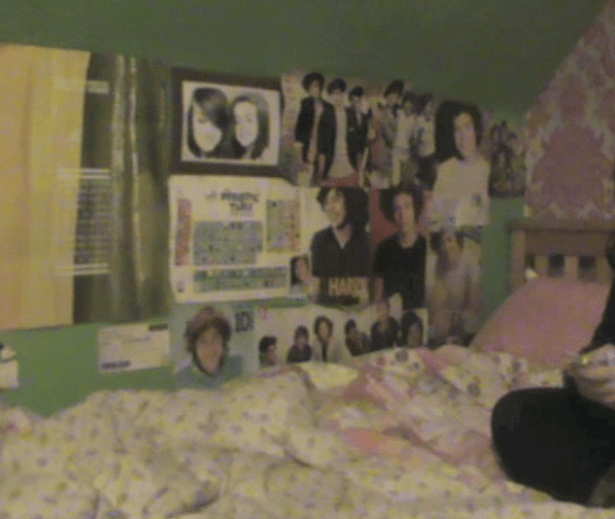
It is when talking to people that I understand the pleasures of the magazines, you can simply hear it their voice and the way their eyes light up with the memories. This week alone I have had a regular customer at my waitressing job become animated when talking to her about Jackie, telling me about her collection in the loft and scorning her husband for even mentioning the idea of getting rid of them. My mum has also told me that Jackie was for ‘prudes’ and she much preferred Just Seventeen; what that says about my mum I do not know. My dad has also re-called how his eldest sisters’ walls were covered with Jackie pin-ups placing emphasis on covered allowing me to picture a room plastered with David Essex, The Bay City Rollers and Donny Osmond; picturing it to be similar to my own teenage bedroom which had floor to ceiling Harry Styles, and weirdly for someone who had no interest in science, the periodic table.
I’ve also had conversations with those who I am working with on the internship. On Monday, Katie brought in her attempt at a 70s Jackie recipe, ‘mushroom clouds’ for us to try. Val then recalled how it was strange they called it this, when there was a moral panic in the 60s over nuclear mushroom clouds. This is only a minor detail, but without Val talking about it, I would have missed it.
One task we have started working on this week has been compiling a reading list. I learn really well through mixing up my sources, moving away from traditional reading and instead watching television and listening to podcasts to consolidate my knowledge. When searching Box of Broadcasts for sources that myself and other students could use to learn about Jackie and the eras it came from (I would recommend Turn Back Time: The High Street and Back in Time For Dinner from The BBC) I stumbled across this clip from Loose Women. In which journalist, Jane Moore, says that everything she learnt about periods was from Cathy & Clare.
(Watch from 20-45 seconds)
The resounding extended “yes” from the audiences, tells me, that for these women, Cathy & Clare was to them, what Sprinkle of Glitter is to me. The person they remember who guided them through tricky periods of life, and even though they’ve now grown out of that time, will always live on in their memories.
Over the coming weeks I hope to talk to more women about the pleasures of the magazines and how it reflected and shaped their domestic reality, from what they learnt to the way their bedroom looked. If you read Jackie and have any thoughts on what it meant to you, or how it shaped your domestic life please leave me a comment down below.
By Rosie Steele.
Bibliography
Summerfield, P. (2000) Dis/Composing the Subject Intersubjectivities in Oral History. In: Cosslett, T., Lury, C. and Summerfield, P. (eds.) Feminism and Autobiography. London: Routledge pp.91-107.
Zoonen, L. (1994) Feminist Media Studies.London: Sage
 LJMU Special Collections & Archives