
This blog post was written by our fabulous placement student from Liverpool University, Shana Taylor.
I am currently a student at Liverpool University, studying for a masters in Archive and Record Management. A requirement of the degree is a two-week archive placement and I have come to the end of said placement at the Liverpool John Moores University Special Collections & Archives. For the past fortnight I have been working on cataloguing a part of the LJMU History Collection and I have to say, I’m a little sad to part from it!
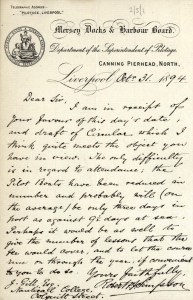
The LJMU History Collection is comprised of records from each of the colleges and schools that eventually merged to form LJMU as we know it today. The records have been gradually deposited at the LJMU archive over a number of years, having spent a large amount of time languishing in store cupboards and filing cabinets throughout the university. Inevitably, records from different schools and colleges have mixed with others and some have been lost altogether. This can make it tricky to arrange the records into a clear filing structure.
An additional obstacle in the arrangement of the collection are the numerous mergers and name changes some of the schools and colleges went through – the Technical College alone went through 7 name changes/mergers in between 1861 and 1970! Once a timeline for the different schools and colleges was established, I divided the collection into series. Each series represents a school or college. From there I could begin cataloguing the records under their correct series.
I have been predominantly focusing on the F.L. Calder College of Domestic Science series and the Nautical College series. The first is the more extensive, in terms of records. Founded in 1875 by Miss Fanny Louisa Calder, the college aimed to provide domestic science education and training to the poor and under privileged. Subjects at the school included needlework, housekeeping and cookery. Fanny Louisa Calder was instrumental in promoting training for domestic science teachers and ensuring the subject was recognised nationally. In 1913 she received an honorary MA degree for her work.
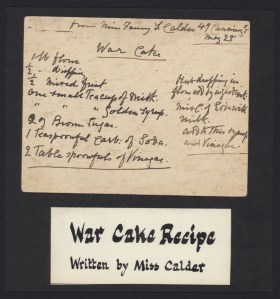
The F.L. Calder records are evidence of the success and impact of the school, charting its progression from its foundation through to its merger with Liverpool Polytechnic in 1970. From student records, to curriculum material, to Fanny Calder’s graduation robes and even a letter from Florence Nightingale, the collection is an insight into the school and the lives of its students and teachers.
The second series I have been cataloguing is for one of the oldest Liverpool colleges, the Nautical College. Established in 1852 as the Liverpool Nautical School, its aim was to prepare its students for a career at sea. Although at first faced with some scepticism – “Is the time really come when our ships are to be officered by professors and not sailors?”[1] – the college went on to be a success.
The challenge with arranging the Nautical College records lies in the college’s merger with the School of Science, Technology and Art in 1901. Luckily the Nautical College Department was formed within the new college merger, making it easier to ensure all records for all things nautical are kept together. The series includes student admission registers, exam results, lecture notes and Headmaster reports – including those of the college’s first Headmaster, James Gill. These, plus many more records, document the history of an important maritime college and its role in shaping the LJMU of today.
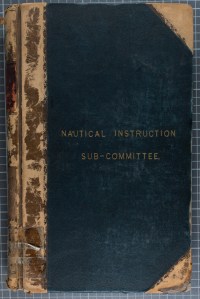
I have thoroughly enjoyed getting to know more about the history of LJMU. Prior to this placement, I did not know of the many schools and colleges that later merged to form LJMU. Working with the collection has allowed me to put skills learnt from my MA into practice and I have enjoyed the opportunity to get out of the lecture theatre and into a working archive. An added bonus is learning about pioneers like Fanny Calder and seeing records that bring their schools and colleges to life. The historian inside me is happy!
Completed sections of the catalogue of the LJMU History Collections will soon be available on our online catalogue at https://archives.ljmu.ac.uk/
Coming soon: Educational Pioneers: Fanny Calder, James Gill and the making of a modern University
[1] Quote from a letter to the Editors of the Liverpool Mercury in 1894. See: Roger Webster and Shonagh Wilkie, The Making of a Modern University – Liverpool John Moores University, (London:2017), p.62
 LJMU Special Collections & Archives