
As Everyman Theatre celebrates their 59th birthday, we reflect on their history of Black writers and performers for Black History Month.
From the very beginnings of Liverpool’s The Everyman Theatre in 1964, the company set out to bring new writing and experimental work to the city. Despite multiple financial crises through the early years, the founders were still not afraid to platform Black actors and plays which addressed race in ways that some White British audiences of the 1960s and 1970s found controversial.
From the 1980s onwards, the company additionally aimed to bring Black writing and performance to wider audiences, introducing a Black Trainee Director’s Bursary initiated by the Actor’s Centre at the Everyman’s Hope Street Project. These examples from the Archive highlight just a few of the productions which demonstrate the long tradition of support for Black actors, directors, and writers at The Everyman.
The archival records of Everyman Theatre are available to view in person at LJMU’s Special Collections and Archive, or online via our catalogue. Many of the photographic records from the collection were recently digitised as part of the oversize scanning project in April 2023. These can be viewed using the reference EVT/P*. Additional research has been taken from Ros Merkin’s 2004 publication Liverpool’s Third Cathedral: The Everyman Theatre in the Words of Those Who Were, and Are, There, which is also available to view at Aldham Robarts Library or in the Archive.
Jack of Spades, 1965-1966
Jack of Spades by Ken Hignett (later known as Sean Hignett) and Norman Beaton, directed by Terry Hands, is considered a ‘lost’ musical. Written for the Commonwealth Arts Festival, it featured Caribbean songs in a celebration of cultural heritage. Although all of the Commonwealth Arts Festival performances dealt with these themes, Jack of Spades was the only musical to explicitly deal with stories of immigration to the UK.
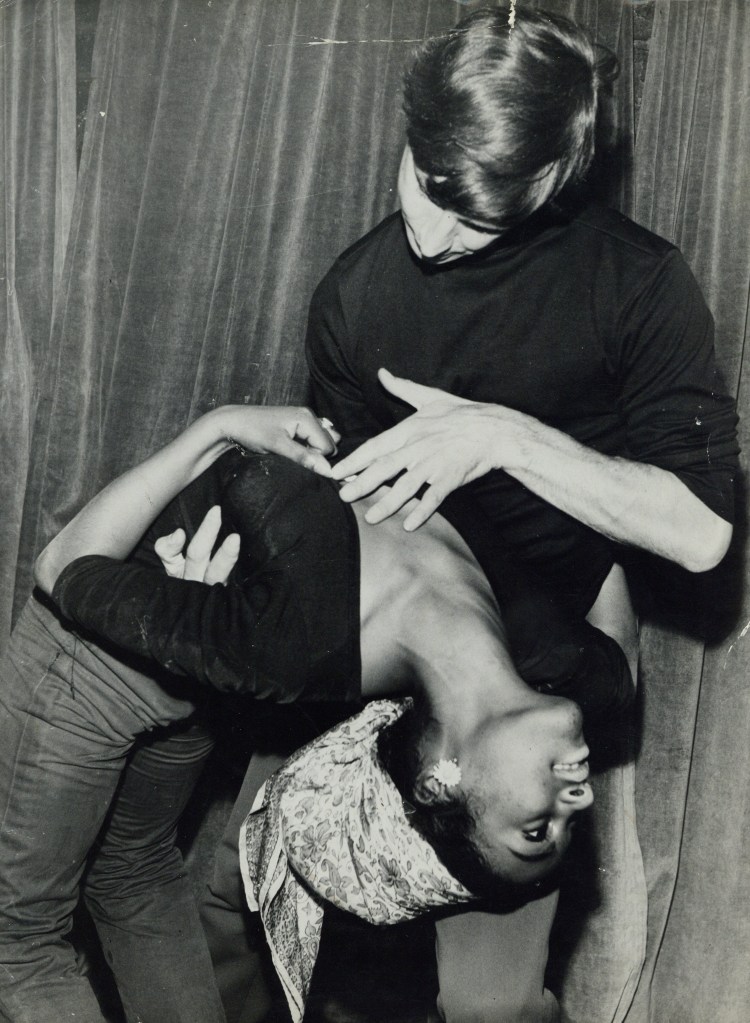
The story is set in Liverpool, where title character Jack arrives from Guyana and experiences both social deprivation and ingrained racism in the poorest areas of the city. He falls in love with the daughter of a local MP, and experiences racially motivated police brutality. At the time of production, Everyman Theatre experienced threats and damage to property due to the portrayal of interracial relationships in the promotional material outside the Theatre.
The only known copy of the script is currently held at the British Library. Unfortunately very little of this production was kept to be deposited into the Archive at LJMU, and only this one production photograph survives. Use reference EVT/P/381 to access a copy via our catalogue.
The Disco Queen, 1980-1981
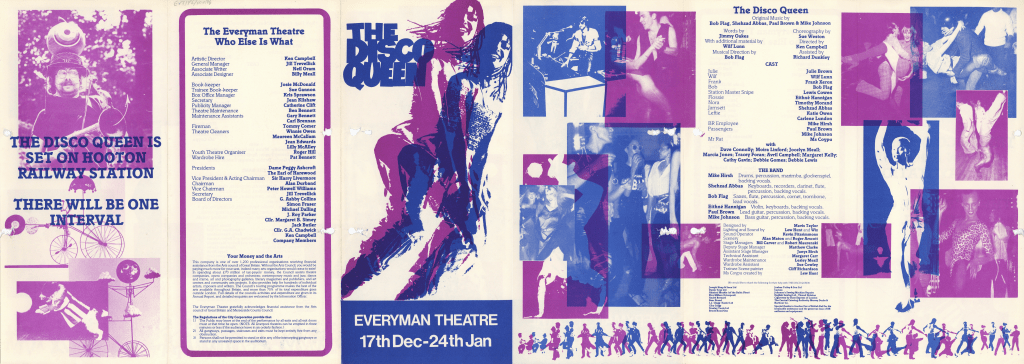
The Disco Queen, directed by Ken Campbell and starring Julie Brown, World Disco Champion, was an exuberant Christmas show staged as an alternative to pantomime. Campbell met Brown by chance on a train and asked her to choreograph and perform for the show. The dance movements of disco may have provided an escape from the climate of inner city economic uncertainty in Liverpool at that time, a chance to dress up, have fun and forget daily troubles. Use reference EVT/P/148 to access photos of The Disco Queen, EVT/PG/106 for the programme, and EVT/POS/98 for the promotional poster.
Two Can Play, 1984-1985
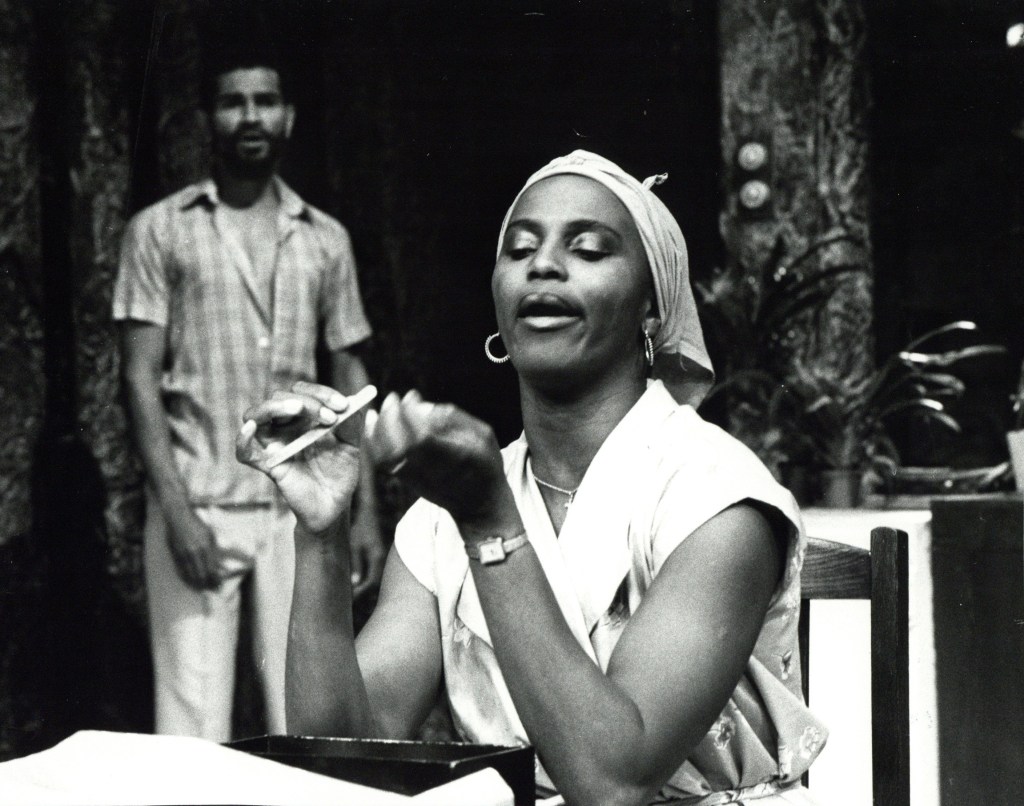
Two Can Play by Trevor D Rhone was a two-handed comedy, set in Jamaica in 1970 against a backdrop of political upheaval, food shortage, and unemployment. Jim and Gloria send their children to the USA to try to establish an immigration scam, where Gloria goes to visit them and discovers that there are ‘two Americas.’ The experience transforms her, and she rises to the challenge to return to Jamaica, finds life there more appealing than before and makes Jim pursue and win her love all over again.
Guardian critic Robin Thornber wrote: ‘While it’s very specifically placed in a Jamaican context, his wry observation of the way that men and women relate applies to us all.’ Use reference EVT/POS/129 to view the promotional poster. This production photo featuring Wyllie Longmore as Jim and Anni Domingo as Gloria is not yet catalogued.
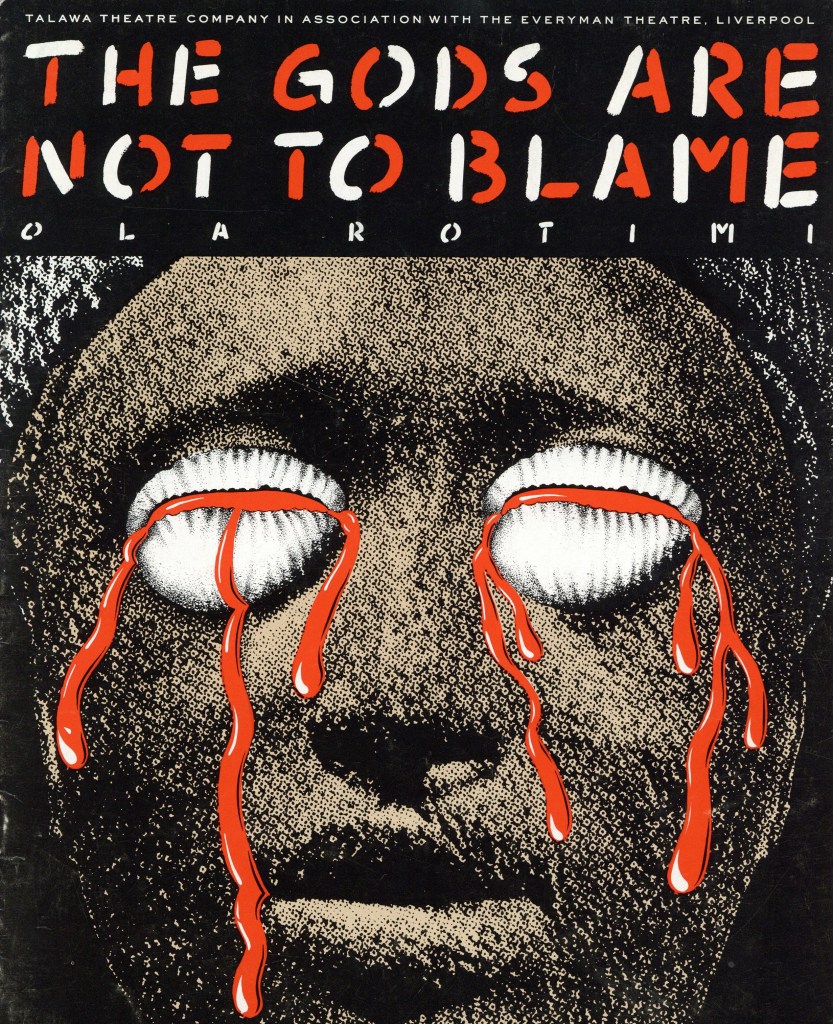
The Gods are not to blame, 1989-1990
The Gods are not to blame by Ola Rotimi was written in 1968 as a Nigerian adaptation of Sophocles’ Oedipus Rex, and was presented at the Everyman Theatre by the Talawa Theatre Company in 1989-1990. Talawa wanted to bring African influences to Black British Theatre, feeling that it had always been more influenced by Caribbean culture. The play examines themes of culture; social structures; colonialism and its impact; and myths, language and dances from Yoruban culture. Use reference EVT/P/207 to access photos of The Gods are not to blame and EVT/PG/267 for the programme.
Antony and Cleopatra, 1990-1991
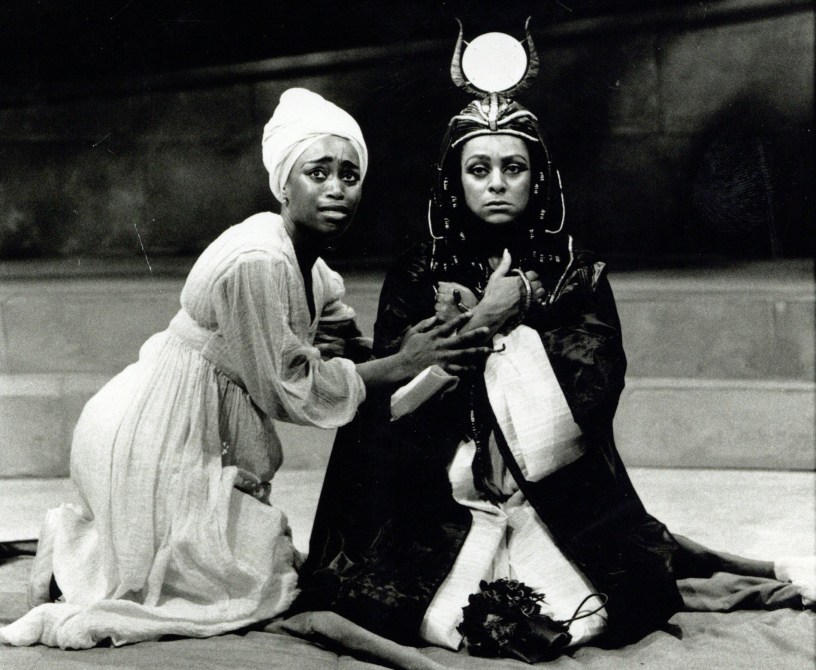
The Talawa Theatre Company’s adaptation of Antony and Cleopatra, which came to the Everyman Theatre in 1990-1991, was the first British Shakespeare production with an all Black acting company and a Black director.
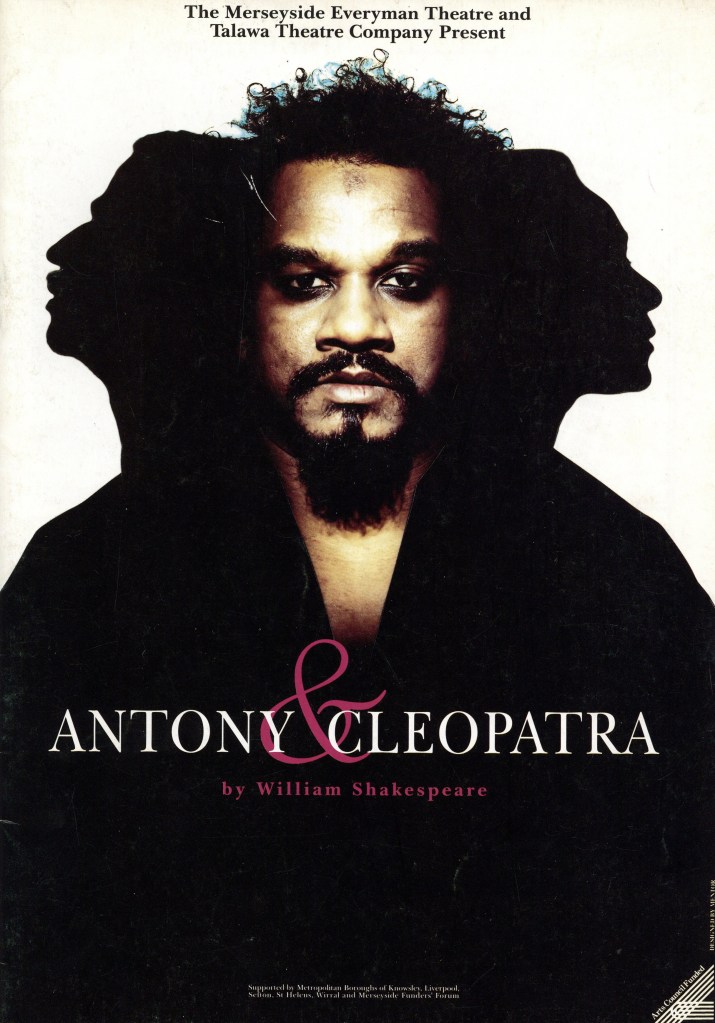
When Talawa returned to the Everyman, they shared resources to enable Everyman Theatre to put on a more ambitious programme at a time when theatre grants were at a standstill. The production was planned before the declaration of war on Iraq, but the programme notes state that the images of appropriation, greed, colonialization and Black foot soldiers fighting Black foot soldiers were in their minds as the company approached the text.
Yvonne Brewster, founder and artistic director of Talawa noted that ‘There were fears that no one would turn up…the company went out into the community introducing themselves to every black person they saw, inviting, pleading with them, to walk on up to the Everyman where they would find something to their liking… We were able to do the official outreach work in L8 this time, which reaped us a really great mix in the auditorium, more dynamic, more involved than anything we had experienced in London.’ Use reference EVT/P/216 and EVT/P/217 for photographs of the cast and production, and EVT/PG/268 for the programme.
Soul Sister’s Melody, 1992-1993
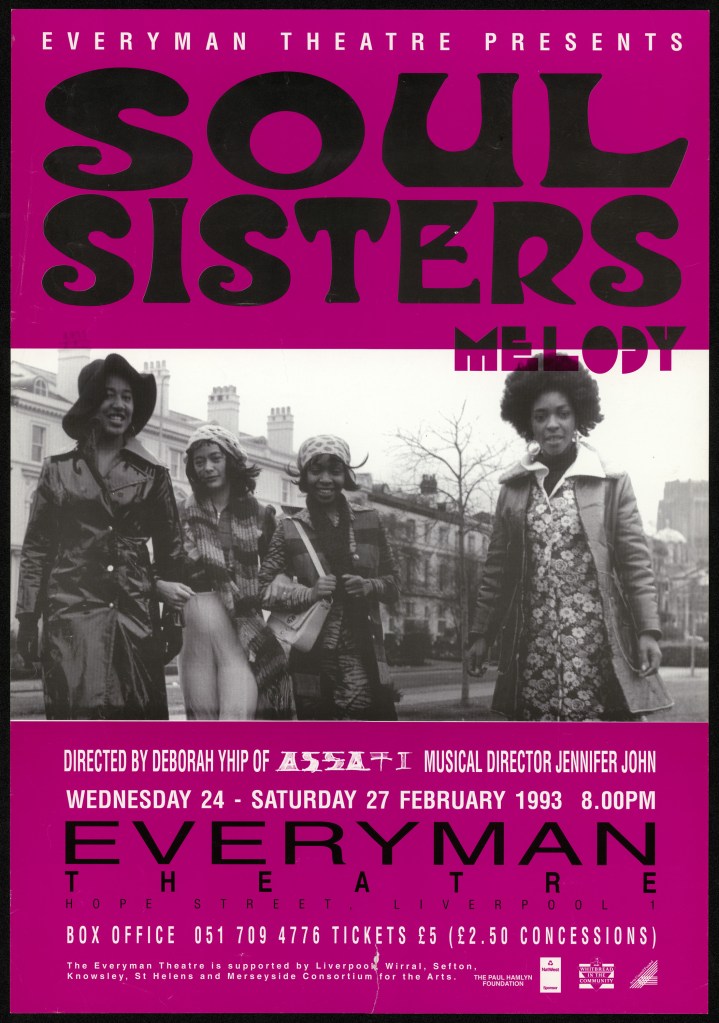
Soul Sister’s Melody writer and director Deborah Yhip was given five and a half weeks to research, write, and present a musical play about Black women’s experiences in Liverpool. The company collected oral histories from local women who recalled the fashions, music and clubs of Liverpool in the 1970s. Soul music at that time had begun to reflect the struggles of Black life and the soundtrack to Soul Sister’s Melody traces these influences, and emphasised the strong Black female vocalists.
Dave Clay notes in the programme that ‘the 1970s was a period of establishing a sense of pride, black pride.’ Despite the racism, police oppression, and riots across Britain, around Granby Street in L8 there was a strong multiracial community which advocated for each other. Soul Sister’s Melody programme is itself a recording the memories of the Black women who lived through the 1970s in Liverpool and influenced this play. Use reference EVT/P/393 to access photos of Soul Sister’s Melody, EVT/P/172 for a programme, and EVT/POS/185 for the promotional poster.
Blues in the Night, 1994-1995
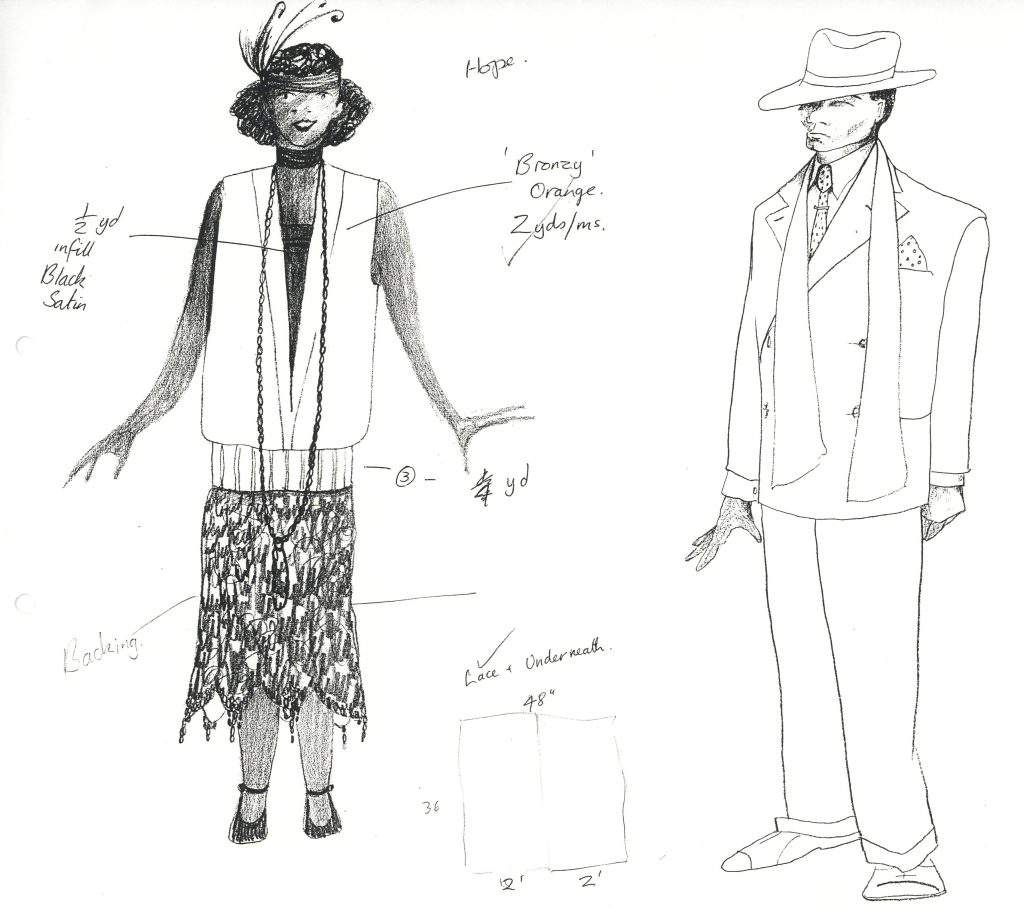
After further financial problems, the Everyman Theatre closed for a period and reopened in October 1994 for its 30th birthday with a musical with no dialogue: Blues in the Night by Sheldon Epps.
Within Blues in the Night, three women come together in a hotel room in Chicago in 1938 and, along with the male bar singer, find affirmation in the music of Duke Ellington, Bessie Smith, Johnny Mercer, Harold Arlen, Vernon Duke, Gordon Jenkins and Alberta Hunter. It was originally staged off Broadway by Sheldon Epps and Gregory Hines. The Everyman cast included Sarah Jane Morris, who sang with The Communards. Use reference EVT/P/253 to access photos of Blues in the Night, EVT/PF/959 for caricatures of the performers, EVT/PF/1634 for costume designs, and EVT/POS/199 for the promotional poster.
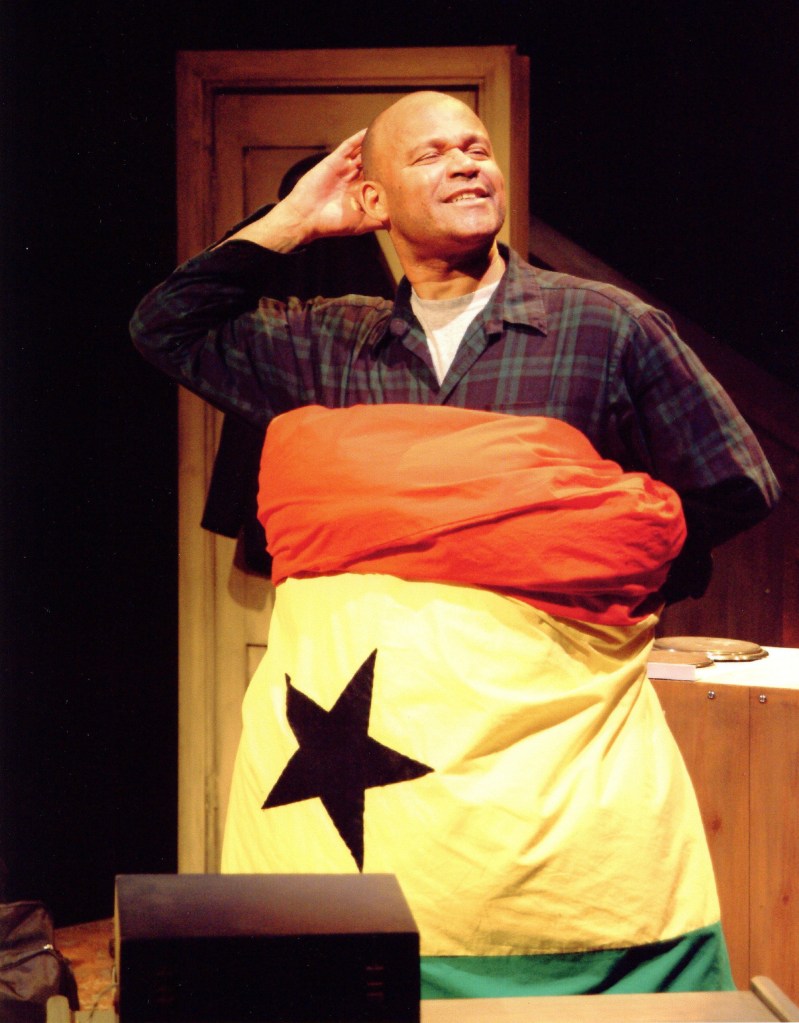
A little pinch of chilli, 2003-2004
A little pinch of chilli by Maurice Bessman was a one-man comedy about an unemployed ship’s cook. It starred Louis Emerick, who also played Mick Johnson in Brookside, and told the story of Godfrey, who is pushed out of his job by the influx of cheaper European labour. Use reference EVT/P/327 to access photos of A little pinch of chilli, EVT/PG/318 for a programme, and EVT/POS/379 for the promotional poster.
Yellowman, 2003-2004
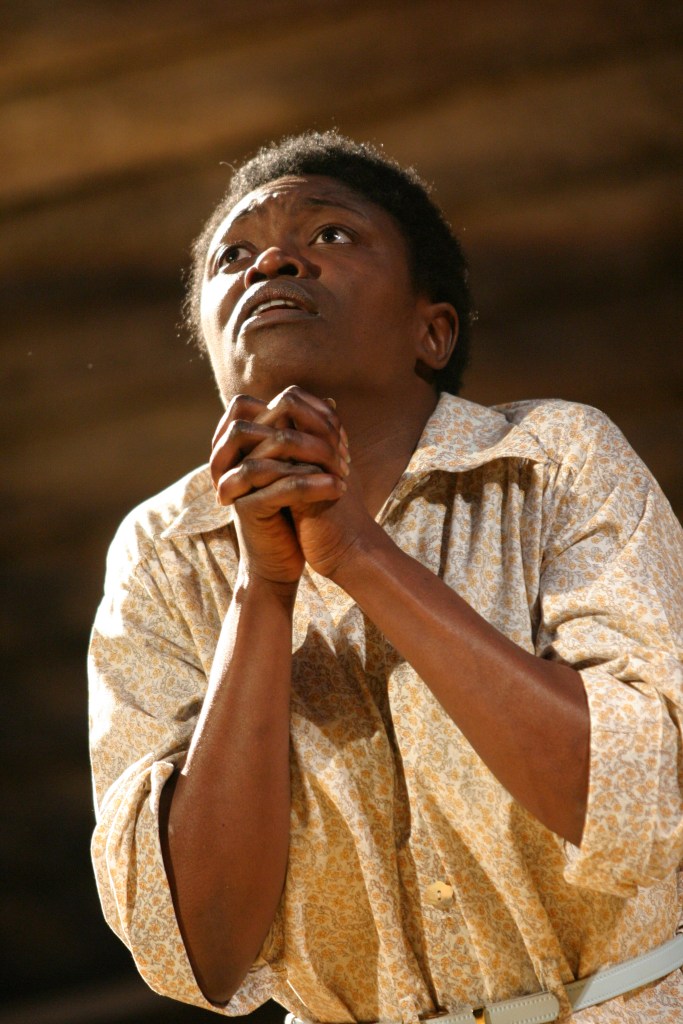
Yellowman by Dael Orlandersmith is a Pulitzer-prize finalist play which premiered at the Everyman Theatre. It told the story of Eugene and Alma, born on the islands off the coast of South Carolina. It addressed issues of race, class, and colourism within Black communities through their family stories. Use reference EVT/P/62 for photos of the original 2003-2004 Yellowman, EVT/P/82, and EVT/P/83 for the 2006 production, EVT/PG/324 for a programme, and EVT/POS/392 for a promotional poster.
For more records of each of these plays, just search the name of the play on our online catalogue. This list is by no means exhaustive, and we welcome you to search or enquire after more information on the history of Black theatre in Liverpool.
Next year Everyman Theatre celebrates its 60th anniversary with LJMU’s Special Collections and Archives. Keep an eye peeled for more theatre history in 2024!
Christopher Olive, Bicentenary Project Archivist 2023
This blog post was edited in May 2025 to update reference numbers and links for records on our catalogue.
 LJMU Special Collections & Archives