
This blog post by one of our interns explores how body image is represented within 1970s-1980s magazines aimed at girls like Jackie and Just Seventeen from within our Femorabilia collection. Click here to see more from our interns on their project, and here to view details of their physical exhibition.
If you asked someone to describe what body image issues are in simple terms, they might say something like “being insecure about your body” or “feeling as if you are not good enough until you look a certain way.” Although body image issues are common today, they were also prevalent within 1970s and 1980s, during which time television and magazines popularised looking a certain way and having a certain body type to feed on the insecurities of the consumers.
Reinforcing Body Insecurity
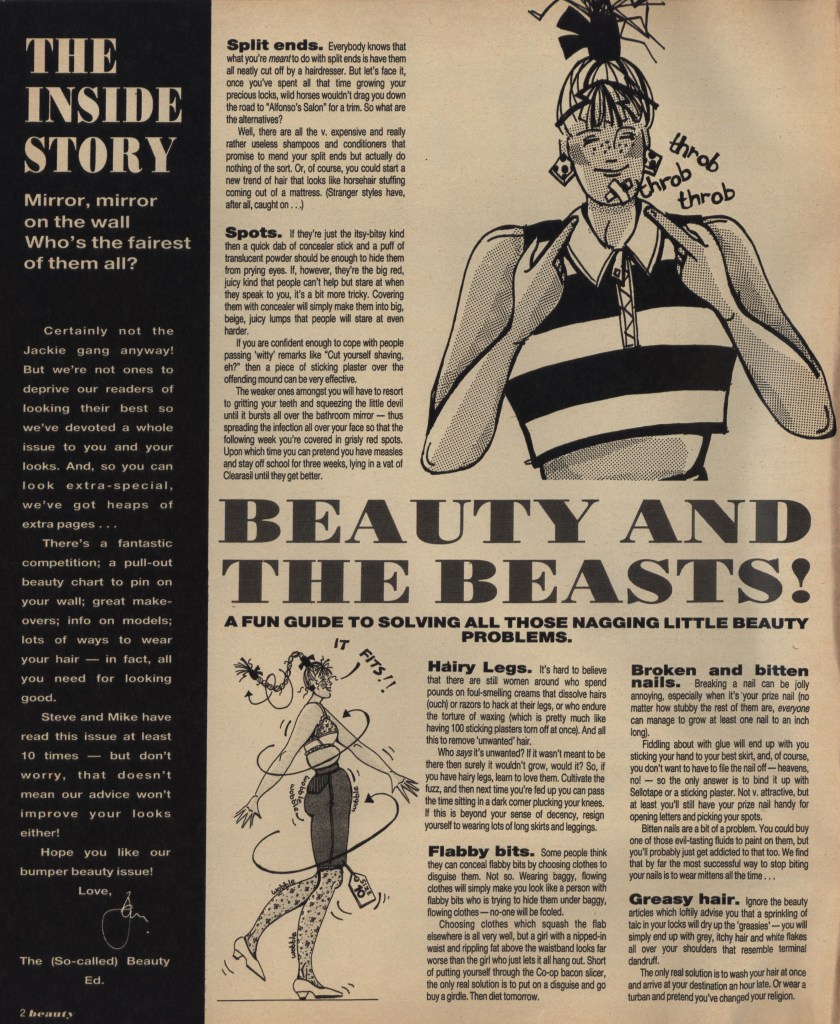
During our research, we noticed that many articles, particularly in the early 1970s, focused on the body – sharing tips on how to have the perfect body for summer, or use makeup to ‘get the guy,’ including home remedies to change features of one’s body in order to fit in with the crowd.
This constant messaging may have created or reinforced insecurities in some young readers that they are not good enough as they are: they needed to be prettier, slimmer, follow trends in dress, or wear certain make up to be worthy.
Responding to Readers’ Body Image Concerns
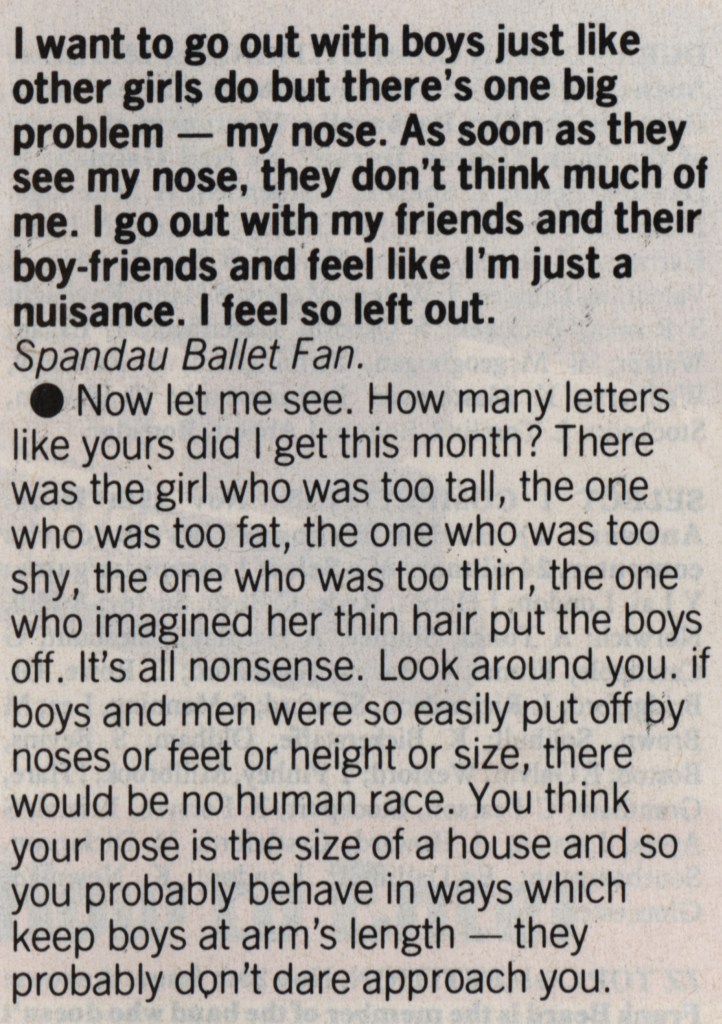
These insecurities are clearly reflected as a prevalent theme in the advice section for Just Seventeen, within which many girls expressed a struggle with liking their bodies as they are. Common questions received by the magazine related to: feeling insecure about body parts; concerns about boys liking them or being bullied at school; and comparing themselves to models and celebrities.
Although the editors’ responses were often supportive, and encouraged girls to embrace their bodies as they were, this messaging was conflicted when presented alongside articles about how to diet to lose a few pounds within the month.
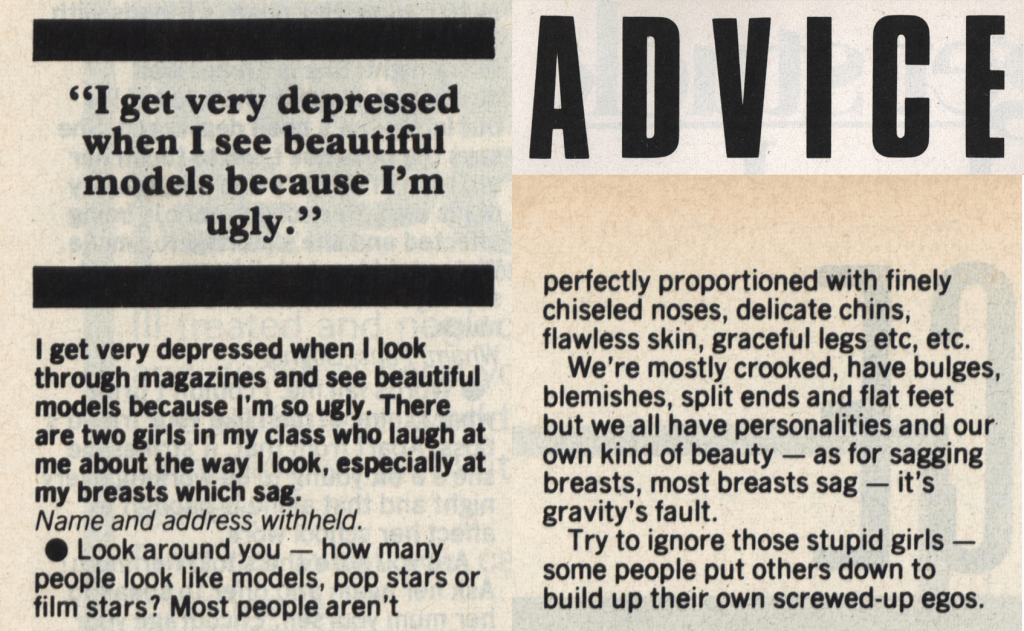
Many girls expressed worry over how they aren’t skinny enough, or a want to change a specific body part. Sometimes this stems from a need for social and romantic connections, and being scared that if one does not fit in set beauty standards, one might not be accepted in the social group. In this response, the editor explained that we all have different body types and that is okay – what matters is our personality and behaviour.
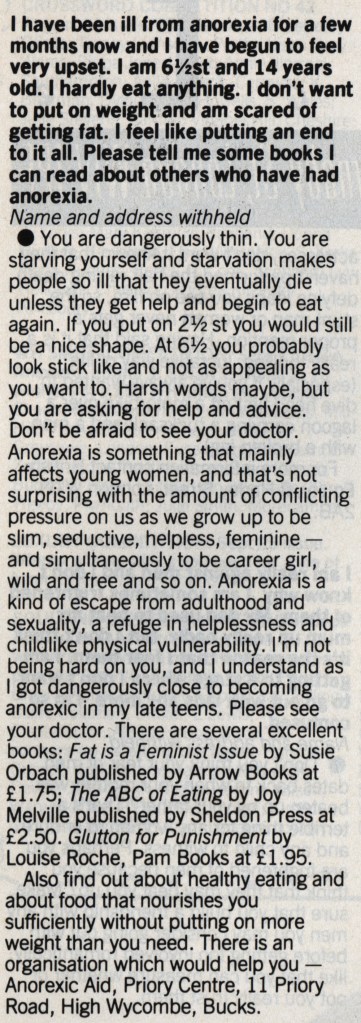
This reader also directly mentions feeling ‘depressed’ after comparing themselves to beautiful models, including those shown within the magazines they were writing to. This highlights the lack of adequate representation of women with different shapes and colours both within Jackie and Just Seventeen, and in popular culture more broadly.
Eating Disorders
Towards the end of the 1970s and in the 1980s, Jackie and Just Seventeen began publishing more articles to raise awareness about the growing risks of anorexia, an eating disorder, and signposting professional bodies who may have been able to help readers.
Although editors did sometimes urge their reader to seek medical help, their brief responses to readers’ concerns also lack a professional understanding of disordered eating, and highlight a lack of recognition of the magazines’ own potential impact on their young readers.
Conflicting Attitudes to Addressing Diet Culture
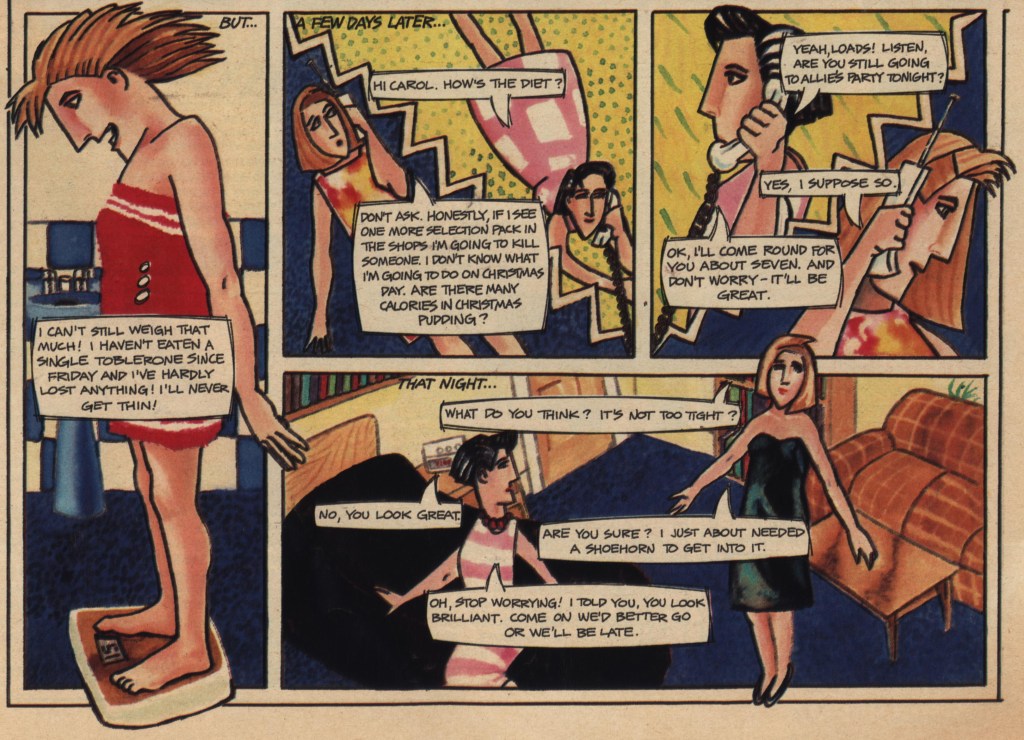
This 1987 comic strip is one example of how Jackie contended with current diet culture, reflecting the unhealthy cycle of frustration in a satirical, albeit not overly critical, way.
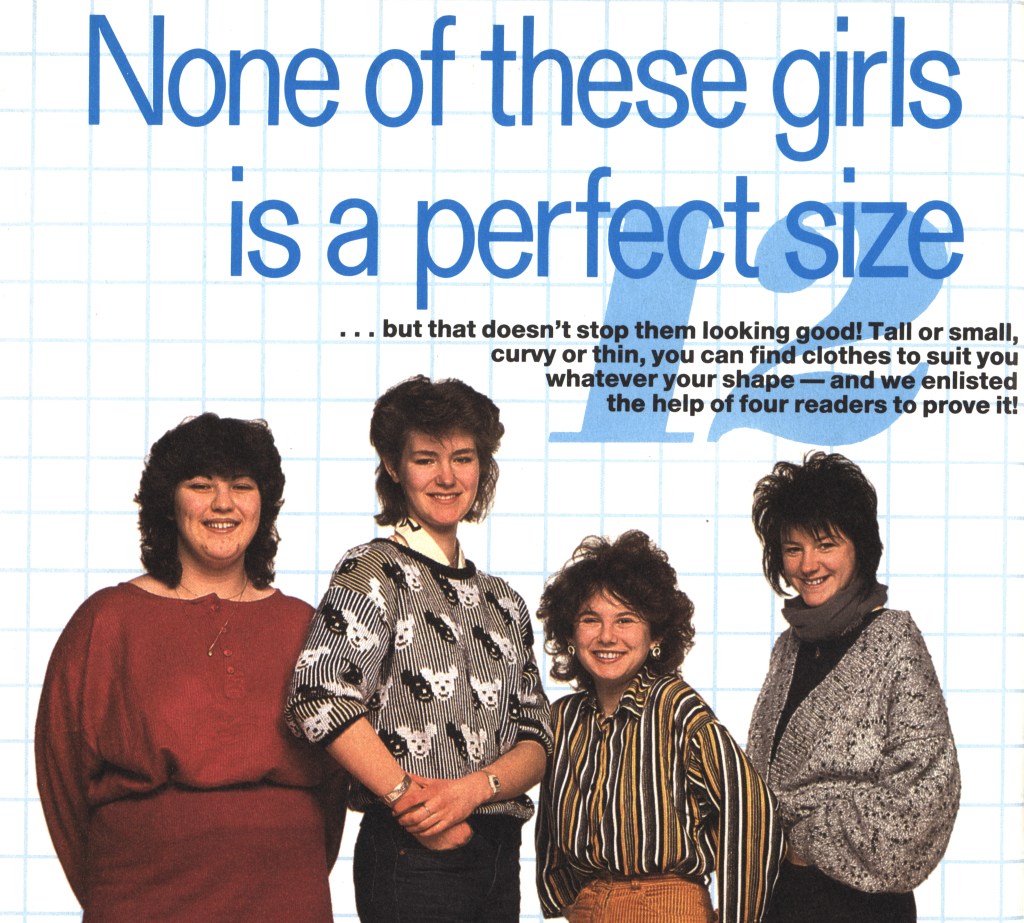
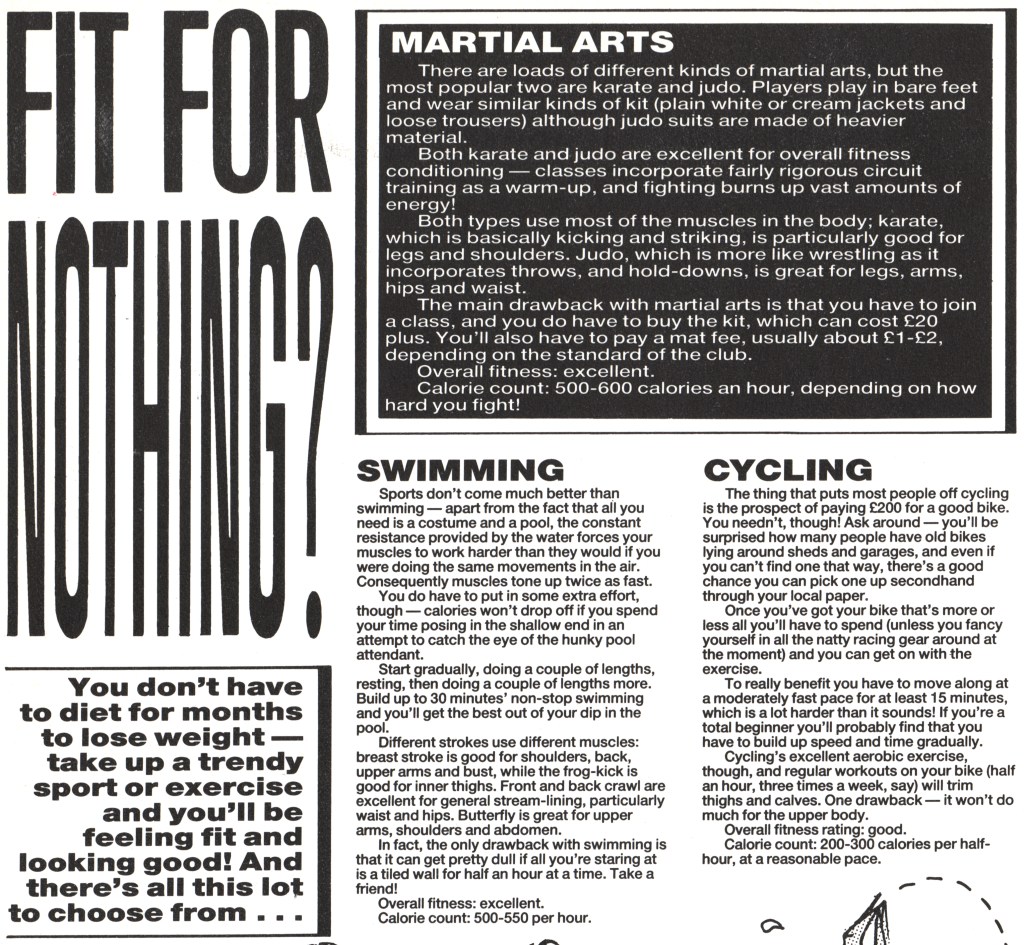
Towards the end of the 1970s and into the 1980s, articles appear more frequently to encourage body acceptance – a precursor to today’s body neutrality movement. Despite this, conflicting attitudes were also present when it came to challenging diet culture. Articles which promoted different body types as normal and healthy were presented alongside other articles on how to lose weight, encouraging young readers to take up sports with a list of how many calories they should expect to burn whilst doing so.
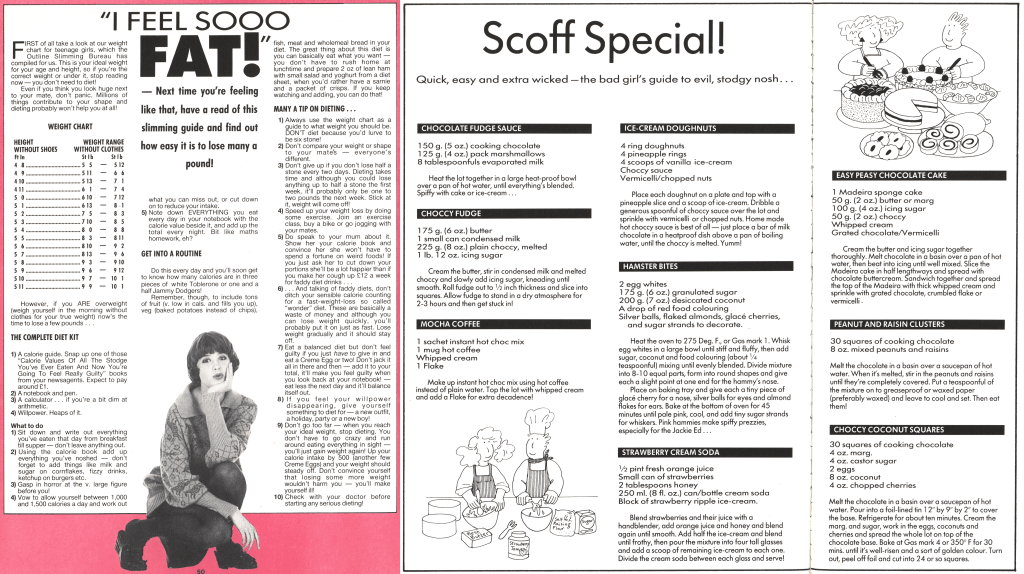
Another example suggests that next time you ‘feel sooo fat!’ you should ‘have a read of this slimming guide and find out how easy it is to lose many a pound!’ alongside a suggested weight chart was only a few pages away from the ‘Scoff Special!’ guide to make recipes such as chocolate cake, ice cream doughnuts, and choccy fudge.


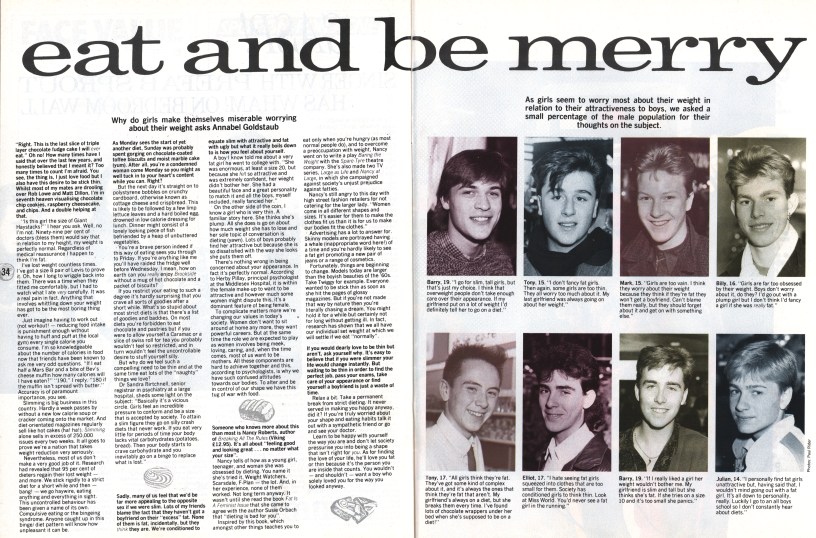
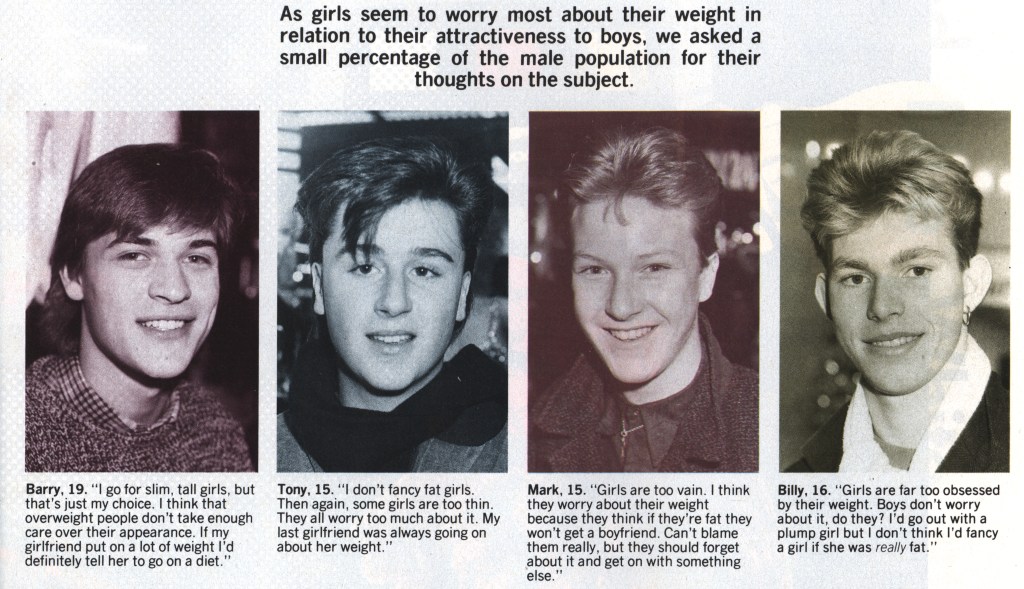
These conflicting attitudes were even present within single articles. ‘Eat and Be Merry’ discusses why ‘girls make themselves miserable worrying about their weight,’ to fit into societal beauty standards. Although the author encourages readers to recognise their worth is not dependant on their size, this advice is contradicted by the profiles of teenage boys with their opinion on weight in relation to attractiveness in girls within the same double-page spread, with no critique or response offered by the editors.
Jackie and Just Seventeen of the 1970s and 1980s played a role in upholding and reinforcing beauty standards, as well as to encourage body acceptance. The differing opinions offered within each magazine evidences the changing and conflicting attitudes held by popular culture at that time, as both a social reflector, influencer, and reinforcer. Body image concerns were common then as they continue to be today.
Vrunda Chauk, Femorabilia Intern 2024
 LJMU Special Collections & Archives