
This blog post was written by one of our interns for the collaborative research project between LJMU Special Collections & Archives, LJMU Media, Culture, Communication, and LJMU Psychology, to examine the social themes related to mental health within 1970s and 1980s magazines for women and girls. Click here to see more from our interns on their project, and here to view details of their physical exhibition.
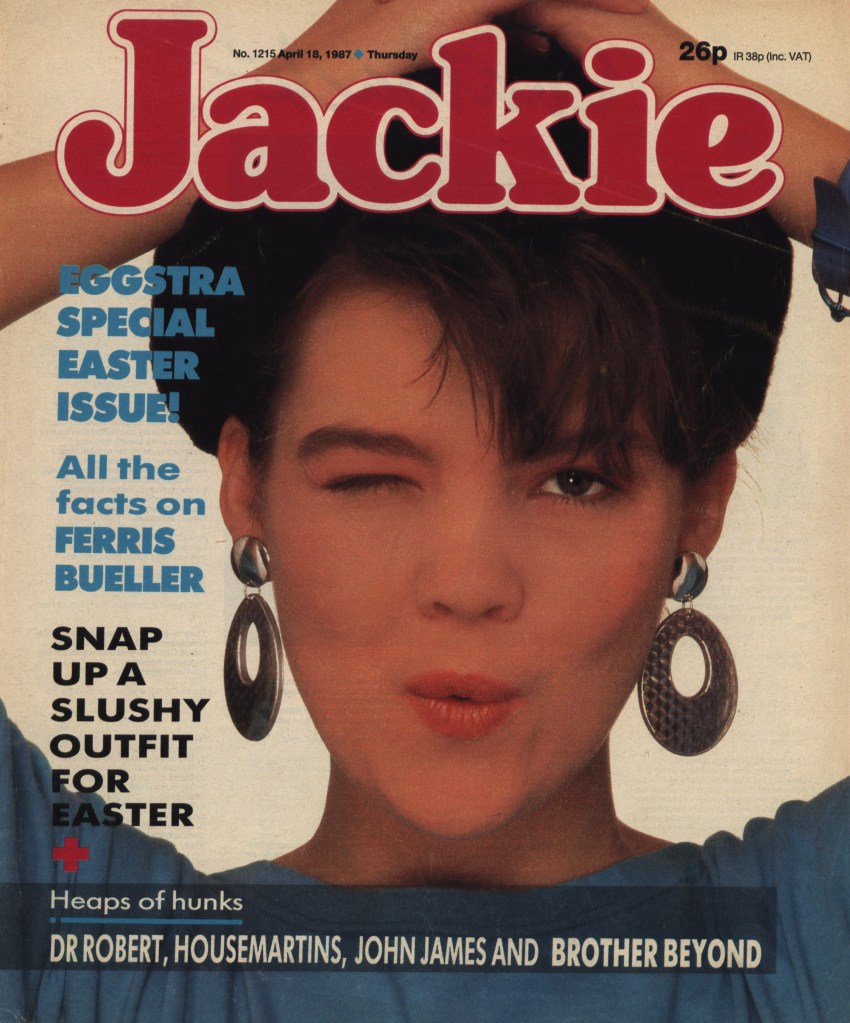
Jackie, Just Seventeen, and Boyfriend were some of the most popular magazines aimed at teenage girls from the 1970s and 1980s – do they ring a bell or bring back any nostalgia for you? You might have been an avid reader yourself, or heard about them from your mother or someone you know. These magazines were not just ephemeral – they played a vital role in shaping the minds of young readers, and studying them can help us better understand cultural phenomena of the time.
Big Sister Advice
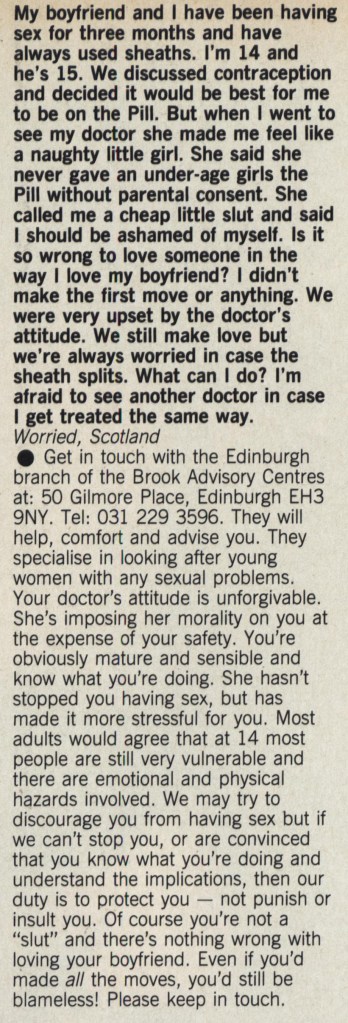
While reading these magazines in LJMU Special Collections & Archive’s Femorabilia collection, I was mostly drawn towards the question-and-answer advice columns, particularly within Just Seventeen. These sections included text submitted by readers and a response by the editors, shedding light on the various problems encountered by teen readers during that time as well as how the adults reading their letters would respond to provide advice. Being a magazine aimed mostly at teenage girls, many of the questions revolve around fashion, dating, doing well in school, career aspirations, and relationships with parents, but plenty of the submissions also discussed the more serious topics readers were dealing with in the 1970s and 1980s including sex, periods, depression, drug use, suicidal ideation, and LGBTQ+ acceptance.

Without access to the internet and search engines like Google, magazines were another space where readers could turn to for information about any topic, or write to to seek more specific answers. The editors also often provided addresses and contact information for third party organisations who could offer more help and support for specific issues – one example includes a 17 year old Pakistani reader whose parents have arranged her marriage, who writes into Just Seventeen for publication in the 10 Jan 1985 issue. The editor is able to refer her to not only the Women’s Aid Federation, but also the contact details for an ‘Asian woman lawyer’ who may be able to rerefer them to regional legal contacts.
A Radical Third Space for Teens
Like the advice sections, a variety of topics were covered within the articles of the magazines, showing how the magazine acted as a third space for influencing, reinforcing, or reflecting the opinions of young readers outside of school and the home, possibly like having a conversation with an elder sister they could trust.
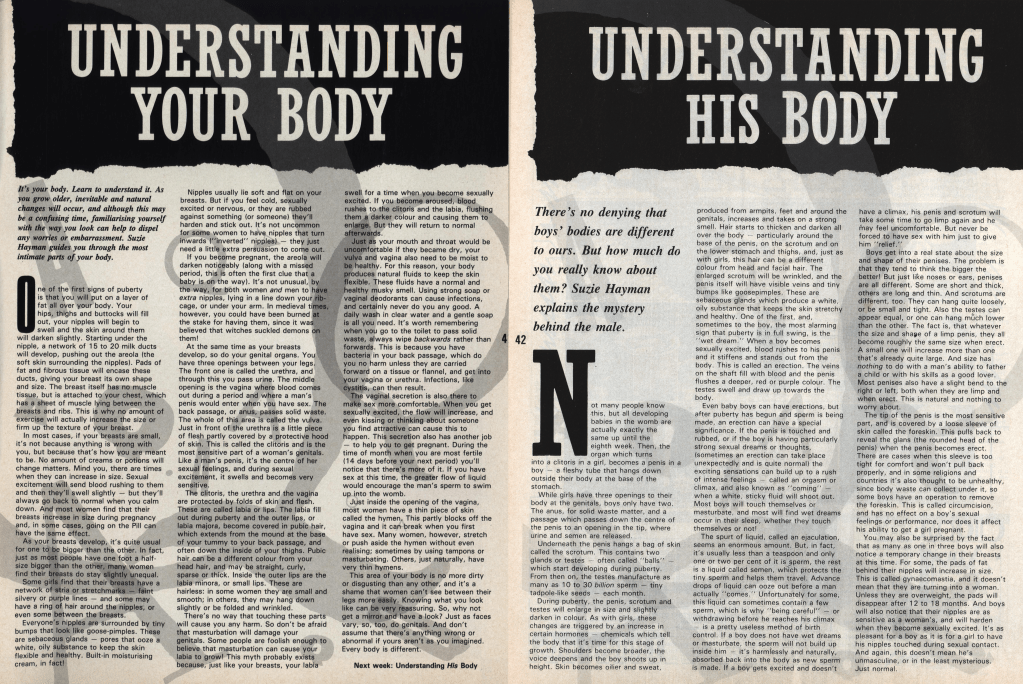
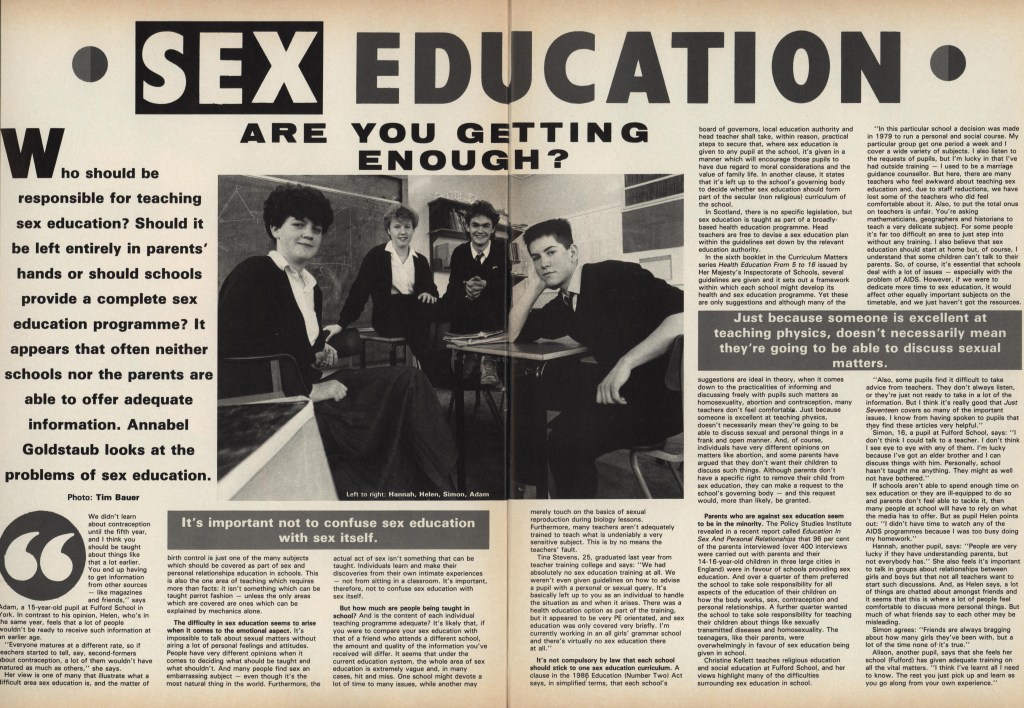
They were radical in their approach to talk about taboo topics, providing information for teenage readers on issues which they may not have been able to discuss with parents or teachers, and even amongst friends. This included sex education, and frank conversation pieces surrounding masturbation, male and female sexual health, contraception, cervical cancer, AIDS and more, without censorship using easy-to-understand language. This information might have had a strong positive impact on teenage girls (and boys) to understand and take care of their bodies where sex education at school or from their parents was limited.
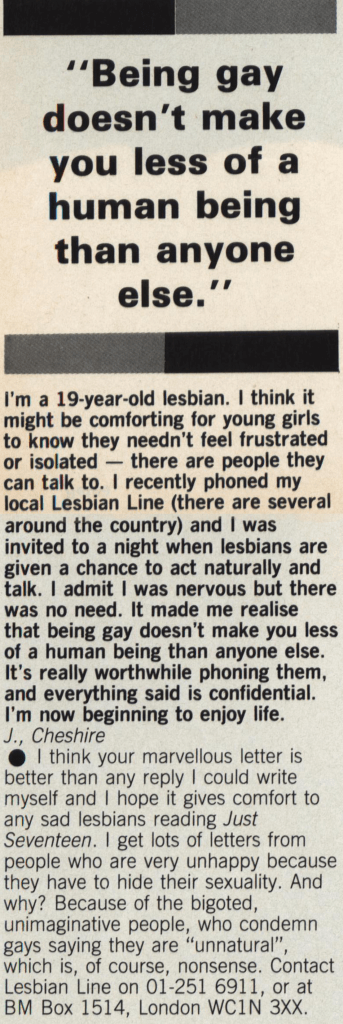
Just Seventeen also championed active support for LGBTQ+ readers, accepting them and advising them to come out or seek support. This provided young people with an alternative route to receive help or discuss life with a supportive adult in the 1980s when, under Section 28, teachers were forbidden from discussing any topics related to LGBTQ+ life.
Similarly, they also addressed political moments and made them relevant to teen life, such as racism and the Handsworth, Brixton, and Tottenham riots.

Disproportionate Emphasis on Beauty and Male Approval
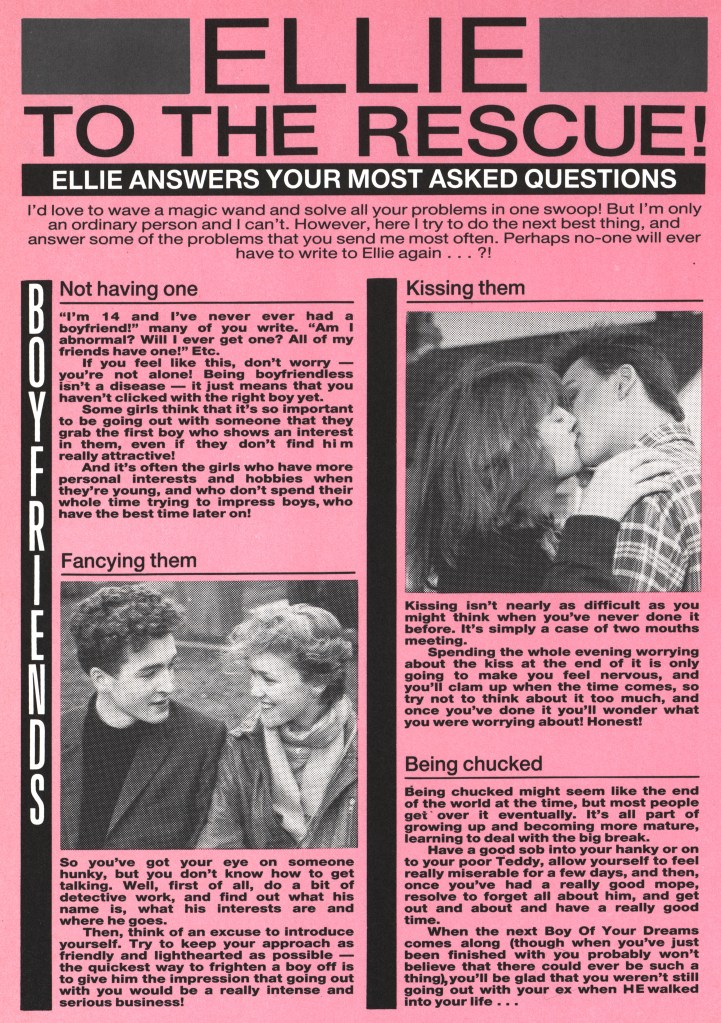
Glancing through Jackie, you can find many article titles related to boys and relationships, such as ‘Love me forever,’ ‘Sweep him off his feet,’ ‘Are you a shoulder to cry on?,’ ‘Can you read his mind?,’ ‘He loves me, he loves me not,’ and so on. While there’s nothing wrong with giving dating advice and providing a space to discuss relationships, the disproportionate number of articles dedicated to ‘how to’ guides to date boys failed to provide a complete picture of what a teenage girl’s life looks like. These articles also often directed girls to follow a certain beauty standard and provided an excess of advice on getting the right guy.
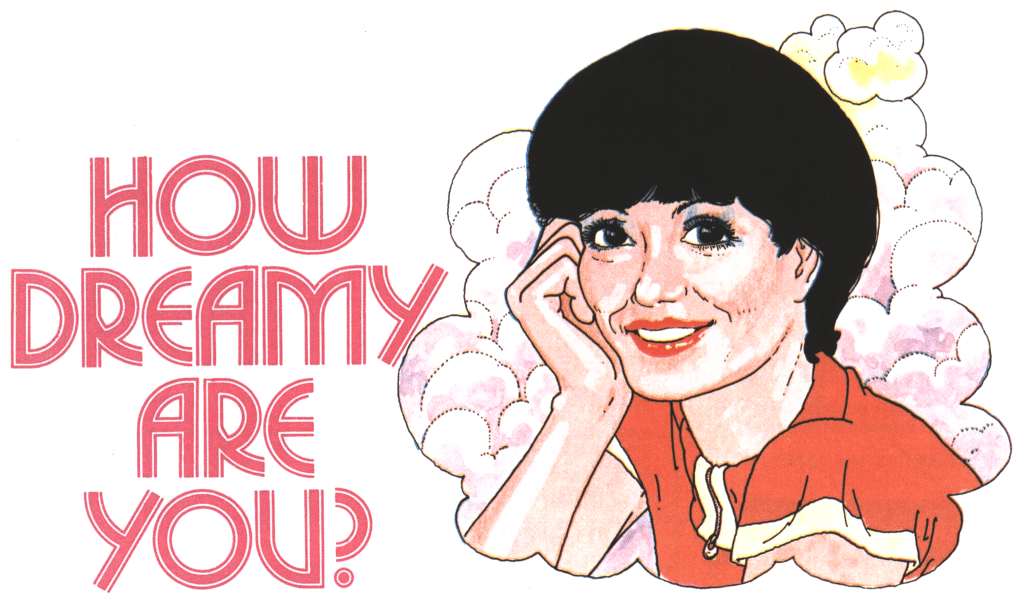
As I reflect on my own teenage years, this type of message and magazine would have appealed perfectly to me back then. But now I understand that even though dating seems thrilling as a teenager, it isn’t what your entire life is all about. Teenage years are also about discovering yourself, your passions, your friendships, making mistakes, learning new things, and making sense of the world.

Some of these magazines definitely fail to provide encouraging and empowering messages for young girls. They did not always initiate conversations around financial independence, navigating the challenges of growing up with friends, being confident, and developing soft skills.

Standing out from the waves of articles on dating, fashion, and advertisements was the occasional article which went against the tide, such as Just Seventeen‘s ‘You haven’t got a boyfriend? What’s wrong with you?’ published 21 Jan 1987. Despite the title, the author advocates for staying single until you meet the right partner – letting young female readers know that they are not any less important, nor are they missing out on life without a boyfriend.
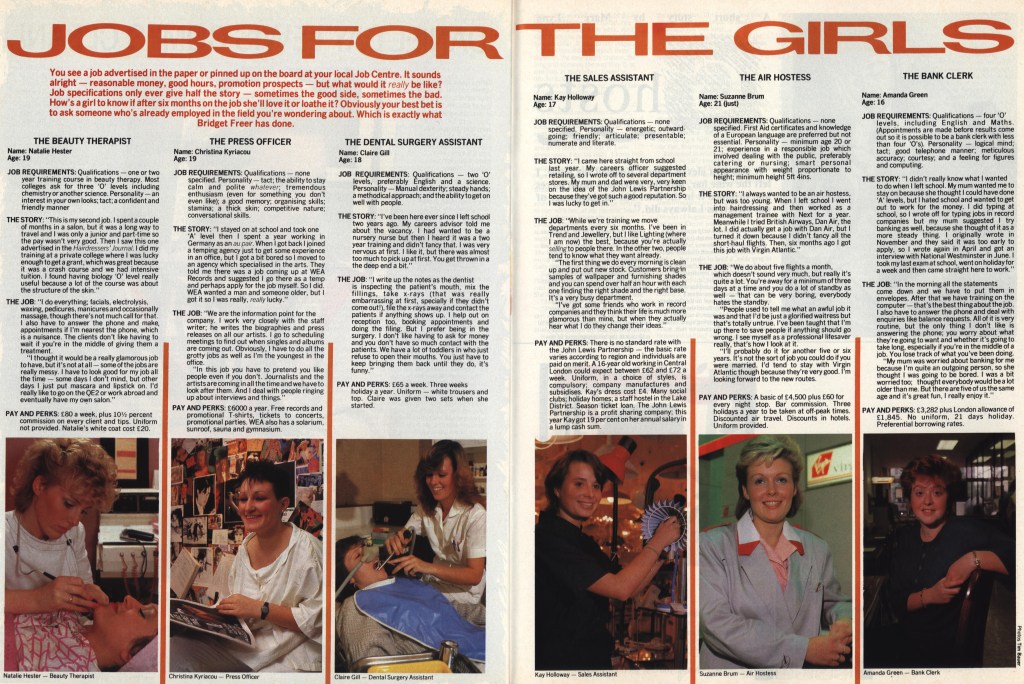
Although less often covered than relationships, Just Seventeen also published articles related to future careers for female readers, including an article in 1986 which discussed the need for female professionals working in Tech. This article from 1985 highlighted the experiences of people working as a beauty therapist, press officer, sales assistant, air hostess and bank clerk to encourage young girls take up one of these professions.
Overall, these magazines were not just random ephemera to teenagers of the time, or even just a source of knowledge and entertainment. They played a vital role in both shaping their attitudes towards life, and evidencing those societal attitudes for us to study today.
Which was your favourite magazine growing up, and why did you like it so much?
Vrunda Chauk, Femorabilia Intern 2024
 LJMU Special Collections & Archives