
Hi everyone, my name is Megan and I’ve recently joined LJMU’s Special Collections and Archives as the Unity Theatre Project Archivist. Over the next year I’ll be cataloguing the papers of the Unity Theatre as part of its Heritage Lottery funded project, ‘A Radical Reimagining.’ I’ll be working collaboratively with Unity to make the collection more visible to the public, part of which will include an exhibition and community productions in summer 2026 focused on sharing stories about the theatre from the 1930s to present day.
The theatre’s history dates back to the mid-1930s when its early members were inspired by the newly established Left Book Club and Unity Theatre Club to form a Left Theatre on Merseyside. Merseyside Left Theatre was then founded in March 1937 shortly after its performance of the dramatised poem ‘Spain’, an act in support of the Republican government during the Spanish Civil War. It became a prominent affiliated branch of the Left Book Club Theatre Guild, which grew into a national political movement of around 250 left-wing theatres. The theatre’s main commitment was to the political struggle for socialism, whereby the group sought to make socially significant and educative theatre for the working classes on Merseyside. Back then the club did not have a fixed venue, so often staged performances in local halls or in the open air at parks, public meetings and rallies. Following the disbandment of the Left Book Club Theatre Guild during the Second World War, the theatre was renamed Merseyside Unity Theatre in 1944 and became a branch of the Unity Theatre Society Ltd.
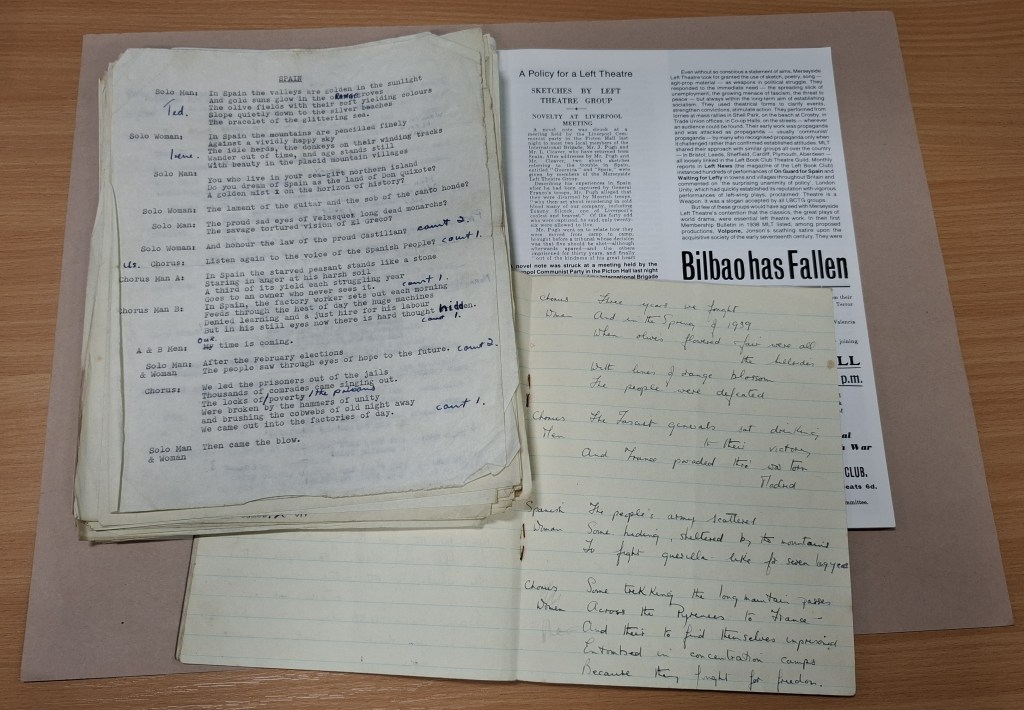
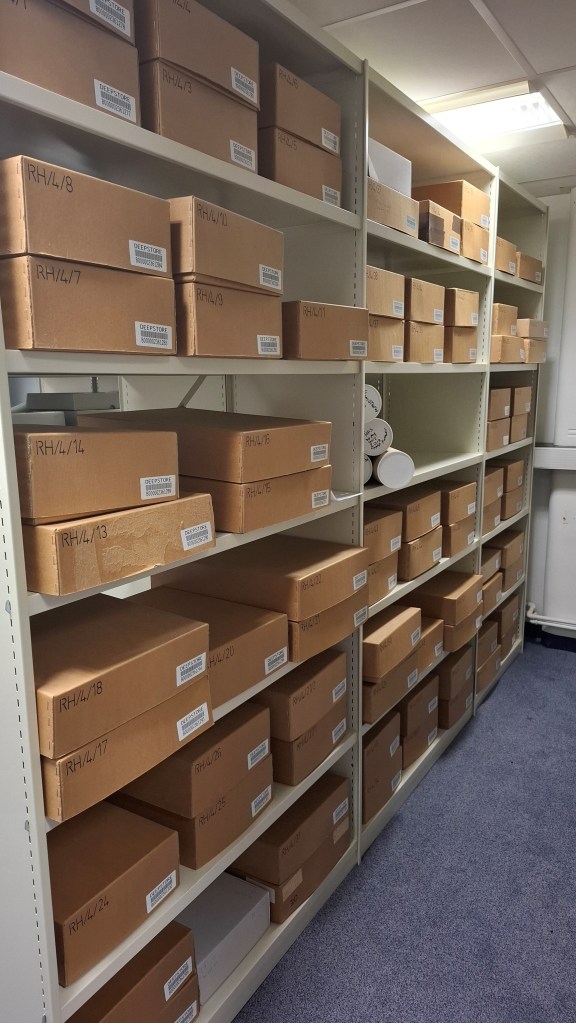
The archives of the theatre are currently split into two main collections – the theatre’s early papers deposited at National Museums Liverpool (recently retrieved from deep storage in a salt mine!) and the later papers deposited at LJMU. My job is to integrate these two collections into one catalogue so that they are more easily accessible to staff, students, researchers, and the local community. In total there are c. 200 boxes of archive material which cover the period from the 1930s to 2015 and comprise papers, photographs, audio and visual recordings, posters, plans, and publications. You can browse the current collection level entry and box lists on our online catalogue at the archive reference UT.
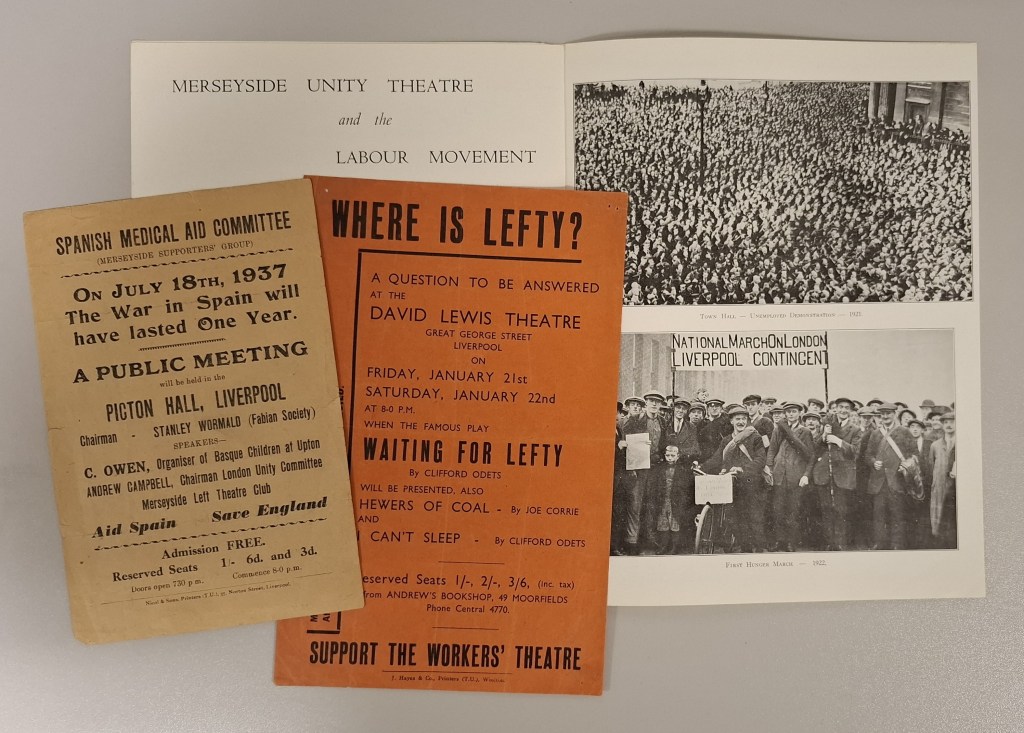
The collection is a rich resource for the study of the theatre’s political and social impact on Merseyside in response to major national and international events. Through exploring the archives, it will also be possible to trace the changing focus and work of a political theatre organisation from the mid-20th century to early 21st century. In its early days the group was fiercely dedicated to the cause of the Labour Movement and worked in close partnership with local trade unions, political parties and co-operative societies. It organised politically relevant lectures, film screenings, musical performances and productions, for example, creating and staging the play ‘100 Years Hard’ for the Liverpool Trades Council in 1949. The papers also cover the period before and after the abolition of theatre censorship in 1968, including correspondence from Lord Chamberlain’s office regarding licencing of their performances such as ‘The Dog Beneath the Skin’ and ‘Waiting for Lefty’.
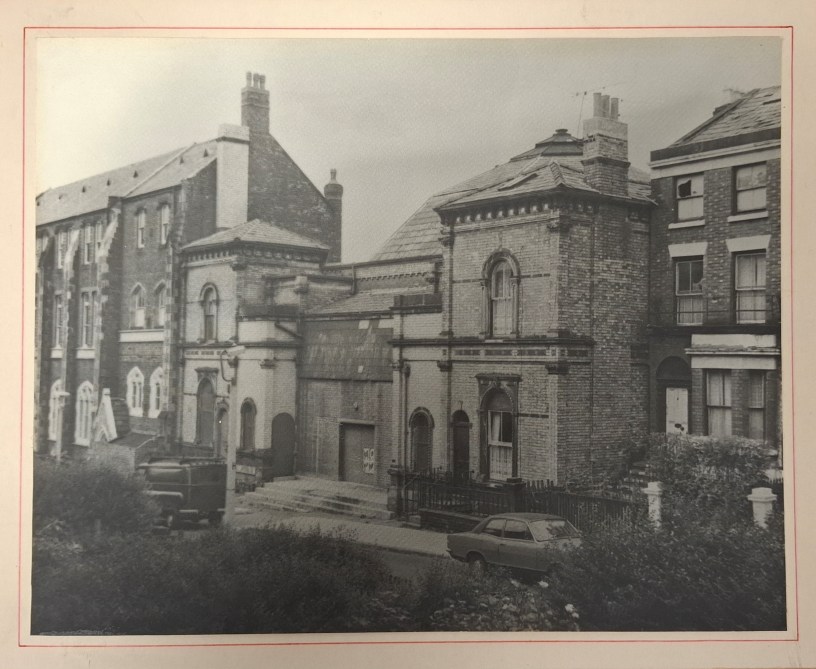
The theatre moved into its current location on Hope Place in 1980. From this period onwards it not only staged plays by Merseyside Unity Theatre but also hosted other performers and completed wider engagement work through the Hope Place Community Association set up in 1983. It will require some further consultation with the archives and conversations with Unity to gain a clearer picture of this period of the theatre’s history including its range of productions and associated organisations.
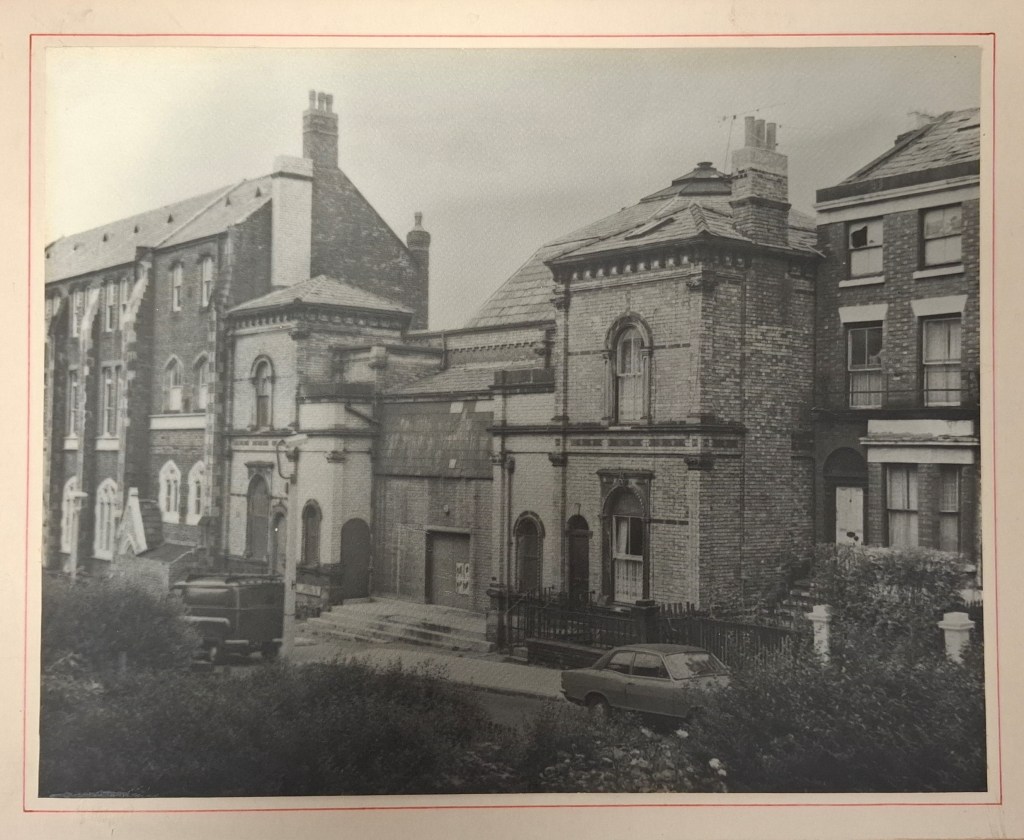
Photograph of the former synagogue building on Hope Place. Ref: UT Box 17
We are now recruiting a group of volunteers to assist with the cataloguing and digitisation of the archive, so if you are interested in getting involved you can apply through our website here. This advert will close on Sunday 19th October. I’m looking forward to sharing further updates about the project through this blog and discovering new stories from the archives once the cataloguing is underway!
If you have any questions and would like to get in touch you can email us at archives@ljmu.ac.uk
– Megan Ashworth, Unity Theatre Project Archivist
 LJMU Special Collections & Archives