
As part of the Bicentenary celebrations for LJMU, the archival papers of its institution are being catalogued and digitised to improve access and preservation, so that we may hopefully still be able to look back on this amazing history in another 200 years to come!
Among the ancestor Colleges which joined the Liverpool Polytechnic which would eventually become LJMU in 1992, one of the oldest is the Liverpool School of Art. Click here to browse the new catalogue for the School.
Contents
- Administrative History
- The ‘Incompetent’ Head of School, Richard Norbury
- Women at the Liverpool School of Art
- Student Magazines: The Comet and Maze
- The School of Art at War under Henry P Huggill
- Principal William Lennie Stevenson
- The Junior Art Department, later the Liverpool County Secondary School of Art
- The Beatles and Associated People
- June Furlong
- Shirley Hughes
- Harcourt M Doyle
- Other Artists
- More Information
Administrative History
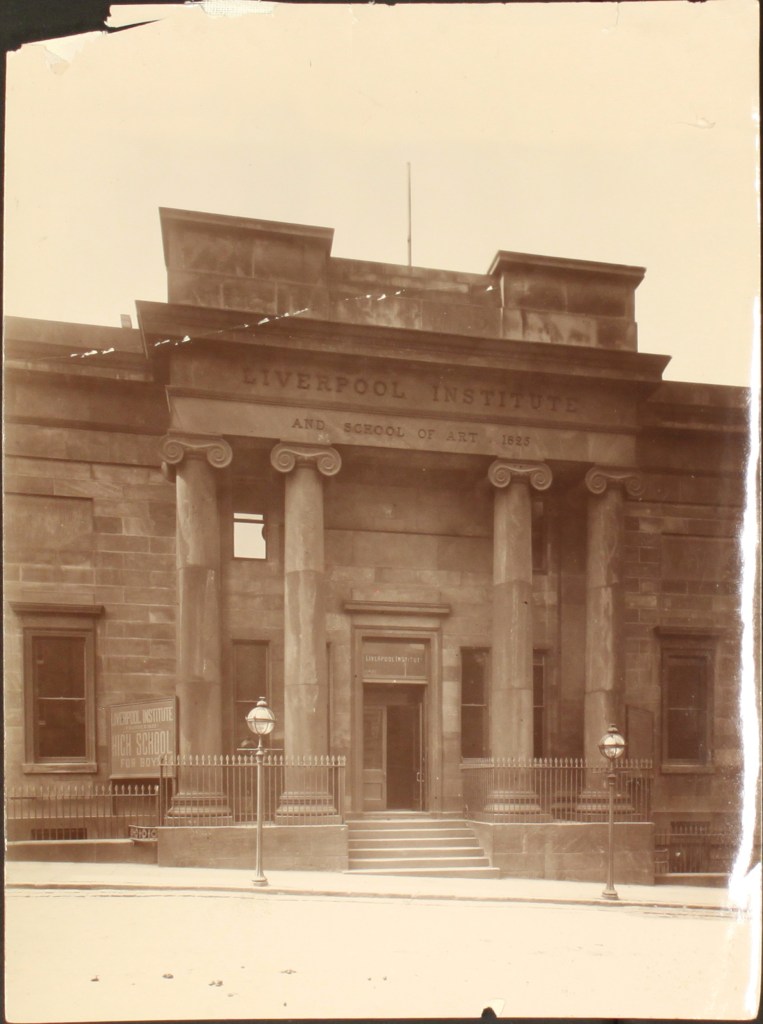
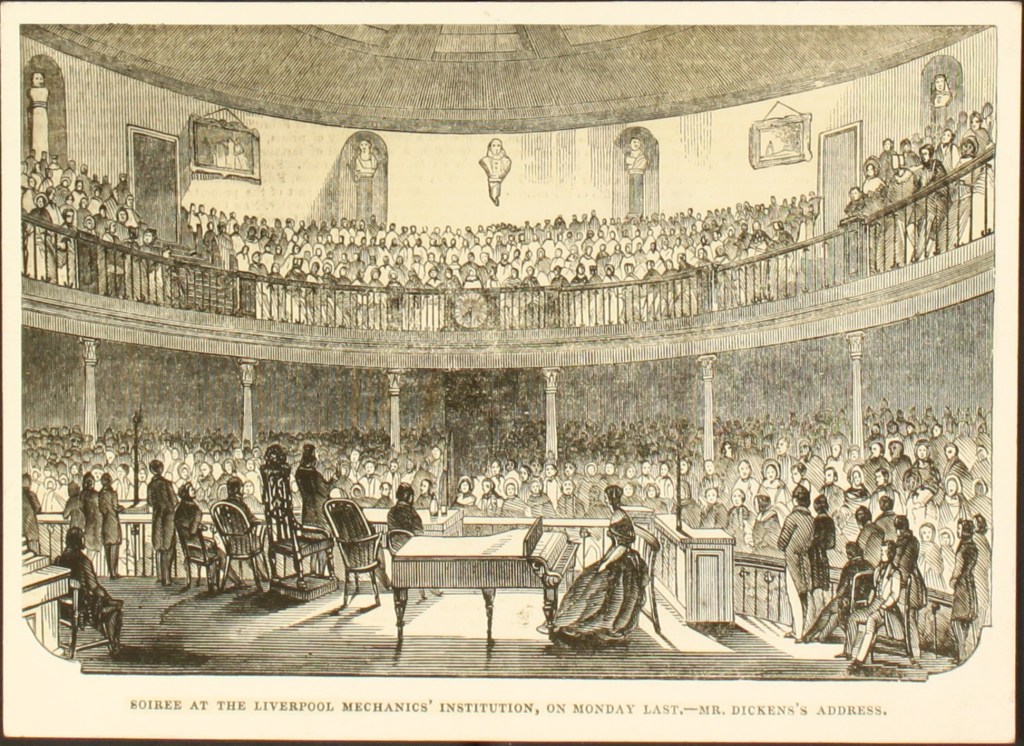
The Liverpool School of Art evolved from the earliest iteration of LJMU history, the 1823 Mechanics’ and Apprentices’ Library, which developed into the 1825 Mechanics’ Institute, the earliest English School of Art outside of London. At that time, the only real instruction in drawing was a Ship Drafting class, as most of the instruction was concerned with the sciences. By 1828 however, this branched off into a wider variety of classes offered such as landscape and life drawing. In 1832, the school was renamed the Liverpool Mechanics’ Institution and the Liverpool School of Art became a department of the Liverpool Institute. The papers of the Mechanics’ Institute are held at Liverpool Record Office under reference code 373 INS.
In 1837, the School of Art moved to its new Mount Street premises, its first permanent home after previously occupying an old chapel on Sir Thomas Street, a school room on Parker Street, and a room above the Union News Room at the corner of Duke Street and Slater Street.
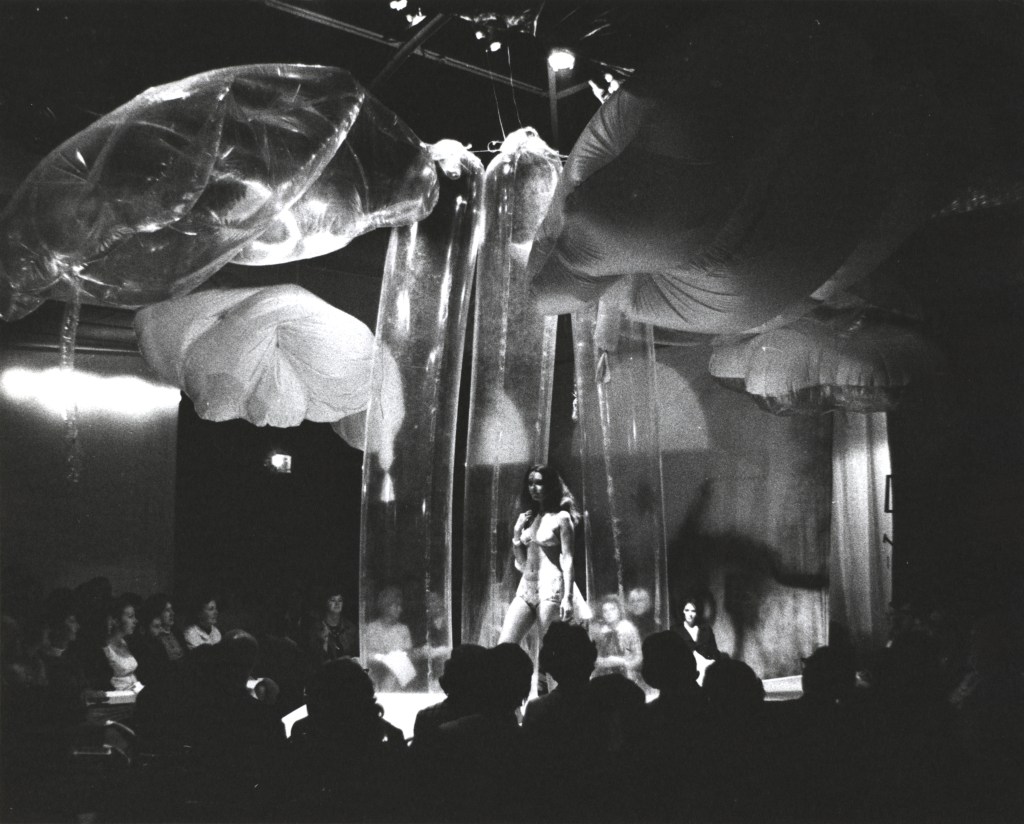
In 1963, the College of Art was approved for the new degree-equivalent Diploma in Art and Design. Photography courses were transferred from the Liverpool Institute to the College of Art in order to extend these studies to the degree courses. In 1970, the Liverpool Regional College of Art was absorbed into the newly-formed Liverpool Polytechnic, and became the Faculty of Art and Design, which went on to become the School of Art and Design at LJMU post-1992.
In 1949 the School was given Ministry of Education approval to assume the title of Regional College of Art for Liverpool. The College applied for membership to the Liverpool Institute of Education in 1951, for effect from the academic session of 1952-1953, and students who successfully completed the Art Teachers Diploma (ATD) course from 1955 onwards would receive a diploma from the University of Liverpool. From 1957-1960, new extensions were built to the main building to house the Printing Department of around 700 students. To cater for increased numbers of students (over 200) in Painting and Decorating, the Department was moved to F L Calder College’s premises on Myrtle Street, which it shared with the College of Crafts and Catering and the Mount Street Evening Institute. By 1960 the School had around 2,000 students enrolled.
The ‘Incompetent’ Head of School, Richard Norbury
In 1843, Richard Norbury was appointed as a new Head of School. Within the first weeks of Norbury’s residence in post, a clash of attitudes and words began between Norbury and John Wright Oakes, one of the School’s earliest and most beloved tutors. On 8 March 1843, the School Committee had made deliberate note of Mr Oakes ‘practical skill industry, and anxious attention to the wants of his pupils [which] renders his services very valuable to this department.’ Only twelve days later, Oakes was being disciplined and cautioned by the Chairman of the Committee to abstain from ‘counteracting the designs of his Principal.’
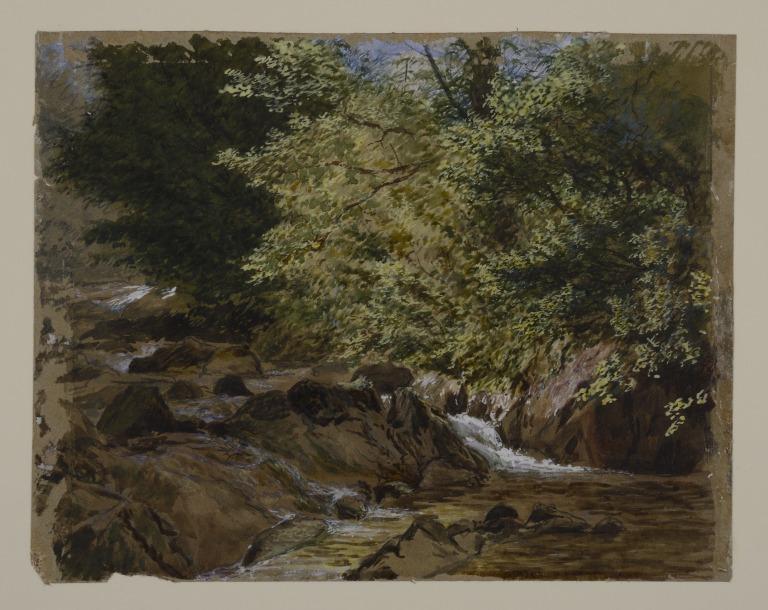
This dispute arose from Norbury’s desire to impose systematic and trained methods of teaching drawing, which included ceasing all plein air sketching and field work, which Oakes resisted. Disobeying his new instructions, Norbury had Oakes cautioned for attempts to ‘prejudice the minds of the pupils against their Headmaster,’ and Oakes retaliated by initiating an enquiry into the competence of Norbury as a teacher. Norbury was forced to comply by presenting his oil paintings with testimony before the School Committee. By this point, only three weeks after Norbury had joined the School, Oakes had already written his letter of resignation on grounds of ‘the alleged incompetency of his Principal.’ Students of Oakes immediately protested – thirteen signed a petition of complaint against Norbury’s ‘inability to teach,’ and they were subsequently cautioned by the Committee too. After continuing to show defiance against the new Headmaster, one student, John Denton, deemed a ringleader of the protests, was even expelled. Norbury remained the Headmaster of the School until 1855.
Women at the Liverpool School of Art
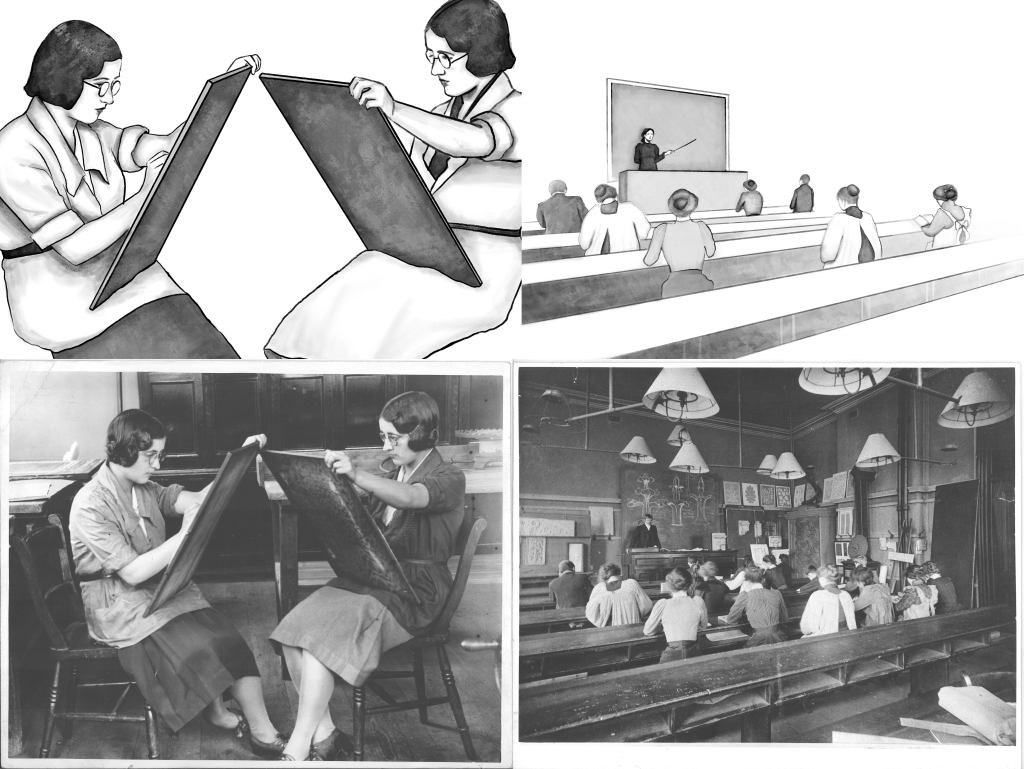
Since the 1832 split, the School has had a long history of promoting the education of women. Women were from then onwards permitted visit the Art Library and to pay 1 shilling to attend any lecture, but were not yet permitted to attend classes of instruction until the 1850s, which remained mostly single sex Ladies’ classes. Emma Gammage was the only female student in 1857, and became the first qualified Art Pupil Teacher from the Liverpool School of Art in 1858.
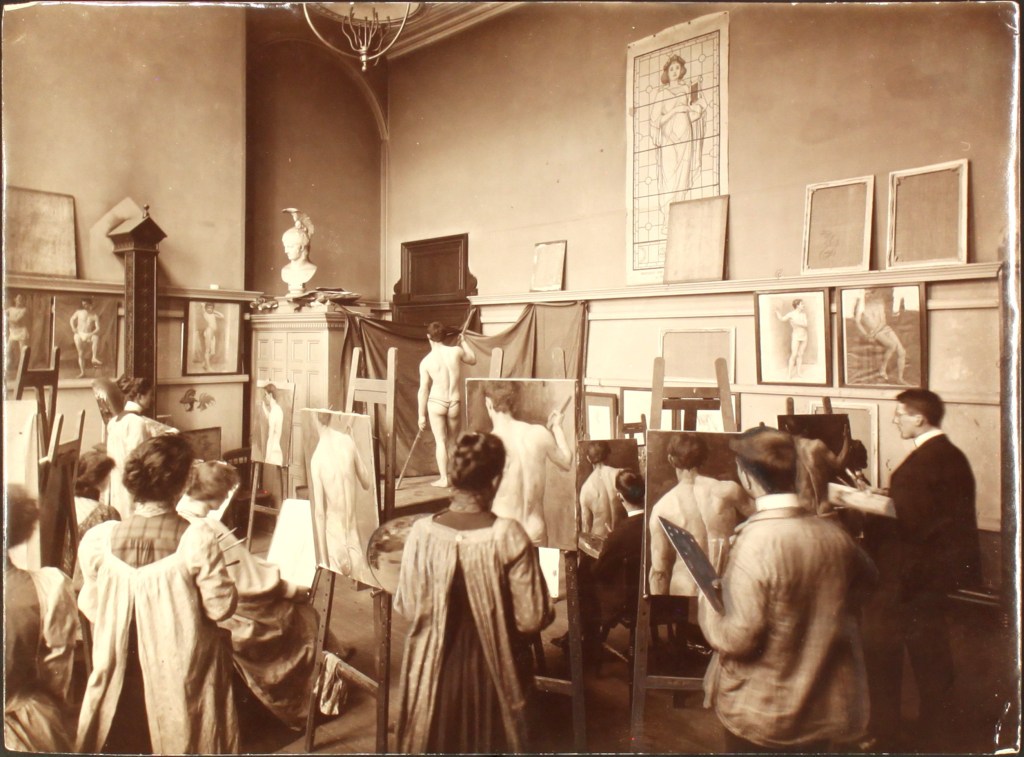
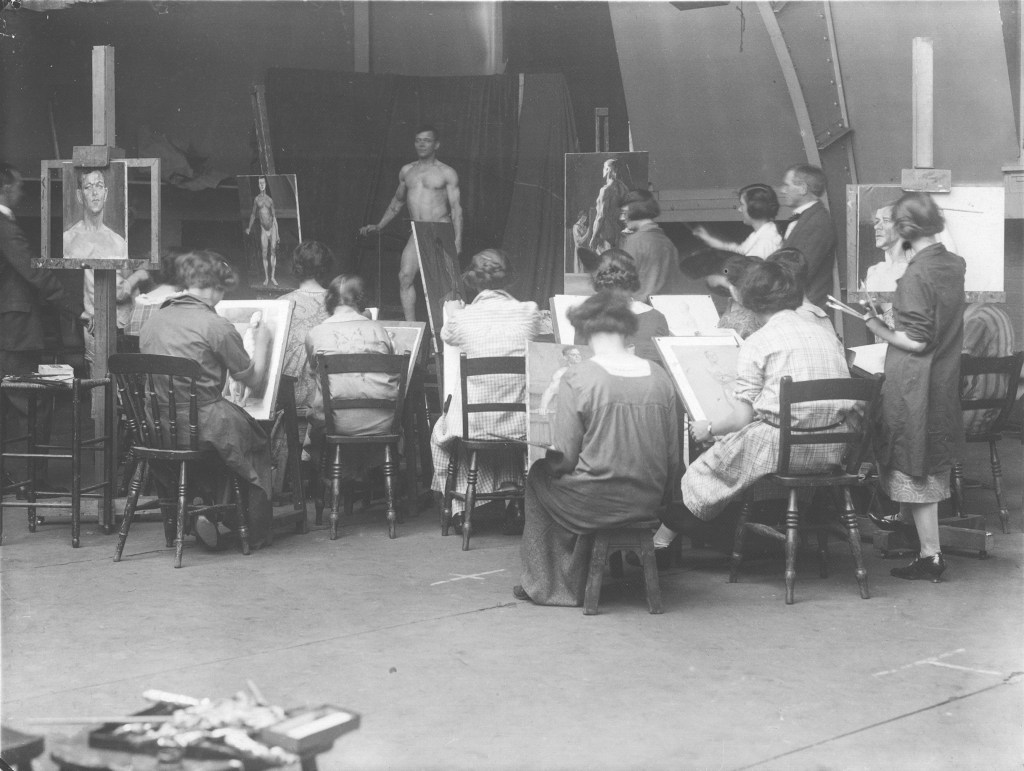
In 1913, the Students’ Union was first formed with permission from the then-Principal George Marples out of the earlier Students’ Guild. One of the issues the Union campaigned for was a Joint Sex (gender neutral) Common Room for ‘promoting social intercourse… for meals in common, for meetings and debates [and] for music,’ as well as for life classes in common. This was not granted until under the new Principal Henry P Huggill in 1939 within the first few months of World War Two. Former student and later tutor Nancy Price recollected that once the male students had been given permission to share the Ladies’ Common Room, ‘they came in and just stood there, and didn’t know what to do!’
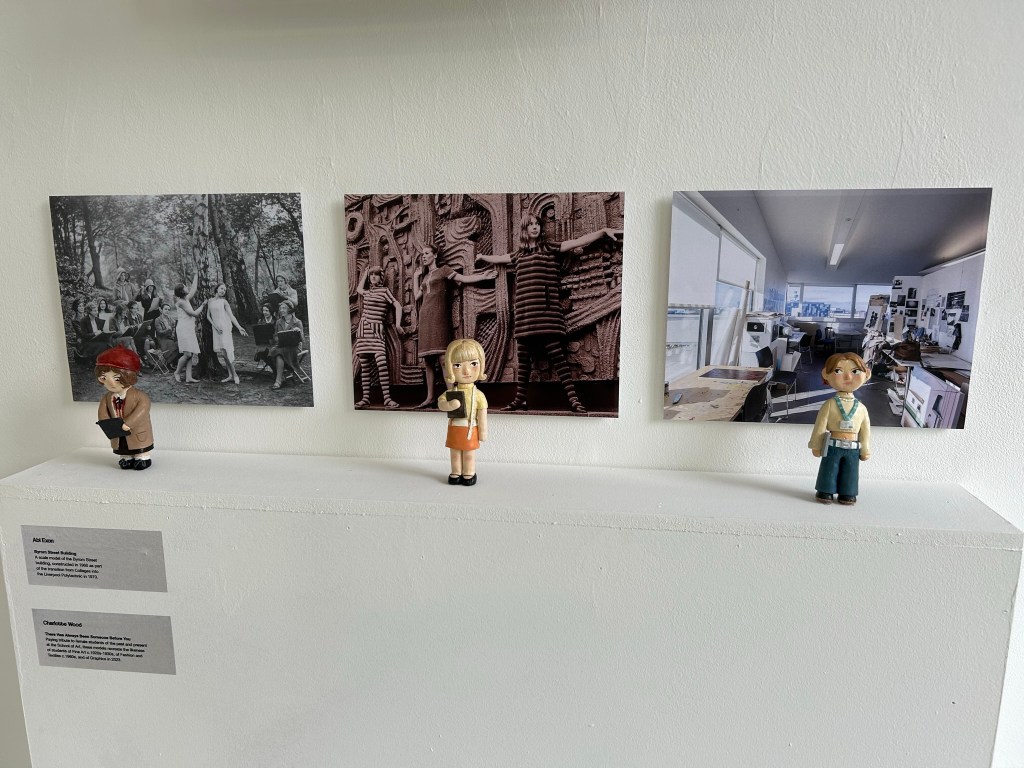
Many students at LJMU today have been inspired by the legacy of female artists who studied or taught at the Liverpool School of Art, including Graphic Design students Charlotte Wood and Millie Hynes who created new art pieces to reinterpret that history for the Bicentenary exhibition re-think, re-design, re-present.
Student Magazines: The Comet and Maze
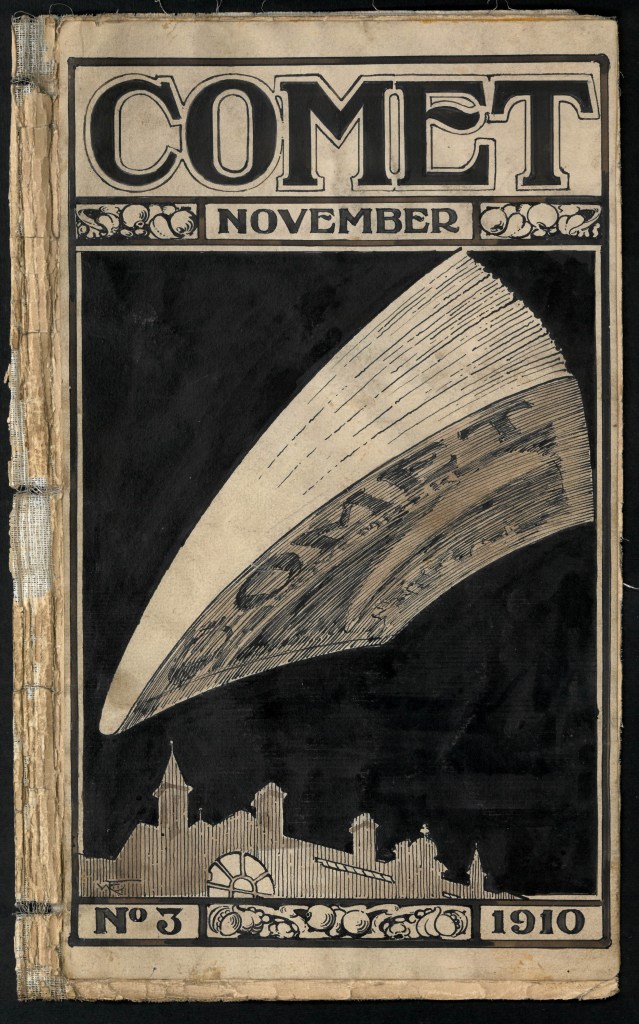
Among some of the incredible artwork by former students of the School of Art are the two sets of student magazines, The Comet (1910-1913), and Maze or, the Confused Mirror of the Mind (1951-1953). Full PDF copies are available online for all issues of both magazines via their respective catalogue links.
With a coincidentally astrological-inspired name, stargazer is a similar modern zine produced by the LJMU Creative Writing Society students. It’s first edition, issued 2023, features artwork by Cora O’Gorman inspired by the original The Comet magazine. A copy of stargazer is available to view at LJMU Special Collections & Archives, alongside the Comet and Maze editions.
The School of Art at War under Henry P Huggill
Following World War One, the School experienced a serious decline in students, with numbers dropping below 200 during 1918 under Principal George Marples, although this was to be significantly revitalised by his successor Henry P Huggill.
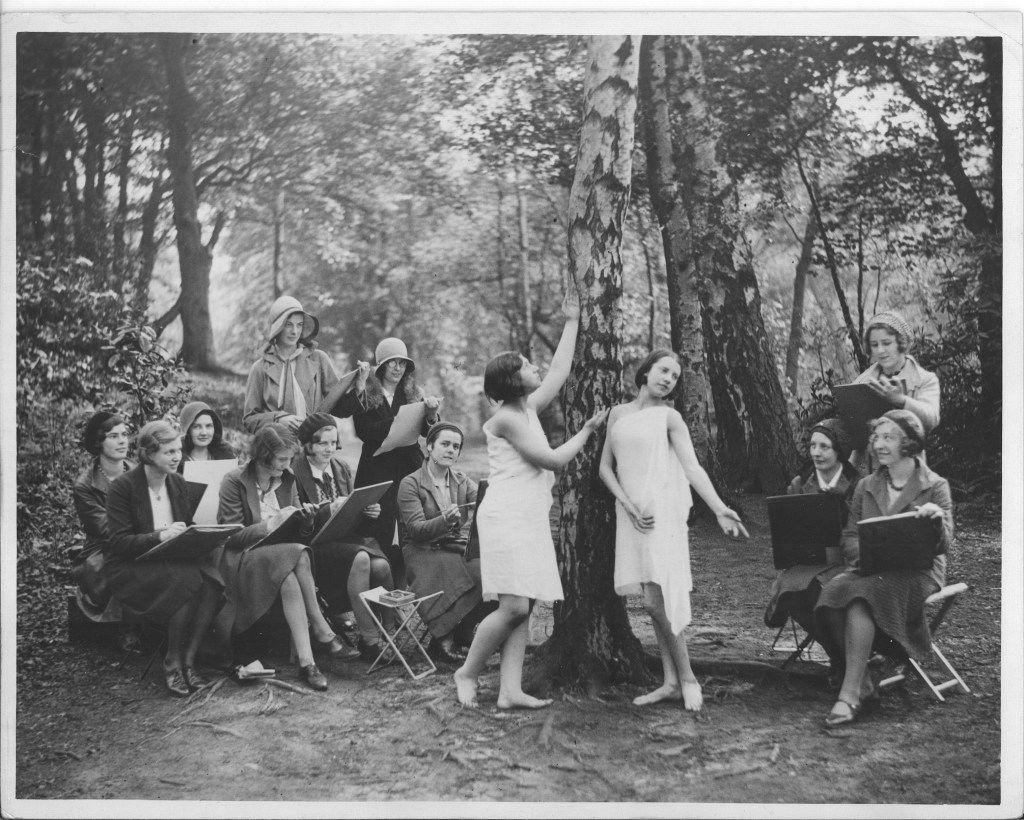
Huggill was the Principal for the Liverpool School of Art from the 1 May 1930 until 1951. He was also the first Principal who had previously been a member of staff, having been a Design teacher from 1913 onwards. In 1914, Huggill left the School to become an early volunteer to fight in World War One under the Cheshire Regiment as a Second Lieutenant, later made temporary Lieutenant in 1916 and was possibly wounded in combat.
Throughout his life, Huggill was known to support struggling tutors, ex-students, and other artists from Liverpool. From 1921-1930 he was the Headmaster at Victoria School of Art in Southport, and Curator of the Atkinson Art Gallery, and during this period he offered Liverpool tutor Joseph Hodel some extra teaching work in Jewellery and Metalwork at Southport as Hodel, among others, was badly affected by the consecutive 1920s pay cuts (up to over 30 per cent for some staff) at the Liverpool School of Art. He also offered assistant-masterships at Southport to ex-students of Liverpool, including Arthur Dalby. Hodel died in May 1930, the week after Huggill assumed the role of Principal. Despite Huggill’s efforts to grant a gratuity to his widow and family, this was turned down by the City’s Gratuities Sub-Committee.
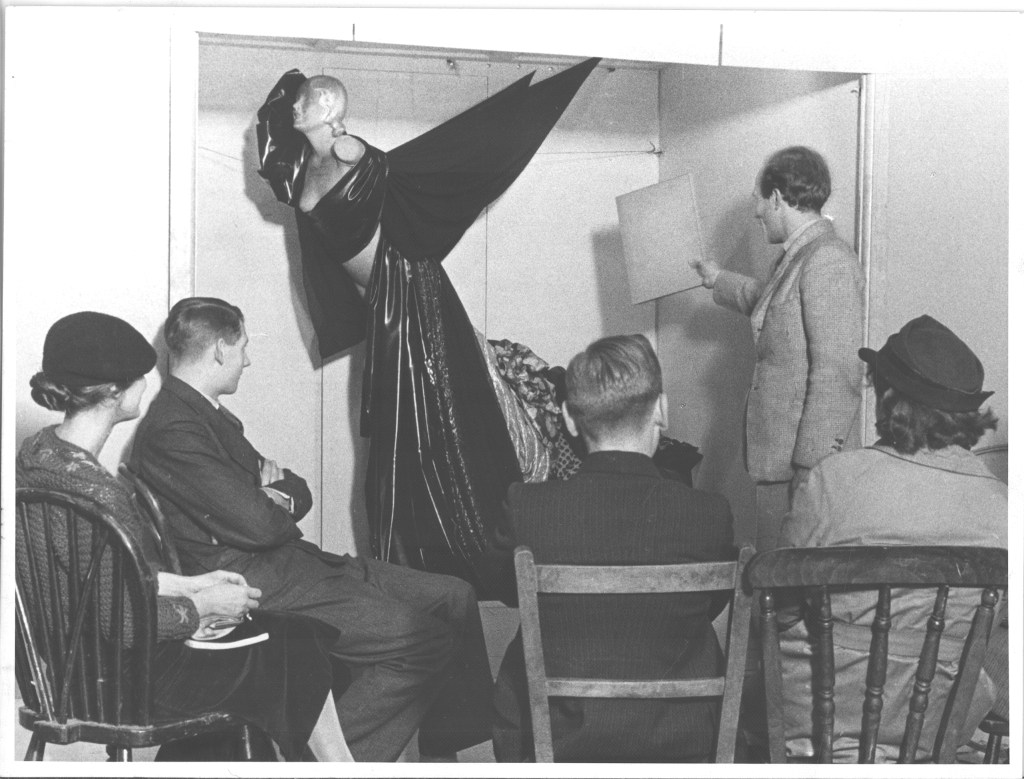
During his time as Principal at the Liverpool School of Art, he established several experimental courses such as ‘Window Display and Salesmanship for the Tailoring Trades,’ ‘Tailor’s Garment Cutting,’ and ‘Fashion Drawing,’ as well as taking on Hairdressing courses from the City Technical College. By 1934, the School had record-breaking numbers of over 1,000 for the first time, in part due to Huggill’s policy of accepting as many fee-paying students as possible, although this put strain on tutors for over-subscribed classes. Throughout the 1930s, Huggill was able to successfully lobby for many more opportunities for students in the way of exhibitions and scholarships, for which he was awarded an honorary degree of Master of Arts from the University of Liverpool in June 1936.
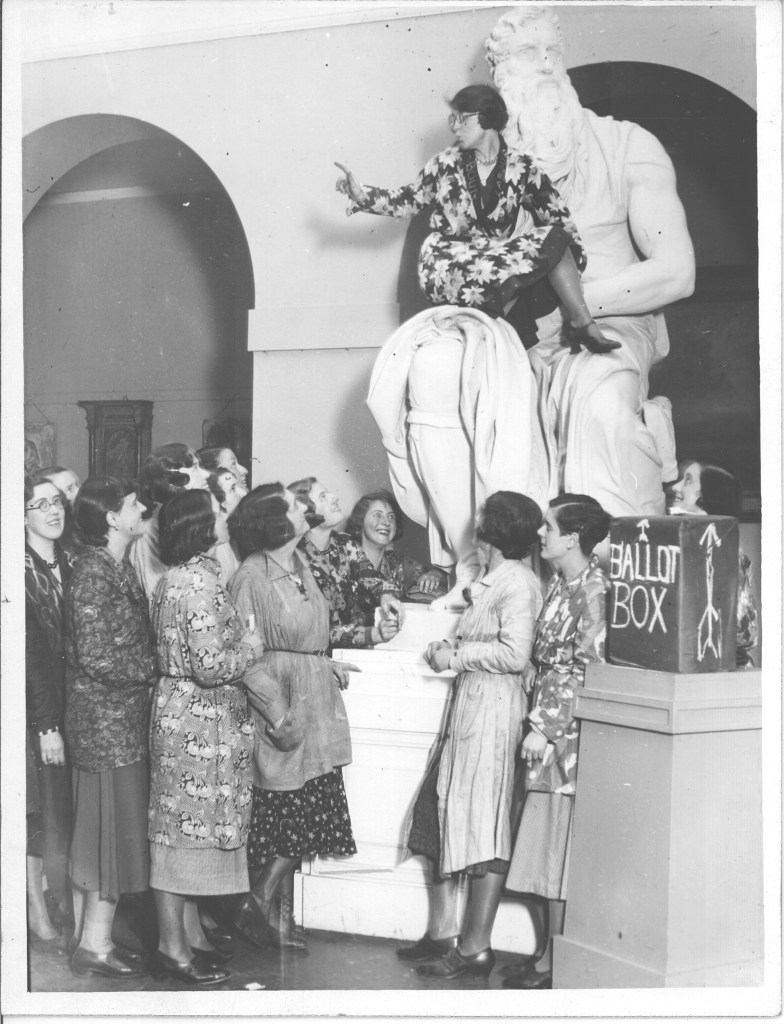
During World War Two, Huggill took quick and effective action to both maintain student numbers and continue to support students both financially and in their classroom wellbeing. He responded to damage from the Blitz through the skylight of Studio 67 by offering free tuition in certain classes to any member of the armed forced stationed in Liverpool, and by forming a Fire Watching group and rota. The School also enrolled their first two students who were German Jewish refugees in 1939. In late 1942, pre-apprenticeship training in Printing & Allied Trades was introduced by Huggill to pupils aged 13 to fill as many spaces in the School as possible, in anticipation of possible demands by the Ministry of Works & Planning to commandeer an entire building from the School of Art for supply distribution. This was run alongside the Junior Art Department, and the Ministry ended up using the Walker Art Gallery instead. More Junior Art Classes and opportunities were expanded upon or created following this throughout the 1940s. In the late 1940s, Huggill pressed managers to approve funds for Dress Design students to visit Paris, after senior assistant Violet Clark paid all her own expenses to take a party to both London and Paris in 1948.
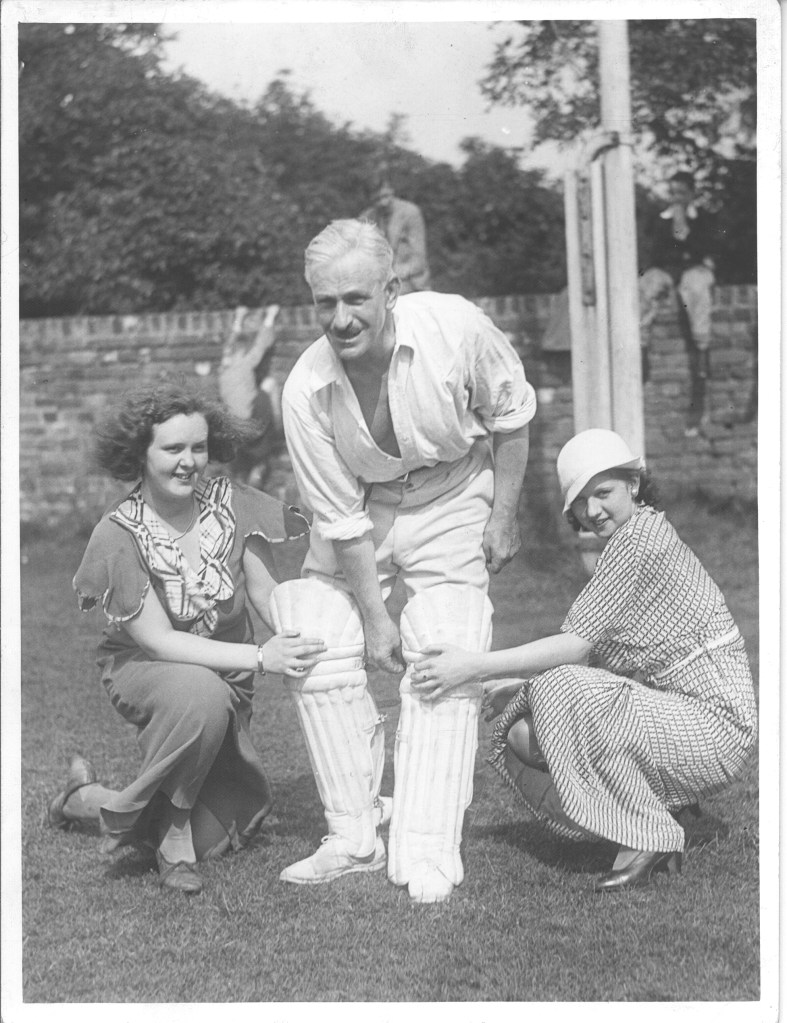
Although Huggill did not teach throughout his time as Principal, he was known for joining students as a cricketer on the School of Arts’ sportsfield at Stonehouse in Calderstones Park.
Another notable person from this time (and possible competitor for Huggill’s role as Principal) was William C Penn, the Vice Principal who in 1942 at 68 years old was requested to carry on working to accommodate the large numbers of ex-servicemen returning and anticipating to return from service in World War Two. He worked at the School from 1911 until 1946.
Principal William Lennie Stevenson
William Lennie Stevenson OBE was a printmaker, sculptor, and teacher born in Liverpool in 1911. Although he was to become Principal of the Liverpool School of Art 1951-1959, he was previously a student at the School in the 1920s when George Marples was Principal. In his interview with Colin Morris, conducted 21 Feb 1984, he described challenging the traditional drawing teaching methods used by tutors such as Charles Morris (Colin Morris, 1985. ‘History of Liverpool Regional College of Art 1825-1970,’ Liverpool Polytechnic: 129-130). He and George MacPherson, who later went on to become Head of Sculpture at the School, brought in different media to challenge each other, such as a lead pipe which gave an unusual quality: ‘It was a capacity for feeling: I had to become the element I wished to draw.’ Stevenson also claimed that at one stage George Marples asked him to depart from the School for his boldness.
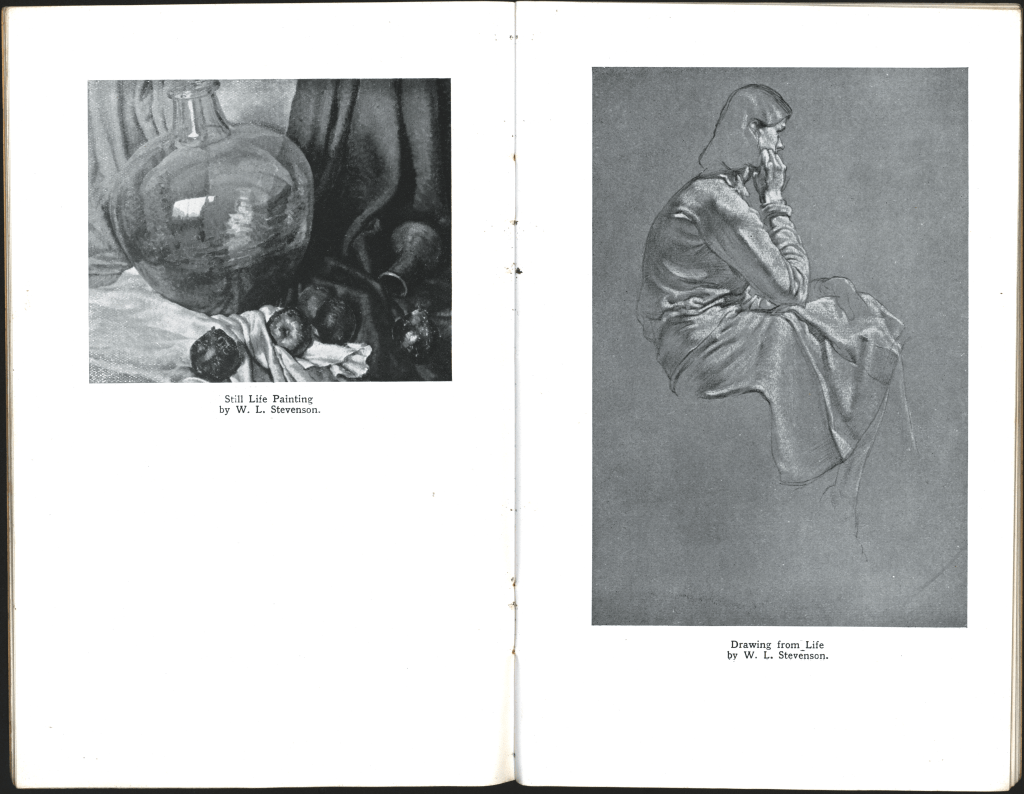
In 1933, W L Stevenson was made a temporary Assistant Instructor at the Liverpool School of Art for Figure Drawing and Interior Design, and appointed Instructor in General Design and Interior Decoration in January 1935, taking on classes of over 90 students for Life Drawing. In 1939 Stevenson departed Liverpool to become Master of Interior Decoration and Colour at the Architectural Association in London. During World War Two, Stevenson enlisted and served as a squadron leader and pilot in the Royal Air Force. He was featured in Liverpool Artists in the Fields of War, City of Liverpool Art Gallery Bluecoat Chambers, 1946. He has given a detailed account of his service in the RAF and how his artistic skills enabled him to problem solve within his interview with Colin Morris (Ibid.: 145). For his intuitive displays of skill within the RAF, he was awarded an OBE.
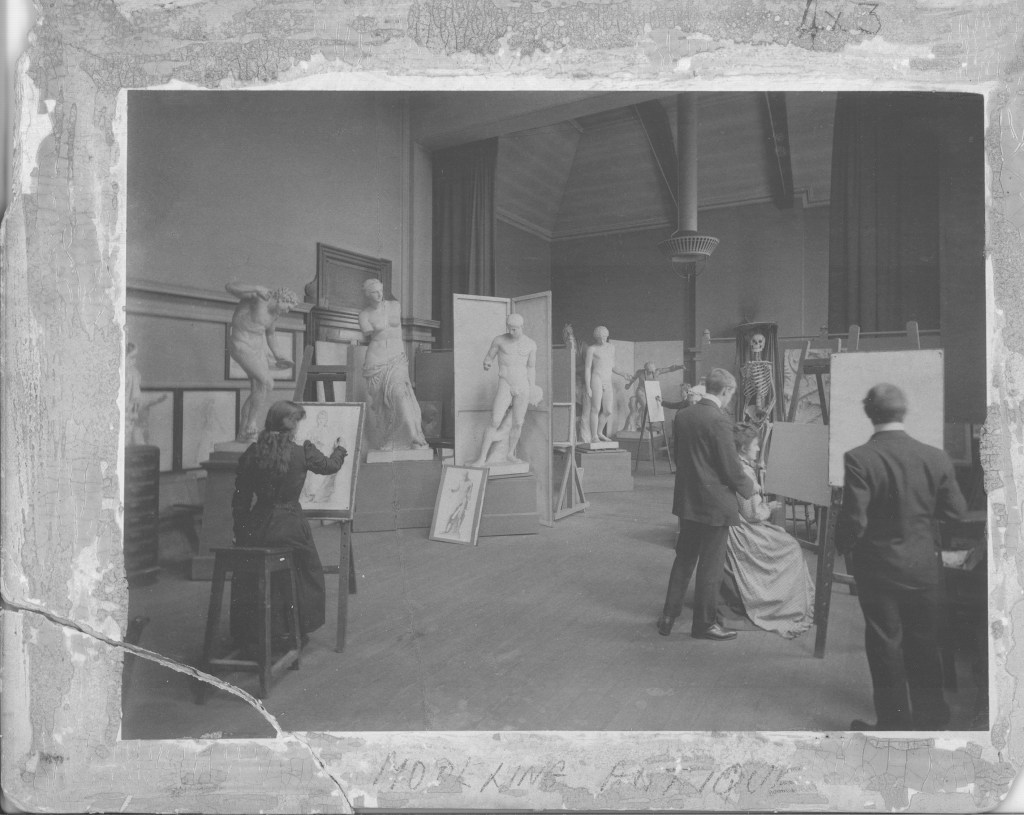
On returning from service to Liverpool, he was appointed to the newly created post of Head of Department, Design and Crafts at the Liverpool School of Art in April 1946, and in 1948 Stevenson was made Vice Principal by then-Principal Henry P Huggill. In September 1951, he took up the office of Principal at the School of Art. Under his direction, traditional forms of artistic study such as Antique classes were dropped in favour of a more dynamic curriculum. Stevenson was also a vocal advocate for expanding the Department of Teacher Training, and participated in many conferences and groups devoted to it, including developing the School’s offering in Art History and promoting more fluent written and spoken communication through appointing Winifred Pullen to a new special post in 1951.
Stevenson remained an active artist throughout his career as Principal, producing a variety of work. He designed the sub-Post Office building in Hanover Street, painted a ceiling for the Bluecoat Chambers concert hall, and sculpted for St Monica’s Church, Bootle, among many other examples, and has work in The Walker Art Gallery and Manchester City Art Gallery collections. He announced his resignation in November 1959, leaving at least partially out of frustration ‘by too many members of the teaching staff proving unwilling to pursue his more radical ideas.’ It was around this time that John Moores began to take an interest in the College of Art, and this relationship brought an invitation for Stevenson to become a manager of the Building Department of the John Moores organisation, for whom he would design the first welded-steel structure in the UK.
The Junior Art Department, later Liverpool County Secondary School of Art
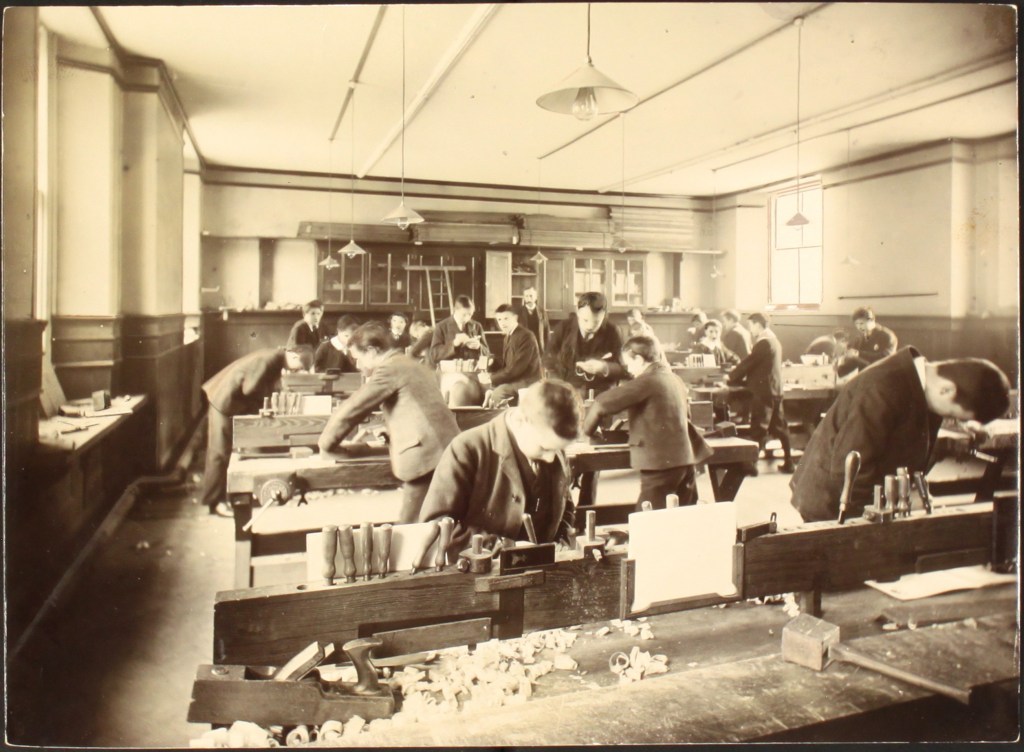
Although the School of Art had provided tuition to school-age pupils (of all genders) much earlier, the Junior Art Department was officially formed in 1925 and the Teacher Training Department formed in 1928 to provide courses for students to obtain an Art Teacher’s Diploma (ATD). In 1947 the Junior Art Department at the Liverpool School of Art became constituted as the Liverpool County Secondary School of Art. Due to congestion in the main building, the Secondary School moved to 11-12 Gambier Terrace, specifically acquired for the purpose of developing general education work alongside access to specialist studios and equipment. The Teacher Training Department which taught the ATD course was also transferred to Gambier Terrace. Junior Art classes had an entrance age of 13 and over, and adopted the Grammar School transfer examinations as an entrance exam in 1950. The Junior Art courses lasted for 3 years and led to the adoption of the Art GCE. The School severed from the College of Art in 1960 with 120 pupils at the time and became an independent unit in the Liverpool City Council’s secondary school sector with its own Headmaster. It was closed in 1966 after luxury specialist equipment was deemed inappropriate for modern-day educational needs.
The Beatles and Associated People
Probably the most famous artists to be associated with the School is Beatles band members John Lennon and Stuart Sutcliffe, who studied in the late 1950s at the College and met together there. While studying, they also met Paul McCartney, then a schoolboy at the neighbouring Liverpool Institute for Boys. Lennon would also meet fellow student Cynthia Powell, who would later marry John Lennon. Although studying Graphics, Powell also took Lettering classes with John Lennon. He reportedly never had any drawing tools with him, so he constantly borrowed pens and pencils from Powell, who discovered he was only there because other teachers had refused to instruct him. Lennon’s attitude towards Powell was physically and verbally abusive, and when her artwork began to suffer, teachers at the School tried to dissuade her from continuing her relationship with him. Principal W L Stevenson’s office was apparently below the room which John Lennon used for music practice with Stuart Sutcliffe, Paul McCartney, and George Harrison, where he reported listening to them playing. In 2010, to celebrate the 70th birthday of John Lennon, the Yoko Ono Lennon estate gifted LJMU one of three John Lennon time capsules to be opened on the 100th anniversary of his birth in 2040.
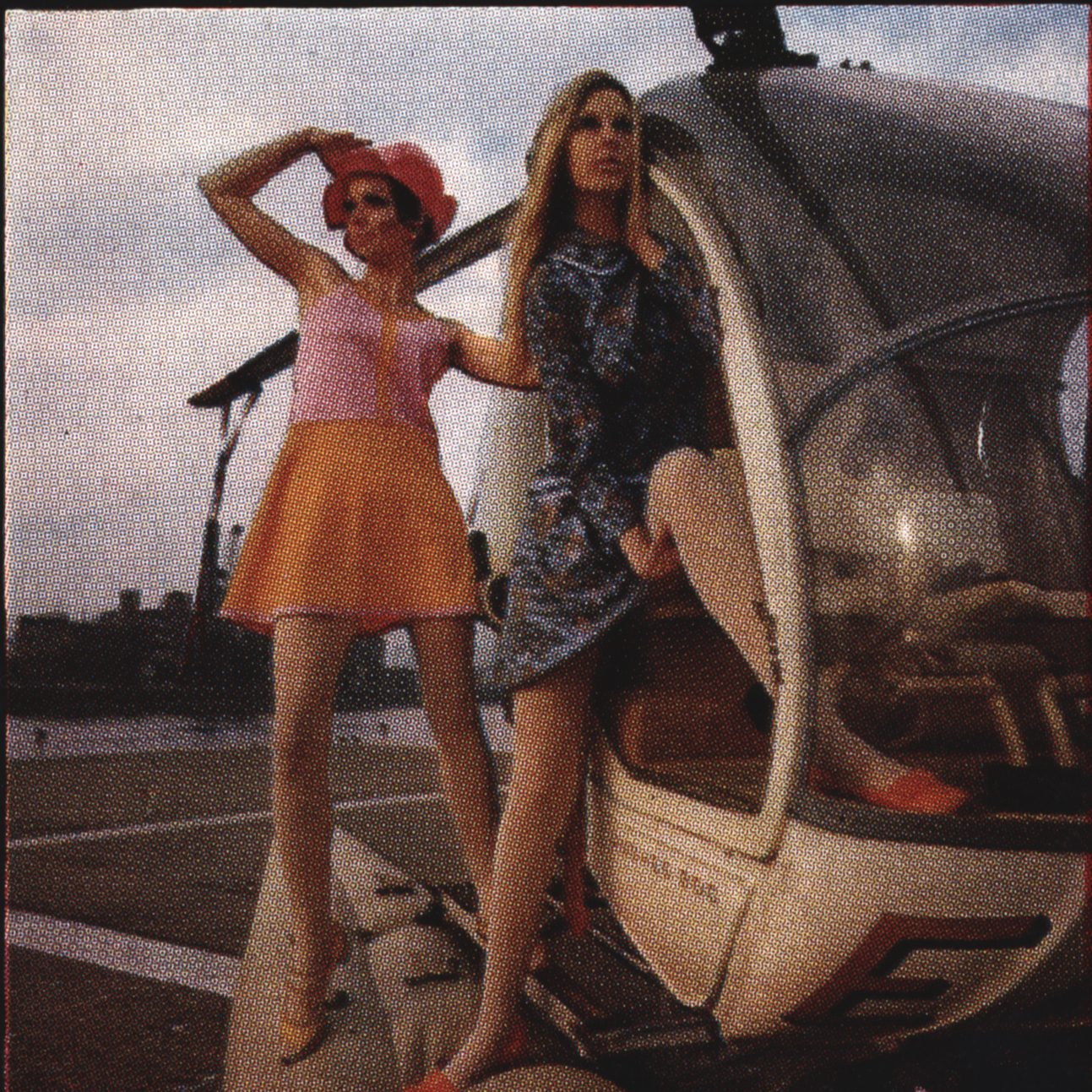
Celia Mortimer was also a student at the School of Art within the Fashion Department, and met her brief boyfriend Mike McCartney, Paul McCartney’s younger brother, at the College’s hairdressing studio for a free haircut. Some of her fashion designs and modelling photos are found within the School of Art papers.
June Furlong
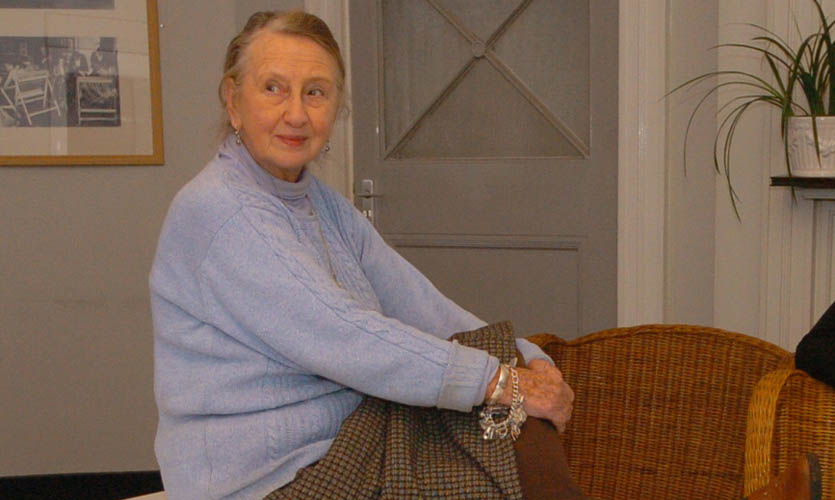
Among the many artists and models in the Liverpool arts scene was Amy June Furlong, life model at the Liverpool School of Art. She began her legendary career at just 17 years old in 1947, and dropped her robe for the last time in 1995, aged 65. June was first suggested as a life model by art student Don McKinlay to tutor Arthur Ballard, who was then Liverpool’s most significant post-war artistic personality, and the foundations for June’s impressive career were set. Nearly every art student that passed through Liverpool between the 1960s and the early 1990s will have drawn or painted her at some point, uniquely capturing her changing physical appearance over almost 50 years.
To watch some oral histories with June Furlong in her later life, visit Sound Agents Films on YouTube.
Shirley Hughes
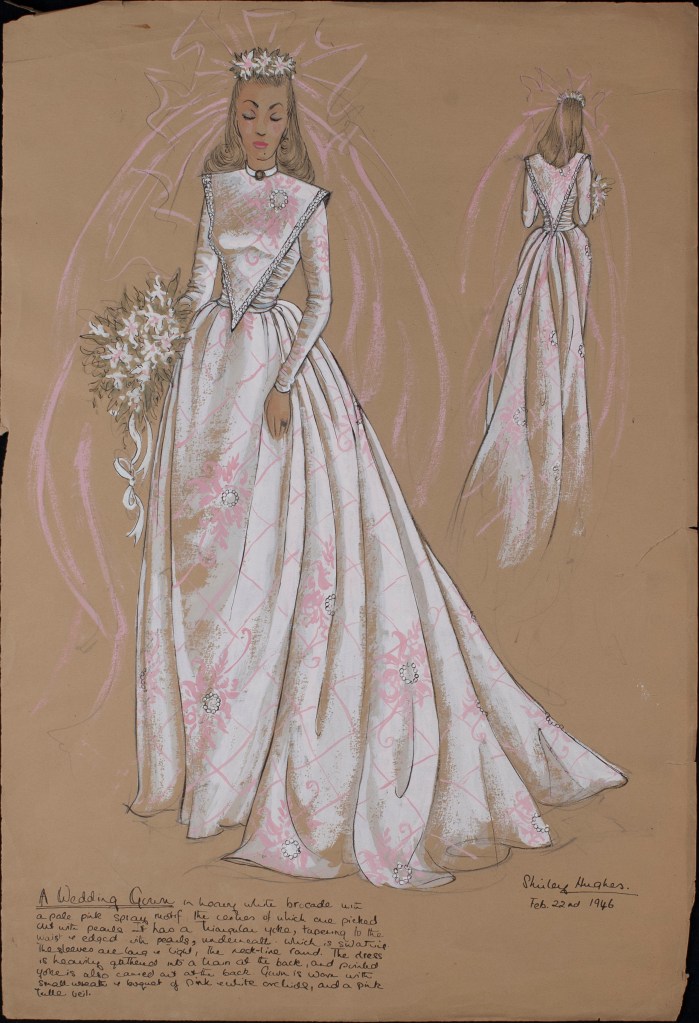
Shirley Hughes CBE was an author and illustrator, best known for her picture book and lithographic illustrations, who was born and raised in West Kirby. Although not an academically minded student, she was a talented artist and left school at 17 to enter the Liverpool College of Art to study Drawing and Costume Design. Unfortunately she felt the Liverpool scene put too much pressure on her to find a husband, and she left the course after two years to study instead at the Ruskin School of Drawing and Fine Art in Oxford. Some of her fashion design sketches from her time at Liverpool are held within the Liverpool School of Art papers, and we were delighted to present Hughes with copies of these just a few years before her passing in 2022.
Harcourt Medhurst Doyle
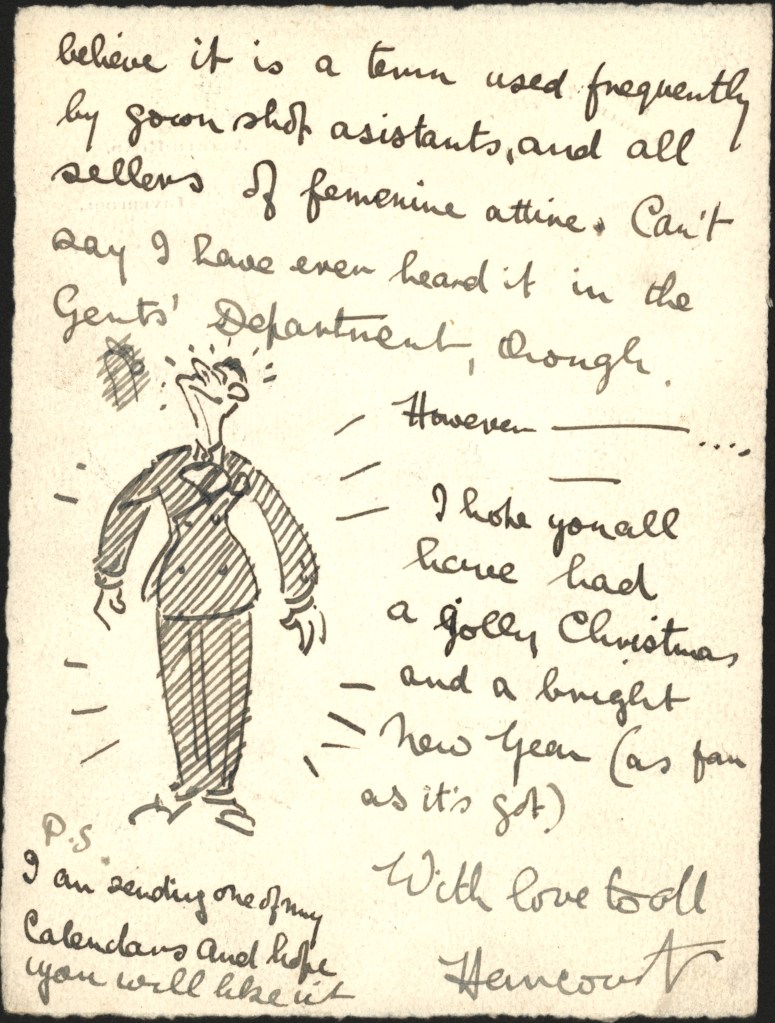
Born in Liverpool in 1913, Harcourt M Doyle was a student of Liverpool City School of Art and Crafts in the early 1930s. He was well accoladed as a student, having obtained a scholarship to attend in 1932, a Royal College of Art scholarship to study Book Illustration in 1933, until he eventually gained his Diploma in Design in 1935 where he specialised in stained glass. During his time as a student, he was particularly influenced by the aforementioned Head of Painting, William Charles Penn.
Following his studies, Doyle became a highly respected stained glass window artist. Studying with fellow glass artist Martin Travers, and later working as his assistant, formed the foundations of his experience to eventually establish his own studio in Liverpool, which gained him important commissions for Trinity College at Cambridge and for the memorial window after the Golborne colliery disaster at St Thomas’s Church in Wigan. Doyle was known for his church window designs, including the replacement of one window at Chester Cathedral and several other churches after damage by enemy bombing during the Second World War. He was also a three times winner of the Annual Competition of The Worshipful Company of Glaziers and Painters of Glass.
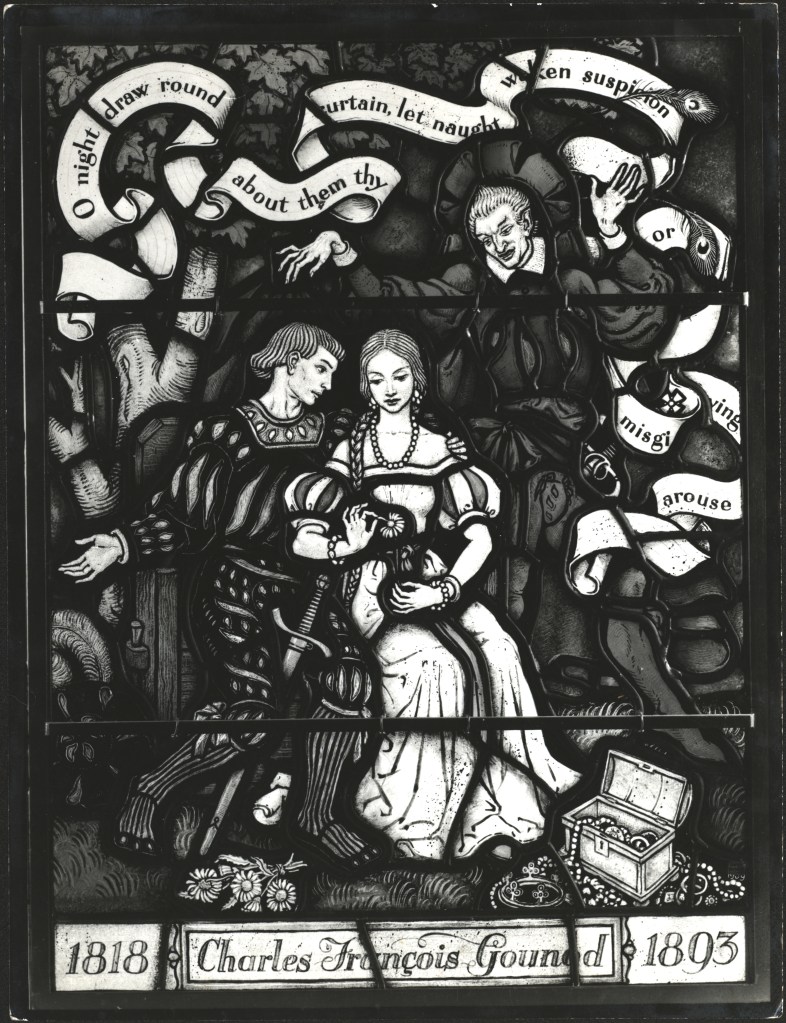
Life was sometimes financially difficult on Doyle as an illustrator in London during the Second World War. Although he was enlisted into the army, he was apparently not suited to life as a soldier and was asked to paint doors instead. Doyle also designed windows for friends and family, one of which was made in 1939 as a wedding gift to his friends, Arthur and Joan Platt. Their son later donated the glass piece to The Stained Glass Museum in Ely, and a copy of the design is kept at LJMU’s Special Collections and Archives.
Other Artists
The Liverpool School of Art papers includes a plethora of incredible artwork produced by former students across the last century. While these are all able to be requested and viewed in person, copyright restrictions prevent us from making digital copies available of most of this artwork without explicit permission from the copyright holder. Many of the artworks are also undated orphan works. Please email archives@ljmu.ac.uk for more information.
Others of the many notable individuals associated with the Liverpool School of Art include: George Adamson; Kay Anderson; Alison Appleton; Arthur Ballard; Margaret Blundell; Dorothy Bradford; June Burnett; Margaret Chapman; Helen Clapcott; Maurice Cockrill; Mary Louise Greville Cooksey; Ruth Duckworth; Edith Edmonds; Jane Greenwood; Bill Harry; Roy Holt; Pat Jourdan; John Francis Kavanagh; Edward Kelly; Ronald William Josh Kirby; Clive Langer; Steve Lindsay; Alexander MacKenzie; Don McKinlay; John Meirion Morris; Lilian Rathmell; Isabel Rawsthorne; Stanley Reed; Sidney Sime; Phoebe Stabler; Sir James Stirling; Norman Thelwell; Ray Walker; Geoffrey Heath Wedgwood; and John Wood.
More Information
To view the top-level record for the Liverpool School of Art papers, visit LJMUH/SA. To browse the hierarchy for the collection’s catalogue, click here. Direct all enquires and appointment requests to archives@ljmu.ac.uk.
For more detailed historical overviews of the Liverpool School of Art, see:
- Charles W Hale, 1977. ‘A Short History of the Origins of Art and Design Further Education in Liverpool.’ Available via LJMU Special Collections & Archives.
- Colin Morris, 1985. PhD Thesis submitted to Liverpool Polytechnic ‘History of Liverpool Regional College of Art 1825-1970. Morris’ thesis includes interviews conducted with: John Keats, Principal Lecturer; Arthur Ballard, Head of Foundation Studies; William L Stevenson OBE, Principal; James K H Graham, Chairman, Faculty of Art & Design, Liverpool Polytechnic; Nancy J Price, Tutor on the Art Teachers Diploma course; Dr Peter MacKarell, Head of the Art Teachers Certificate course at Goldsmiths’ College, London; Norman Thelwell, ex-student; and Walter John Norman, Principal and later Assistant Rector at Liverpool Polytechnic. Available via LJMU Special Collections & Archives.
- Webster, R., and Wilkie, S., 2017. The Making of a Modern University: Liverpool John Moores University (London: Third Millenium Publishing), pp.36-45. Available via LJMU Special Collections & Archives.
Christopher Olive, Assistant Archivist 2024
 LJMU Special Collections & Archives
PAUL YGARTUA ATTENDED THE LIVERPOOL SCHOOL OF ART — 1962-65
HE HAS BEEN A FUYLL TIME ARTIST, MAKING HIS LIVING ONLY FROM HIS ART, MANY INTERNATIONAL EXHIBITIONS AND GALLERIES IN LONDON AND PARIS — I am Joanne Ygartua, and wanted to give an Ygartua painting to the college and all the info on Ygartuafor your archives, but was disappointed to hear that your College is temporarily closed, will it open in the near future–or will your school be part of another school. Paul was there during last year for John Lennon and went down to the Cavern with him at lunchtime. Paul is also
at Bar Four, Hard Days Night Hotel where he has large paintings of the Fab Four
Please let me know if we could give a painting to the school for your Art Collection wall90.com ygartuaoriginals.com info@ygartua.com
If I do hear back and if you would like a painting, I will then send you complete Ygartua Histoire. Thank you for your consideration Sincerely Joanne Ygartua
LikeLike