
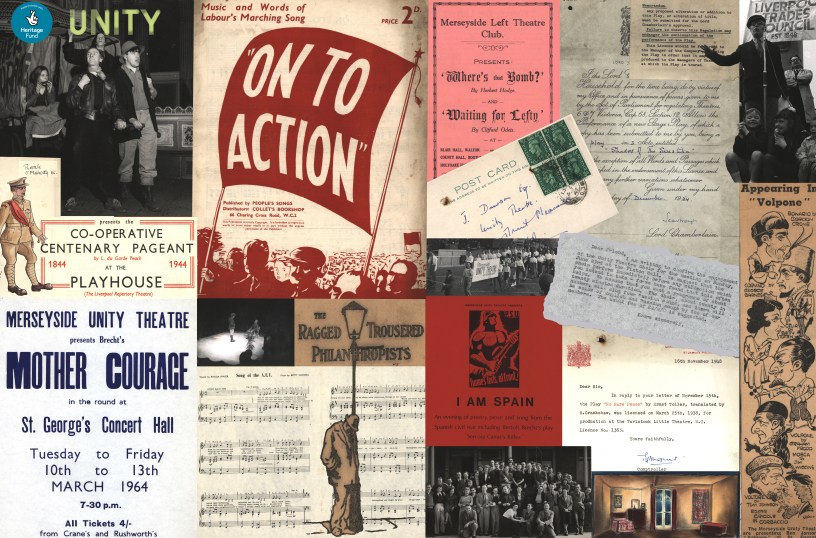
We are now over halfway through the Unity Theatre archive project and it has been a busy few months at LJMU’s Special Collections and Archives! The project team has been working with a variety of archives materials from the 200-box collection which document the theatre’s early history, and in this post we would like to showcase some of the brilliant work carried out by the project volunteers and share the main cataloguing and digitisation outputs so far.
- Cataloguing correspondence from the Lord Chamberlain’s Office, 1937-1968
- Discovering photographs of early club members, c 1930s-1940s
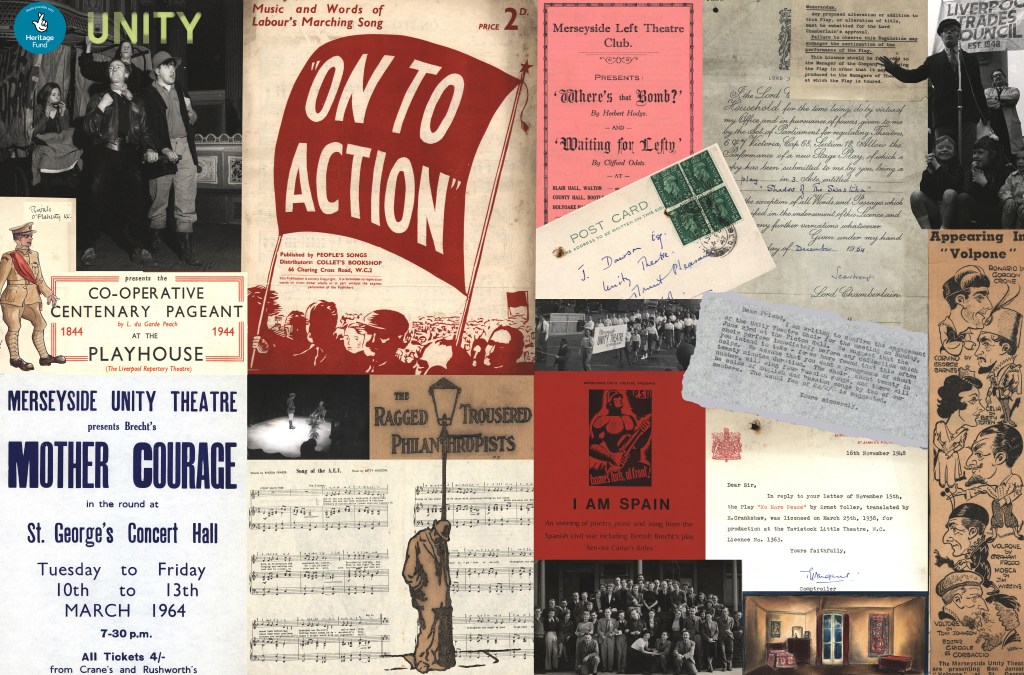
- Digitising Merseyside Unity Theatre’s programmes, posters and costume designs, 1937 – 1980s
- Summarising audio recordings and oral history interviews
- Supporting a MARM student cataloguing placement
- Upcoming project events
Cataloguing correspondence from the Lord Chamberlain’s Office, 1937-1968
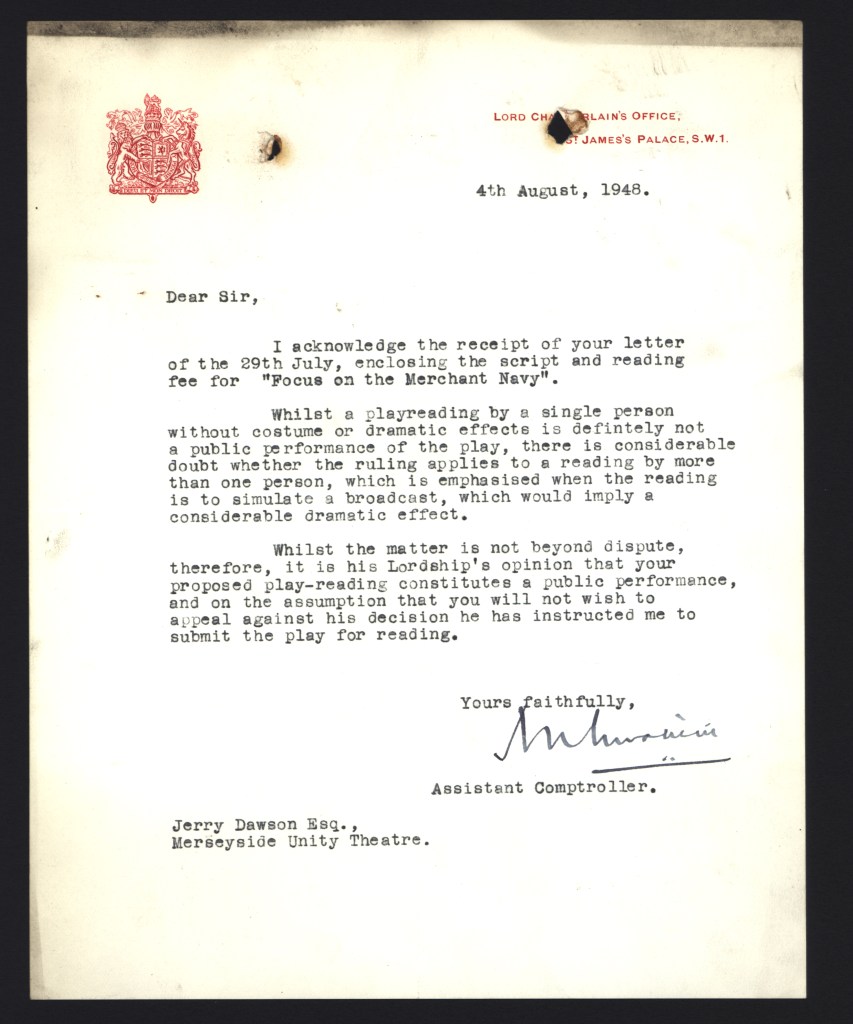
Merseyside Left Theatre Club was founded in 1937 with the aim to present dramatic performances of social significance and educational value for progressive bodies on Merseyside. They performed plays, gave mass declamations, sang political songs, and organised Sunday lectures and film screenings which all dealt with pressing political issues of the time including the rise of fascism, the impact of war, and strengthening workers’ rights. As a result of their political aspirations, the majority of the club’s performances came under the scrutiny of Lord Chamberlain who had the power to censor plays that were deemed morally or politically unacceptable under the Theatres Act 1843. The Act wasn’t abolished until 1968, so for over 30 years the club were required to submit all scripts and details of performances, following which several lines and stage directions were often removed or amended in line with the Act and also government policy.
There are lots of letters and newscuttings in the archive collection which document this period of theatre censorship. Reyha Dickson has read and catalogued all of the letters to and from Merseyside Left Theatre and the Lord Chamberlain’s Office which has provided interesting insights on attitudes towards language, morality and religion during this period. Below are some examples of this correspondence in the collection and a quote from Reyha about her work on this task.
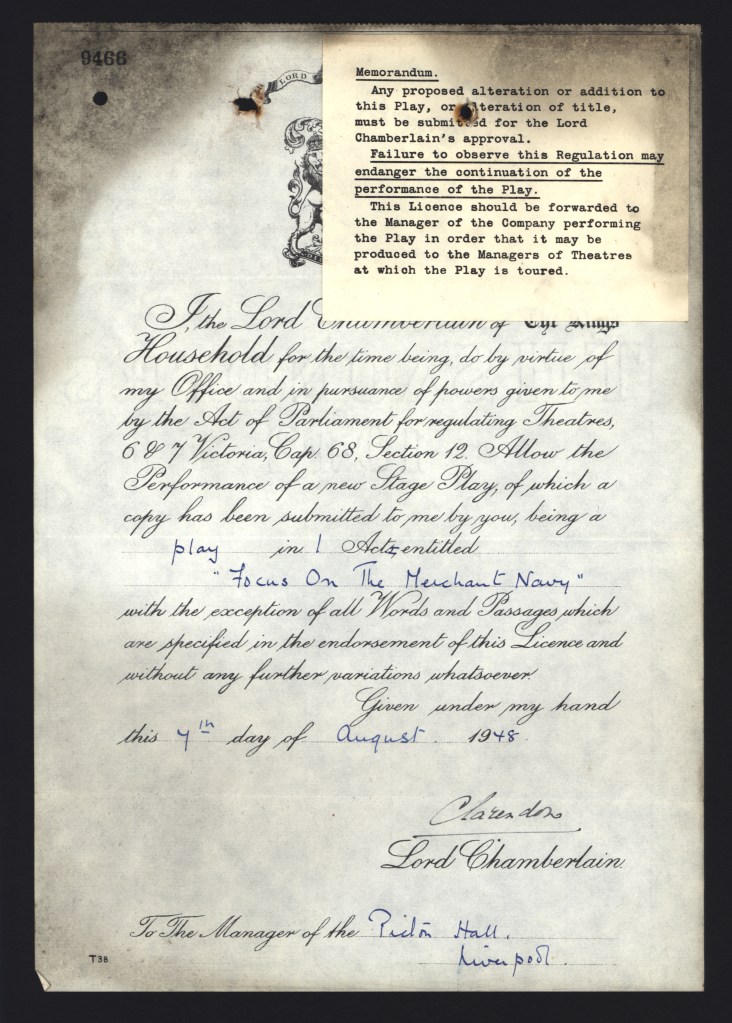
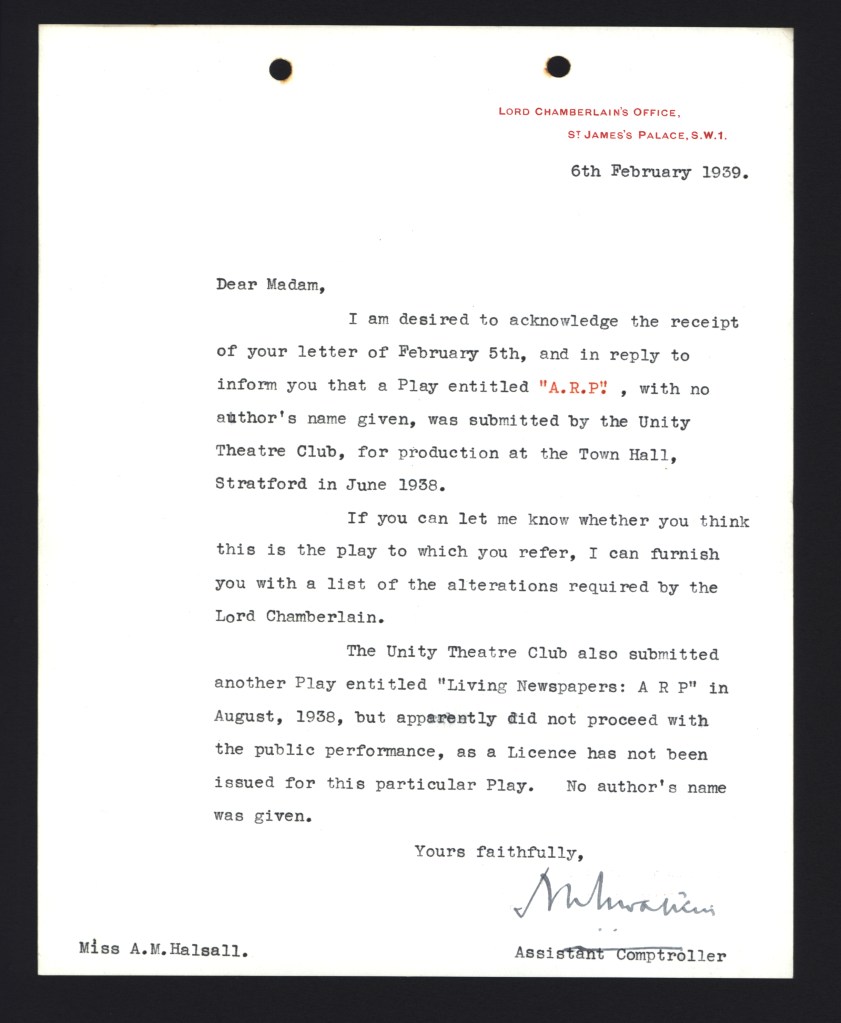
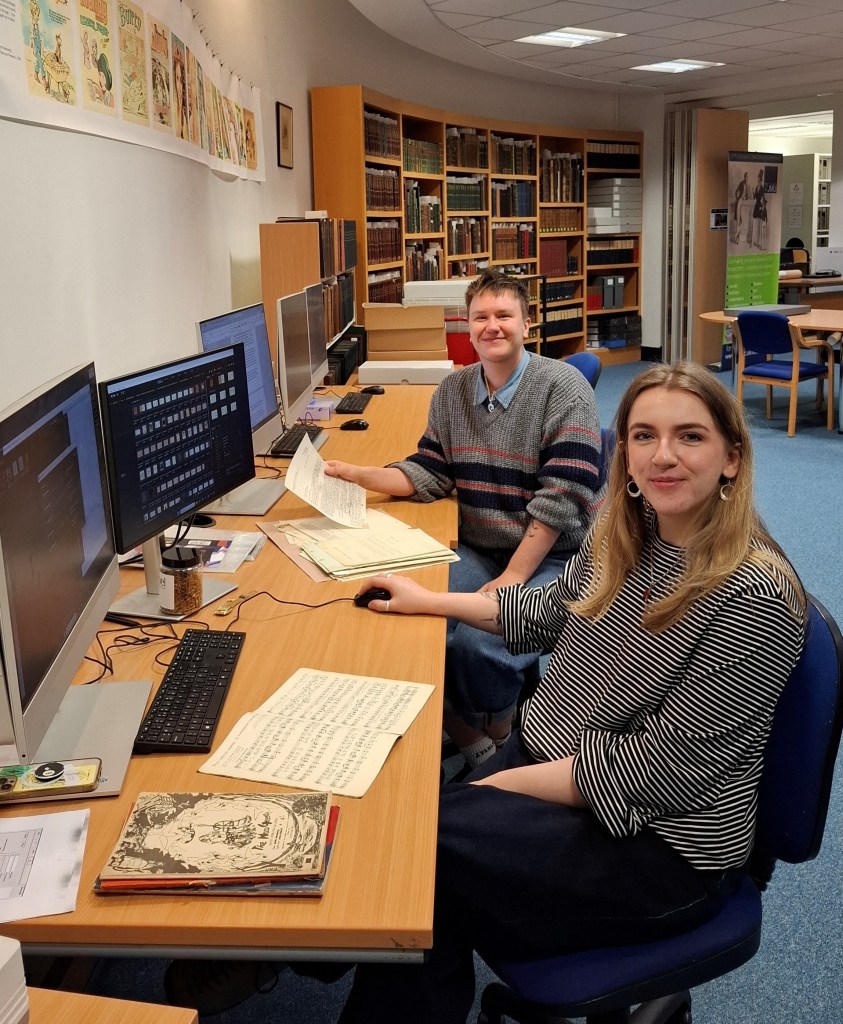
Cataloguing correspondence between Lord Chamberlain and Unity Theatre during the mid-20th century has taught me how to organise papers into chronological and summarise the contents of the archives at file and item level. Reading and deciphering typescript and manuscript archival material has been an extremely immersive and enjoyable task; piecing together letters, lists and leaflets to understand the bigger picture offers a tangible connection to the past and often transports me to the mid-20th century. I feel incredibly lucky to have this opportunity: cataloguing and digitising archival material, identifying key information in each item or file and combining this with my own research has been an educational experience, but also surprising in terms of discovering the censorship that was imposed on Unity Theatre scripts during the mid-20th century. Thanks to Megan’s help and guidance, this has truly been an eye-opening and educational experience; not only in deepening my understanding of the past but also in my understanding of the present, and how technology has become an intrinsic part of our society and our means of communication. I am looking forward to further assisting with the installation of the exhibition itself and seeing all our investigative work come together.
Discovering photographs of early club members, c 1930s-1940s
Another significant output of the project so far has been the digitisation of early photographs and papers thanks to the commitment of the staff team and volunteers. A lot of preparation was required ahead of this work including identifying and sorting archives ready for digitisation, creating a file naming convention, developing a workflow, and providing training on digitisation equipment and software. The archives have all been scanned at a high resolution in preservation formats and then converted to access copies for project research.
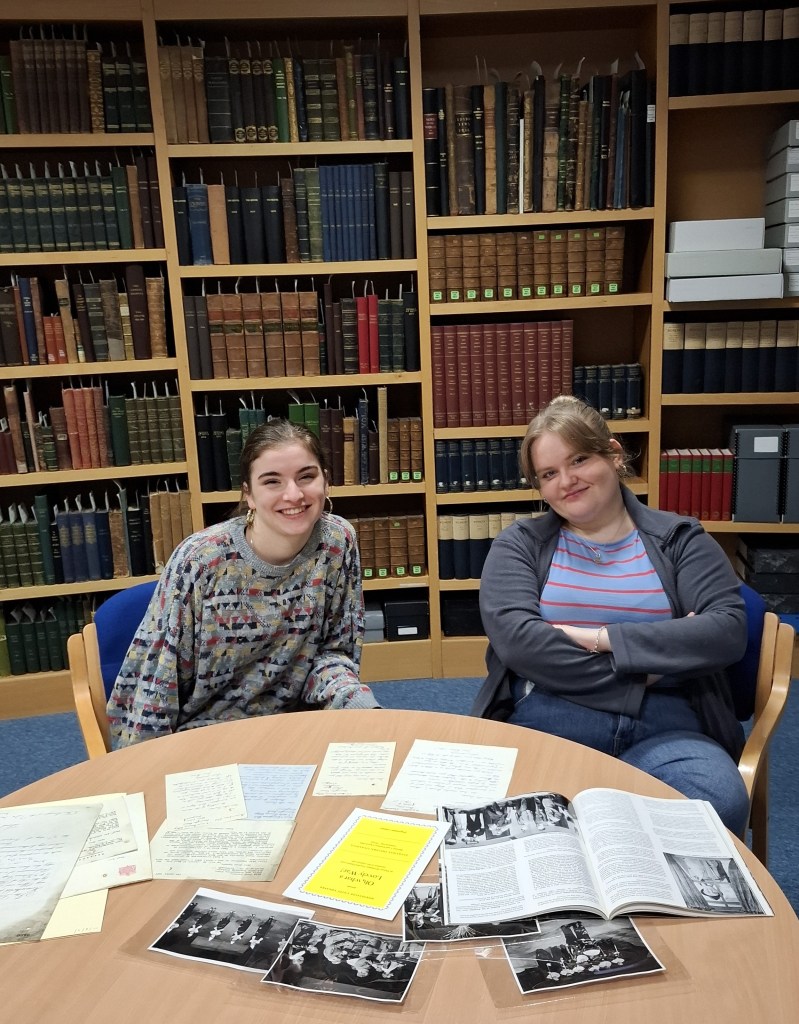
Niamh Cassidy has been digitising and cataloguing photographs of early members from the late 1930s – early 1940s which has involved transcribing names and identifying locations. The club started with about 30 active members in 1937, and despite many of the more experienced members being called up during the Second World War, the remaining members continued the work of the club largely thanks to the commitment of the female members who took over responsibility of organisation. Some of the club’s war-time activities included performing to factory workers at RAF camps and workers’ hostels, as well as staging in theatres some of its most ambitious early plays by international playwrights including ‘Till the Day I Die’ by Clifford Odets and ‘The Informer’ by Bertolt Brecht – plays unlike anything else being presented by other theatre groups in Liverpool. The photographs reflect the enthusiasm of the young people engaged in the left theatre movement on Merseyside in its early years and their unity towards performing plays to make a social and political difference. Many of the photographs that have been digitised were captured during the club’s Sunday rambles on the Wirral during the war, and Niamh writes below about what she learned from completing this task.
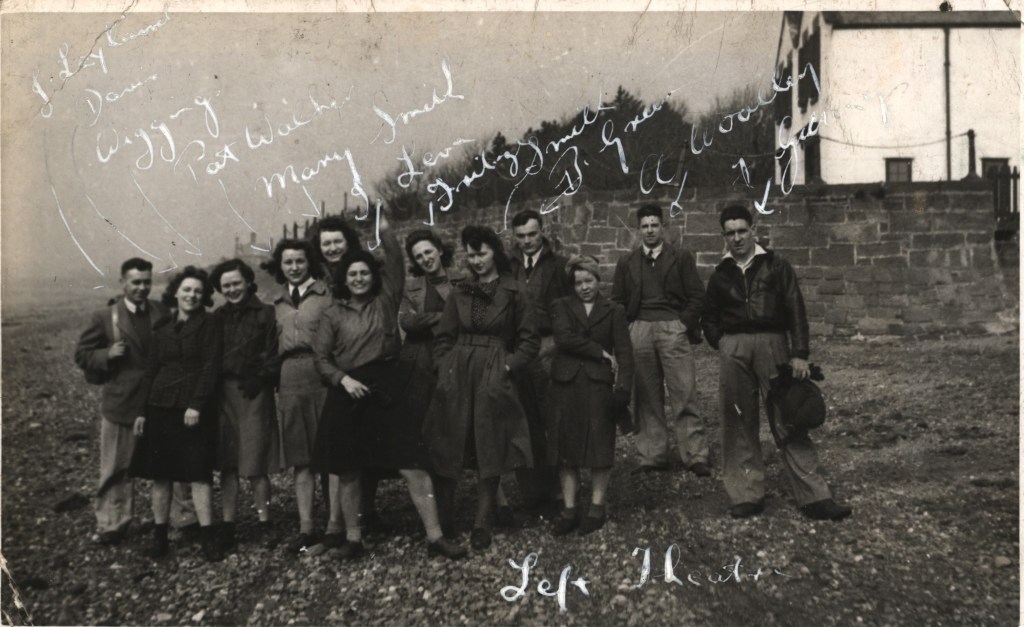
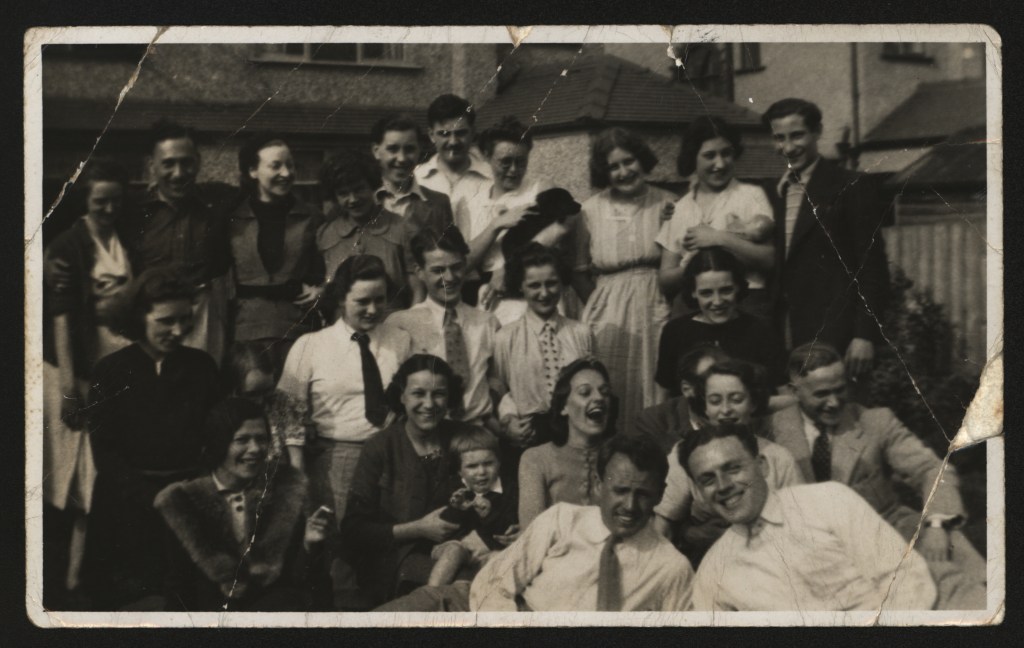
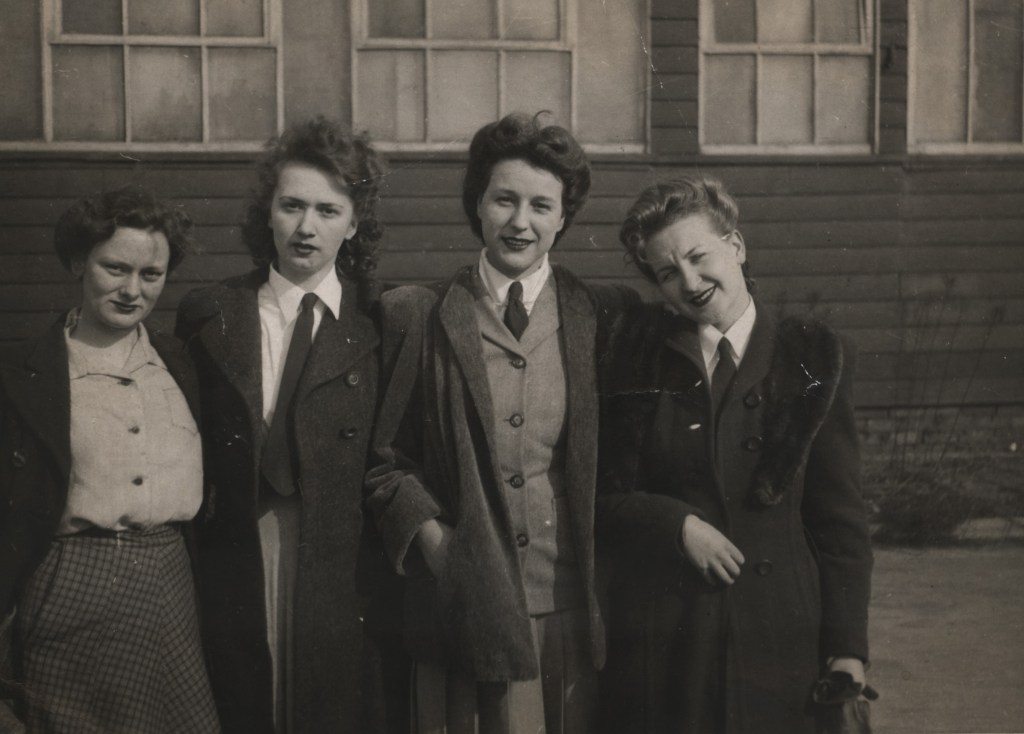
During my time volunteering for the Unity Theatre Project, I’ve learned about local history that I previously didn’t know existed – even as a local to the area! Being able to catalogue and digitise mid-century historical documents and photographs has allowed me to develop skills that needed practice as well as gain new knowledge about the world of heritage and archiving. From the general knowledge needed to carry out tasks, such as how to use equipment, to more detailed skills, such as identifying individuals in photographs never seen before, the level of detail required to carry out archivist work is something that I have learned to respect deeper during my time at LJMU’s Special Collections and Archives. The most enjoyable aspect from my time working alongside fellow volunteers and lead archivists has been the wealth of knowledge and independence and trust that comes with volunteering work – being trusted to take care of such special documents and incredible photographs has been the most amazing opportunity and is something that I will carry with me through life.
Digitising Merseyside Unity Theatre’s programmes, posters and costume designs, 1937 – 1980s
In addition to the digitisation of photographs, the volunteers have also been working on digitising a complete set of Merseyside Unity Theatre production programmes dating from the 1930s – 1980s. This has been an extremely valuable task, allowing for the project team to quickly locate digital copies for research and reproduction for the upcoming exhibition. These production papers can be studied together with the club bulletins which have been digitised and scanned through OCR software to facilitate key word searches for the titles of plays, performance locations, names of actors, and other political events or themes.
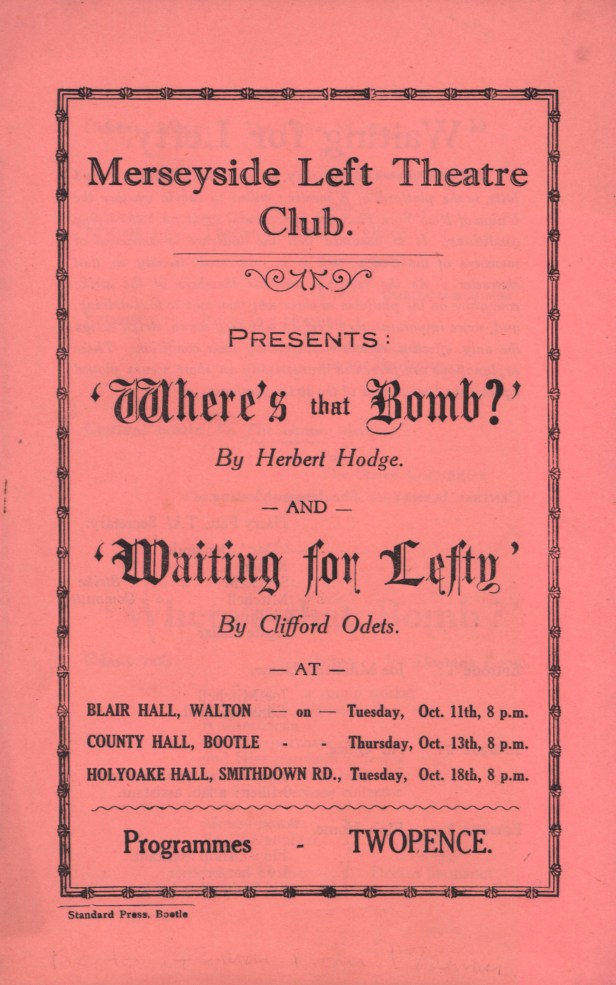
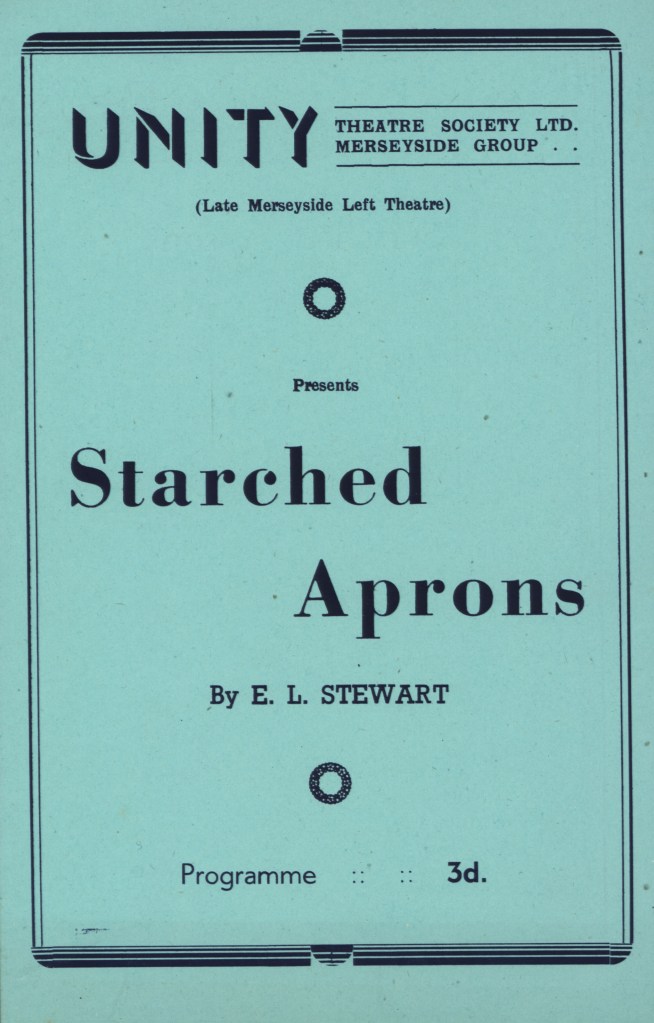
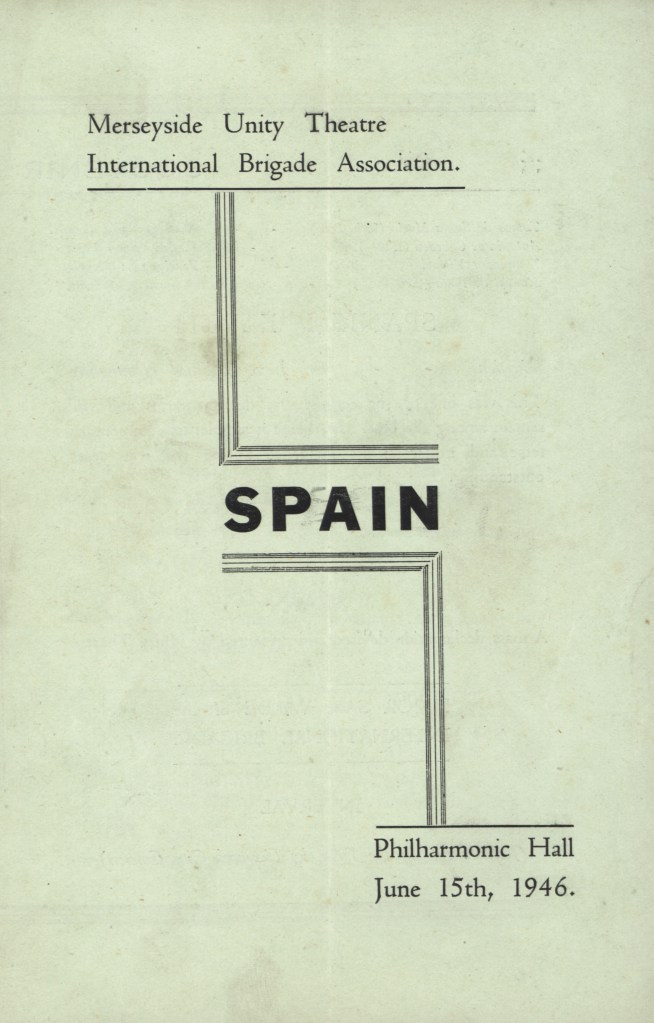
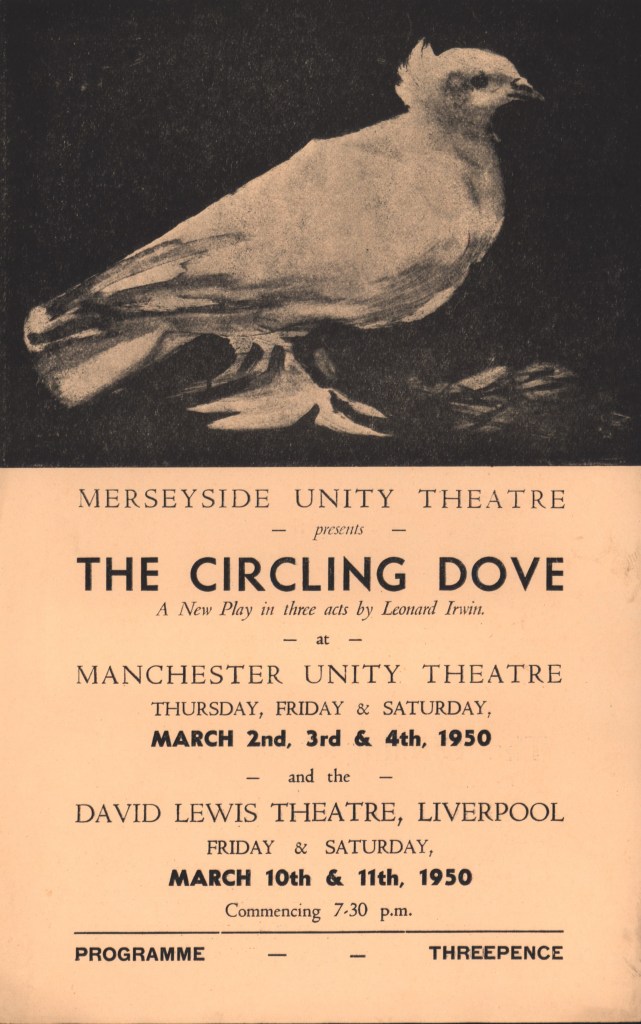
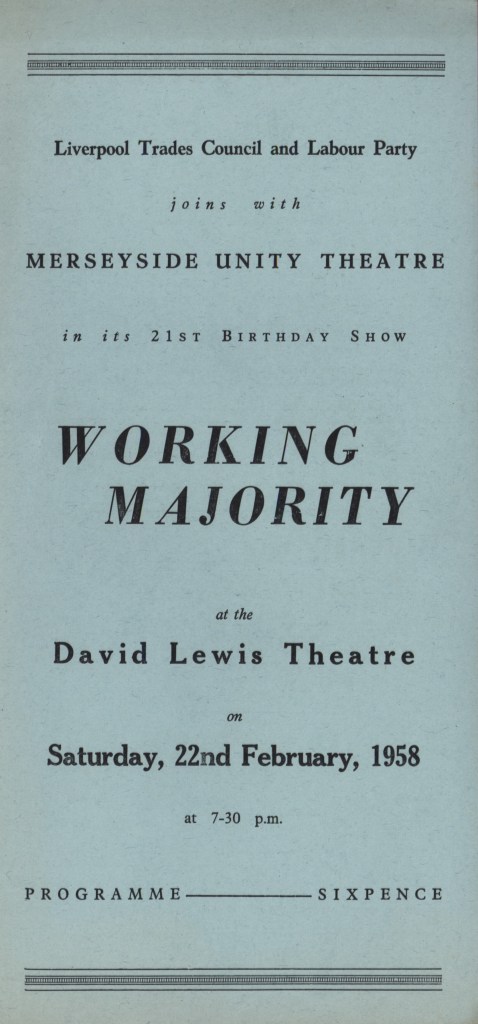
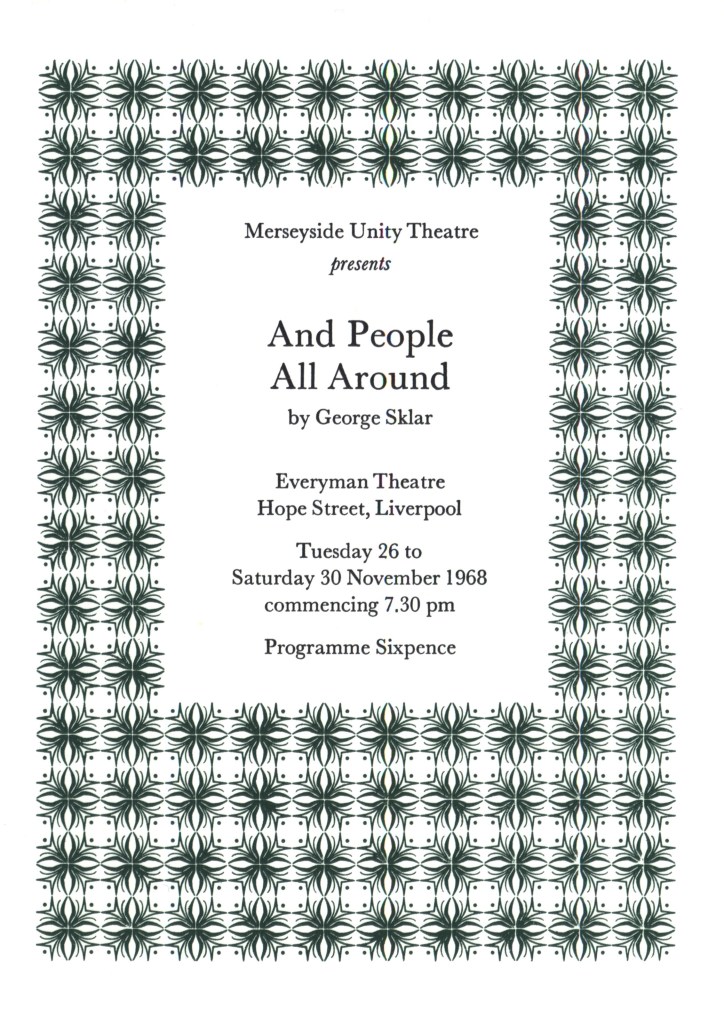
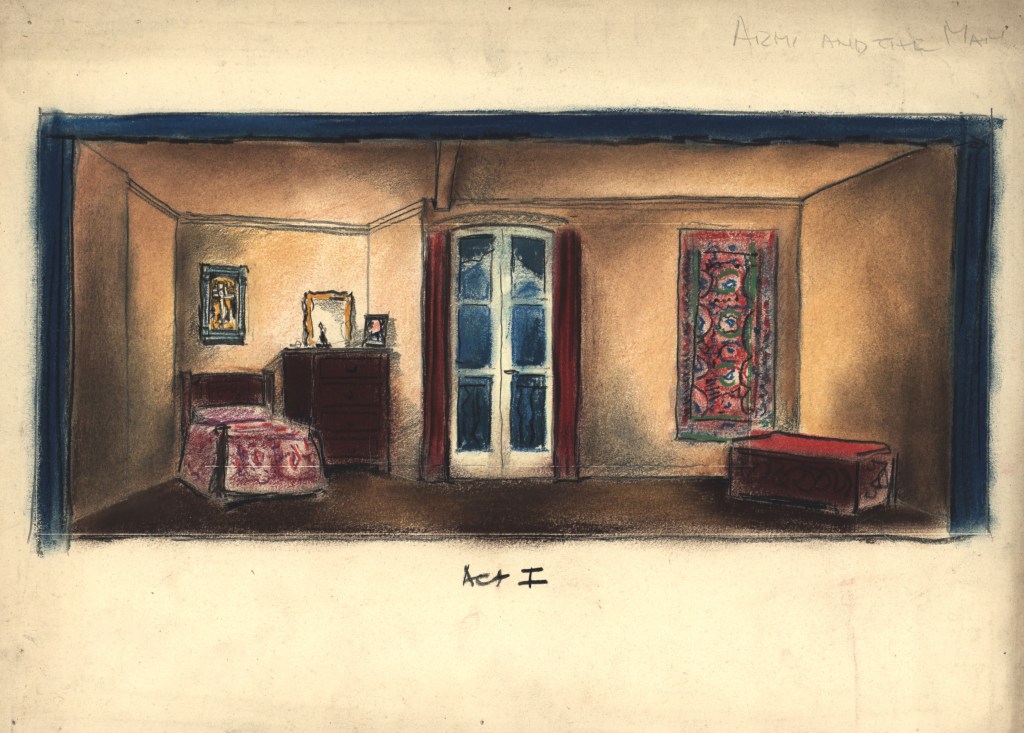
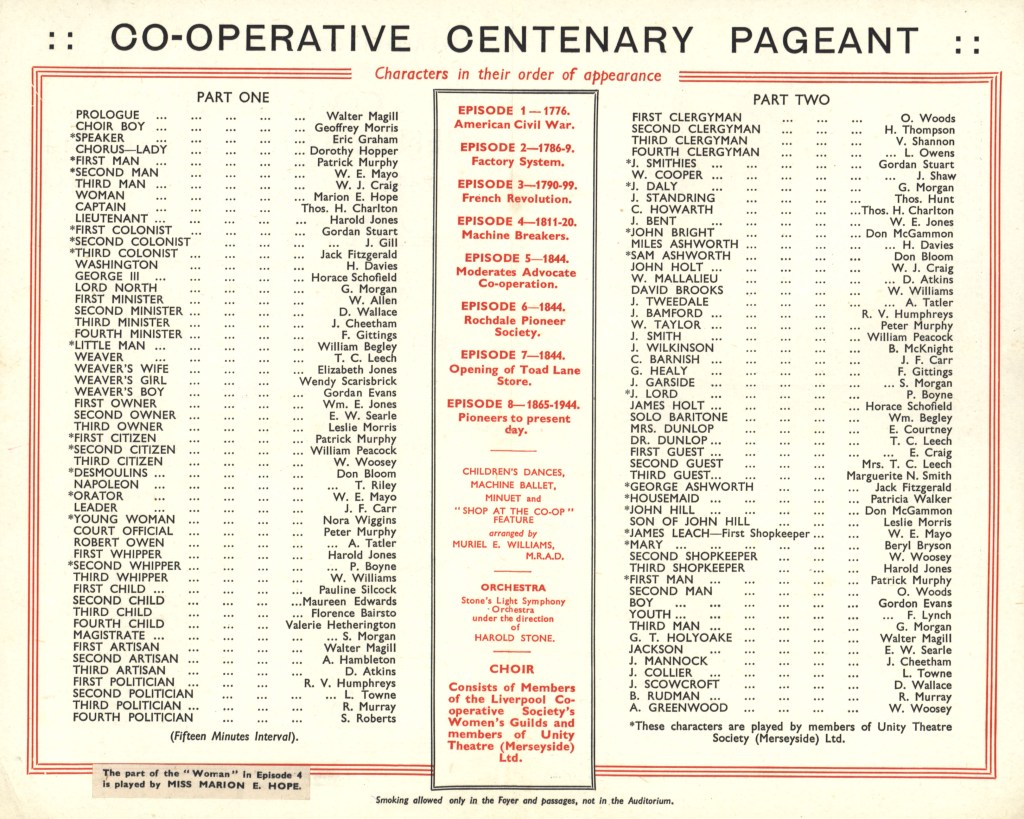
Further to this, the volunteers and the SCA team have also been digitising other production records including designs, posters and original scripts. Throughout this work, it has become clear just how talented, committed, and versatile Merseyside Unity Theatre was not only within the Unity theatre movement but also in its contributions to the arts locally for five decades. In its early years the club performed several original writings by one of its founding members, Edgar Criddle, who wrote the mass declamation ‘Spain’ which was praised by the Left Book Club Theatre Guild. Later, they focused on supporting the labour movement through writing and performing plays for trade unions and councils such as ‘Man with a Plan’ and ‘The Engineers’. The 1950s then brought post-war writing from Unity writers Leonard Peck and Leonard Irwin, and premiers of new plays by international playwrights for the first time in Liverpool.
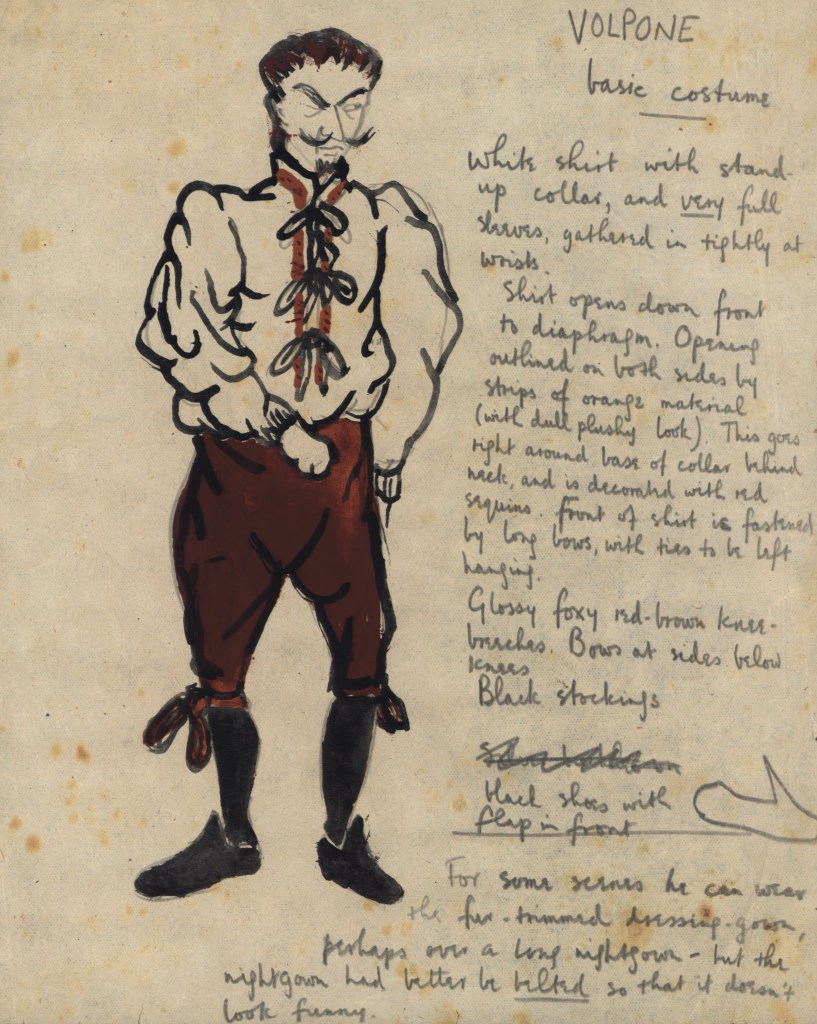
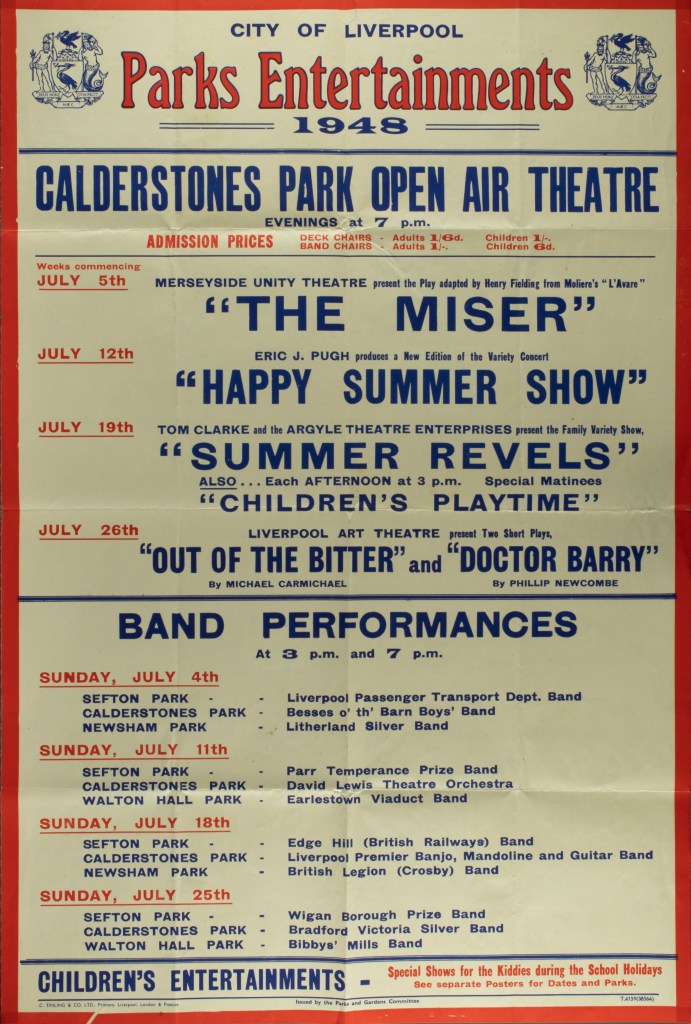
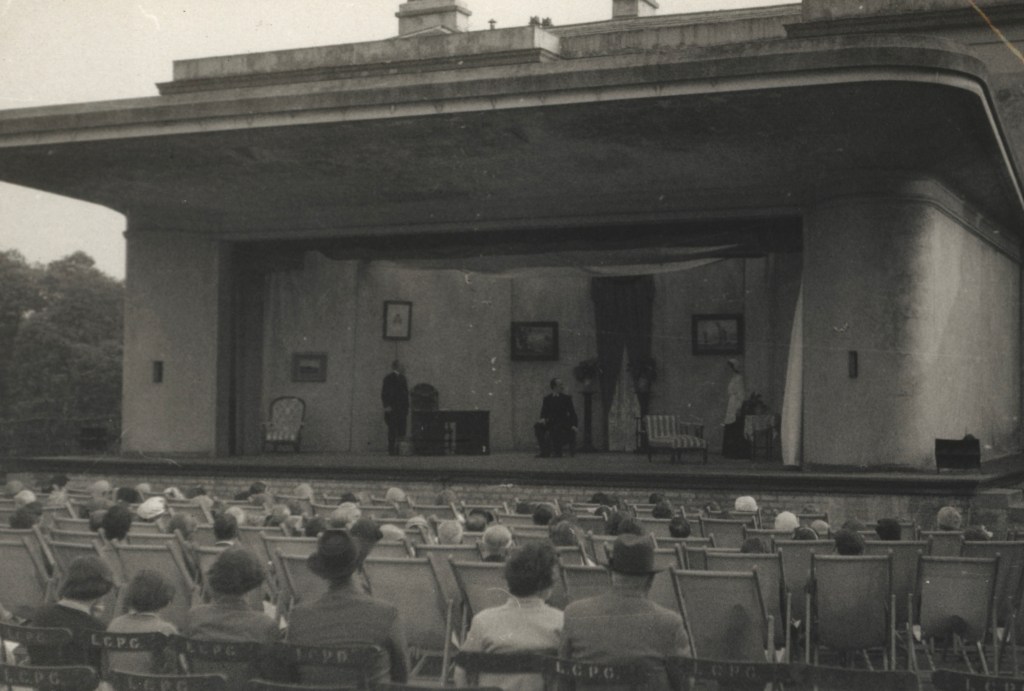
Alongside new writing, they also reimagined many classical plays, such as Jonson’s ‘Volpone’, and set them in the twentieth century to encourage audiences to reflect on their lives. While classical plays wouldn’t appear to be a focus point for an agit-prop theatre group, Merseyside Unity Theatre carefully researched and selected specific plays based on their closeness to social and political problems of the time. Several of these productions were performed in Calderstones Park’s summer open air theatre, making the club a significant contributor to the Parks Entertainments scheme. Volunteers Arthur Wright and Eva Simmonds have completed a large amount of digitisation and cataloguing work on the club’s production records, and Arthur reflects on his time at Special Collections and Archives below.
I have loved volunteering at LJMU on the Unity Theatre project; I have learned so much about archival processes and how to handle and record documents and artwork. I’ve really enjoyed learning about the history of the Unity Theatre through interacting with the letters, programmes, artworks, and photographs in the archive. It’s a unique way to witness the growth and success of the group from the 1930s all the way to the present day and I’ve really enjoyed being a part of it.
Summarising audio recordings and oral history interviews
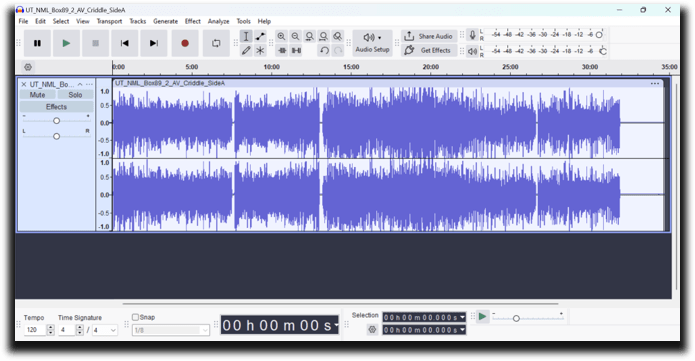
The archive collection also contains a large amount of audio-visual material including VHS and cassette tapes, and high priority items have been identified and digitised in-house to accessible mp3 and mp4 digital formats. A signficant interview recording with one of the club’s founding members, Edgar Criddle, has been migrated from analog to digital format using the software Audacity, and then summarised by one our volunteers, Eva Simmonds. We will later be accessioning oral history interviews conducted at the Unity Theatre during the heritage project, but in the meantime Eva has been working on writing summaries of these recordings with timestamps to support current and future research.
I have loved my time volunteering at LJMU on the Unity Theatre project so far! I have learned lots of new skills, such as cataloguing, handling archival materials, and digitising and editing posters and programmes. I have also been transcribing and summarising oral histories from people that have worked at or had a connection with the Unity Theatre, which has been really interesting to get first hand accounts on its impact, and how the Unity has changed and developed over time. I am so glad to have been involved on the project, learned more about the history of the Unity Theatre, and to have gained this experience.
Supporting a MARM student cataloguing placement
Lastly, over two weeks in January the project hosted a Masters in Archives and Records Management (MARM) student placement which involved sorting and cataloguing the early Merseyside Unity Theatre production records. These archives were previously stored across several boxes arranged by type of document e.g. scripts, programmes, posters, photographs, and designs. So, as part of the project cataloguing and arrangement, records relating to each production have now been brought together into production files, making it much easier for researchers to request production records in the collection using one sub-sub-series reference. The purpose of the MARM placement is to support understanding and knowledge of how archive collections are catalogued in practice, and Louis Taylor writes below about their experience working in the department on this task.
I had a really enjoyable time helping to catalogue the Unity Theatre archive. Getting to conduct further research into the records was very interesting, such as learning about the Lord Chamberlain’s censorship of theatre, and the different topics and events tackled in the productions. Looking at materials that spread over such a long period of time was also really interesting to see, as it showed what the theatre emphasised in the programmes and handbills over the years, such as starting to include more specific information on how to join and support the theatre and the decision to start including cast lists from the mid-1940s onwards. Cataloguing these records helped me to understand what information is necessary to be included in archival description to maintain standardisation and help with the accessibility and searchability on the online catalogue. It was also beneficial for me to watch how the LJMU archive engages with members of the public – especially through creating exhibitions and opportunities for students to look at a large range of records at once. It was a very pleasant and informative experience overall, and it introduced me to an aspect of local history that I was previously unfamiliar with.
Upcoming project events
We are preparing now for the installation of the exhibition ‘A Radical Reimagining: the history of Merseyside Unity Theatre, 1937-1987’ which will be on display from 14 May to 28 June 2026 at Mount Pleasant Campus Library. There will be plenty of other events and workshops over May and June for the Unity Theatre heritage lottery project so keep an eye out for updates and see the link below for details on how to book your place!
https://www.unitytheatreliverpool.co.uk/whats-on/a-radical-re-imagining-unity-heritage-project/
– Megan Ashworth, Project Archivist 2026
 LJMU Special Collections & Archives